Why can’t we just print more money?
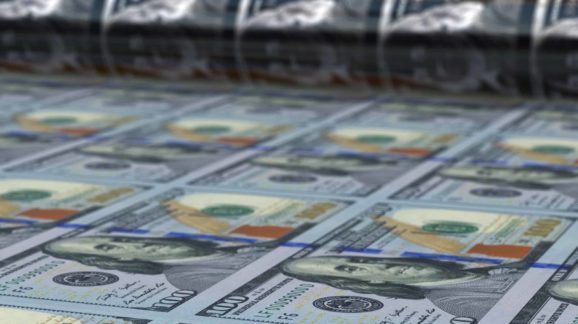
Photo Credit: Getty
Last week, I attended an event at a think tank where the conversation centered on the federal budget and national debt. At one point, a fellow attendee asked: “If the government owes so much money, why can’t we just print more?”
At first this idea seems reasonable. The United States uses dollars, and it can create more of them. Printing more money can seem like a simple way to cover what the government owes without borrowing more and paying interest.
The catch is that creating more dollars does not create more of what we actually want to buy. The number of homes, cars, groceries, and services available does not rise simply because the amount of money does.
More money, in other words, does not necessarily mean more wealth. More than two centuries ago, Adam Smith wrote in The Wealth of Nations that “It would be too ridiculous to go about seriously to prove, that wealth does not consist in money or in gold and silver, but in what money purchases.”
Smith’s point is that money is a means, not an end. Money gives us a common way to exchange the things we produce and buy what others produce. Adding more dollars, however, does not increase what the economy produces. Creating more dollars is easy. Creating more wealth is not. If production does not keep pace, more dollars are simply chasing the same amount of goods and services. There may be more money to spend, but there is not necessarily more to buy.
Printing more money can taste sweet at first. The appeal goes beyond paying the government’s bills. In the short run, monetary expansion can also boost economic activity. Businesses can sell more, hire more workers, and respond to stronger demand.
But the short run does not last forever. Wages and prices adjust, the boost to production fades, and more of that extra spending shows up in higher prices. More money may be circulating, but the money in your pocket buys less.
That timing is what makes creating more money so tempting. The benefits can appear before the costs become obvious. More spending, stronger economic activity, and increased employment are easy to welcome. The eventual loss of purchasing power is harder to swallow.
Looking back, I wish I had given that fellow event attendee a much simpler answer. I would have started with what printing money cannot do. It cannot build another home, grow another crop, or produce another car. Those things take real resources, work, and time.
The first taste may seem sweet. Inflation can be the bitter aftertaste.