Buy Now, Pay Later doesn’t mean pay more, owe more, and panic more
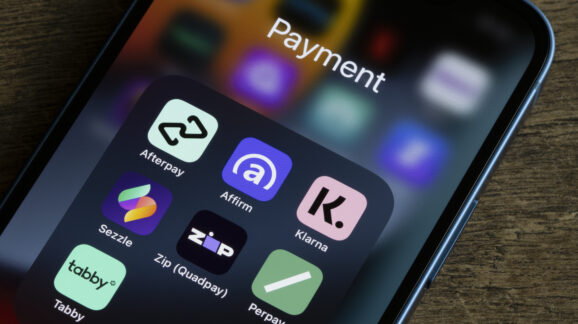
Photo Credit: Getty
Buy Now, Pay Later (BNPL) has become a familiar way to pay for everything from discretionary purchases to everyday expenses. BNPL lets consumers divide purchases into installments instead of paying upfront, without interest when payments are made on time. Consumers have embraced that flexibility. LendingTree reports that 47 percent of Americans have used a BNPL service in the past year, up from 41 percent in 2025.
A recent Fortune article argues that BNPL is likely to increase the price of your groceries. This criticism is worth examining because it reflects a larger tendency to treat BNPL’s rapid growth as evidence of higher prices, increased consumer debt, and economic distress. But BNPL also has benefits, including providing greater flexibility in managing expenses and debt. Three claims in particular have become common, and all three deserve to be busted so that they don’t threaten consumer access to this innovation’s benefits.
Claim #1: BNPL fees make everyone’s prices higher
BNPL providers charge merchants fees that they may seek to recover through higher prices, which is especially relevant in an industry with margins as thin as those in grocery retail. The concern also has a legitimate theoretical foundation. Researchers at Washington University in St. Louis modeled BNPL’s effects on retail pricing and found that retailers may raise prices to compensate for the cost of installment payments. But identifying a mechanism is different from measuring its real-world effect.
CEI’s research on interchange fees provides a useful comparison. As with BNPL fees, interchange fees are payment-related costs merchants incur when consumers choose a particular payment method. Yet when the Durbin Amendment reduced debit card interchange fees, 77 percent of merchants made no pricing changes, 22 percent raised prices, and only 1 percent lowered them.
This experience complicates the assumption that merchants automatically pass payment costs on to consumers. A model showing that BNPL fees may theoretically raise prices is not enough to establish that they actually do.
The bottom line is that, as with credit and debit cards, retailers accept BNPL as a payment method because they believe the resulting increased sales will outweigh any costs. Critics have yet to establish that BNPL produces broad and meaningful price increases in the real world, particularly when data shows little evidence of systematic price increases following a comparable reduction in payment-related costs.
Claim #2: BNPL automatically causes consumers to drown in more debt
As with any form of credit, BNPL carries some familiar risks. Consumers can take on more debt than they can comfortably repay, stack multiple loans, or miss payments. The Consumer Financial Protection Bureau (CFPB) observed that 63 percent of BNPL borrowers had multiple simultaneous loans at some point in 2022. Additionally, the Federal Reserve estimated that 26 percent of BNPL users reported paying late in 2025.
But these figures don’t tell us whether BNPL causes financial distress. The CFPB found that BNPL users tend to carry more non-BNPL debt, but said its analysis cannot determine whether BNPL causes that additional borrowing or “whether consumers increase their use of BNPL in response to decreases in available credit.”
BNPL also offers a consumer benefit that gets lost in the discussion of debt. As former CEI Research Fellow Patricia Patnode has explained, spreading a purchase across installments can give consumers flexibility in managing their budgets. CFPB research estimated that 89 percent of BNPL installment payments in 2021 were made by debit card.
More recent Federal Reserve research notes that “most BNPL payments are made through automated debits from a checking account.” That structure allows consumers to pay down purchases automatically instead of carrying a revolving balance.
And most BNPL loans are repaid without late fees or charge-offs. The CFPB found that just 4.1 percent of BNPL loans were assessed a late fee in 2023, while only 1.8 percent were charged off or deemed uncollectible. Both figures were down from 2022, when 5.2 percent of loans were assessed a late fee and 2.6 percent were charged off. The low rates suggest that widespread BNPL use is not synonymous with consumers struggling to repay their purchases.
Claim #3: Rising BNPL use means consumers are in economic trouble
There is a difference between consumers using BNPL more often and consumers becoming financially worse off. The Federal Reserve found that 16 percent of adults used BNPL in 2025, up from 10 percent in 2021.
That growth can reflect both substitution and additional consumption. Consumers may choose BNPL instead of a credit card, while others may use it to make purchases they otherwise would have postponed. As CEI Director of Finance John Berlau has argued, BNPL and other fintech innovations are creating new competition in credit and payment markets, which gives consumers more options for accessing goods and managing debt.
Neither substitution nor additional consumption necessarily indicates financial distress. The Federal Reserve observed that consumers commonly cite spreading out payments, convenience, and avoiding credit cards for using BNPL. That suggests that consumers value features of the product, not simply that they lack alternatives.
Scale matters, too. The CFPB calculated that BNPL represents about 1 percent of total credit-card spending. BNPL is therefore growing rapidly without representing a large share of consumers’ overall borrowing. Its growth alone is a poor proxy for household financial distress.
Don’t buy the BNPL panic
The case against BNPL should rest on evidence, not assumptions. Merchant fees do not prove higher prices, BNPL borrowing does not prove widespread over-indebtedness, and growing usage does not prove economic distress.
Before critics condemn a financial product that consumers and retailers clearly value, they should establish actual harm, measure its magnitude, and demonstrate that any proposed restrictions would leave consumers better off. Otherwise, restrictions could impose costs on consumers in the name of solving a problem that may not exist.