Freedom of furnaces: One more reason to celebrate America’s 250th
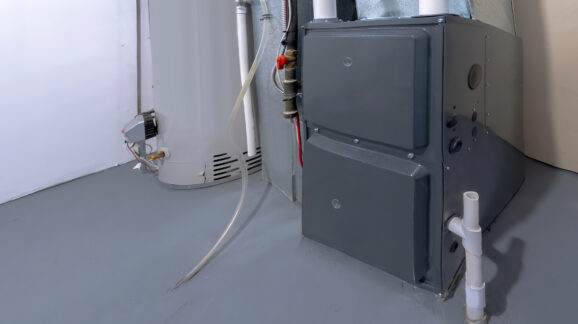
Photo Credit: Getty
Freedom of furnaces may not be on the minds of most Americans as we gear up for the nation’s 250th Anniversary, but thanks to a recent Supreme Court decision rejecting bad furnace regulations, it is one more thing we can all be thankful for.
The story begins with the Biden administration and its climate agenda, which was every bit as sweeping as it was extreme. It even reached into our basements in the form of new Department of Energy efficiency standards for residential furnaces that discouraged some natural gas models in favor of electric heat. The agency put forth these standards despite conceding that natural gas costs only a third of what electricity costs per unit of energy. Heating an average home with gas cost nearly $500 less than doing so with electricity last winter. Nonetheless, natural gas is a fossil fuel and thus was a particular target of the previous administration.
Specifically, the Biden DOE set an ultra-stringent standard for gas furnaces that non-condensing models cannot meet, leaving condensing furnaces as the only available kind of gas heat. Compared to non-condensing gas furnaces, condensing models can extract more heat from the exhaust stream and thus are more efficient. But they also require a very different venting system that millions of older homes designed for non-condensing furnaces do not have.
According to the American Gas Association, 55 percent of homes have non-condensing furnaces that are no longer replaceable with a similar model. The DOE estimates that 30 percent of senior households and 26 percent of low-income households would face higher costs as a result of the standards.
In fact, the difficulties of renovating homes not originally designed for condensing furnaces may be enough to induce some to switch to electric heat, the stated favorite of the climate activist community.
This regulation limits consumer choice and thus violates the law. The Energy Policy and Conservation Act (EPCA), which gives the DOE the authority to set such efficiency standards, expressly forbids the agency from setting standards that are “likely to result in the unavailability in the United States … of performance characteristics (including reliability), features, sizes, capacities, and volumes that are substantially the same as those generally available in the United States at the time of the Secretary’s finding.” It is hard to imagine language more protective of homeowners who prefer a non-condensing gas furnace.
The American Gas Association and others sued in the US Court of Appeals for the District of Columbia Circuit, arguing the agency had violated this provision. But last November they lost, with two of three justices agreeing with the agency’s original position that non-condensing gas furnaces are not protected. Judge Neomi Rao wrote a powerful dissent, emphasizing that the law prohibits “setting efficiency standards in a way that would eliminate product features and characteristics that provide substantial utility to consumers,” and that “the challenged rules do just that by banning a class of useful gas-fired appliances.”
The plaintiffs appealed to the Supreme Court. The Competitive Enterprise Institute (and others) filed an amicus brief, urging the Court to grant the petition for certiorari and take up the case.
In its brief to the Supreme Court, the DOE revised its position and agreed with the American Gas Association, noting that the rules at issue were “an unduly narrow understanding of what constitutes a ‘performance characteristic’ under EPCA” and “rested on a legal error.” The DOE also represented that “the agency is considering a new rulemaking in which it would correct those errors.” Given its change in position, the DOE requested that “the petition for a writ of certiorari … be granted, the judgment of the court of appeals … vacated, and the case … be remanded for further proceedings.” On June 8, the Supreme Court did just that, sending the case back to the DC Circuit “for further consideration in light of the position asserted by the Solicitor General in his brief[.]”
It is now up to the DC Circuit to heed the high court’s order and permanently strike down a furnace rule that is both bad law and bad policy. Let furnace freedom ring!