Illiberalism: The bipartisan tradition
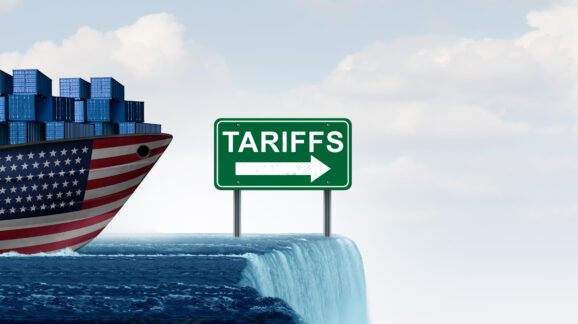
Photo Credit: Getty
After experiencing the horrors of World War I and fearing a second World War could be imminent, Ludwig von Mises wrote Liberalism: The Classical Tradition in 1927. Mises outlined liberalism as the political and economic doctrine that produces prosperity and peace. He offered a timely – and timeless – critique of the illiberal left and right that is still relevant today.
In the Weimar Republic, the Social Democratic Party and Communist Party of Germany supported extensive central planning and socializing policies. Meanwhile, the National Socialist German Workers’ Party rejected liberal capitalism as “Jewish internationalism” and, under Adolf Hitler, subordinated German economic life to the supposed goals of the people and the state. Liberalism was stuck between a rock on the left and a hard place on the right.
Mises’s work offered a sweeping defense of liberalism against both of these movements. He argued that private property, free exchange, and free movement are not optional institutions, but the necessary foundations of prosperity and peace. Each movement was willing to eliminate or subordinate private property.
By 1927, widespread protectionism had pushed many nations into mutual isolation. This established a dangerous precedent. A country could, in Mises’s words, “secure its place in the community of nations by force alone.” Conquest, not trade, was the de facto method for national improvement. The Second World War was one consequence of this mentality.
The liberalism Mises advocated instead aimed at the “undisturbed development of material well-being for all.” This depends on the international division of labor, in which production is guided by relative prices rather than political planning. In free markets, price signals direct labor and capital toward their most valued uses at home and abroad. Free trade expands this coordination beyond national borders, enabling each country to specialize according to comparative advantage. The result is greater output and higher real wages than in an isolationist economy.
Tariffs disrupt price-guided allocation and divert resources into less productive uses. The country imposing tariffs ultimately bears the costs of protectionism in lower real incomes and diminished efficiency. Attacking customers is bad for business. Free trade encourages cooperation between citizens of different countries, which is the foundation of lasting peace. Tariffs prompt retaliation and weaken alliances.
While President Franklin D. Roosevelt, the architect of the New Deal, claimed that “enlightened administration” could manage markets and overcome these difficulties, Mises argued that the problem was not one of goodwill but information. When governments replace this decentralized process with planning, they undermine the very price system needed to guide economic decisions. In a planned economy without free exchange of goods and services, “there can also be no money prices for goods and services of higher order.” Without such prices, rational economic planning is impossible.
Nearly a century later, liberalism again faces pressure from both the right and the left. On the right, protectionist tariffs reflect rising economic nationalism among Republicans. This protectionist urge has consequences both domestically and internationally. Canada, for example, levied retaliatory tariffs on the United States while strengthening trade ties with China amid fraying North American agreements. Tariffs benefit only cartels and monopolies, which Mises argues are “quite unthinkable” in a liberal, tariff-free regime.
On the left, Democratic Party politics have moved leftwards, reflected in proposals from popular figures like Zohran Mamdani. Campaigning on affordability, the recently inaugurated mayor of New York City proposed policies such as no-cost child care, city-owned grocery stores, and free public buses.
But how can local government actually deliver on these promises? To provide these services universally at no cost, the city must decide how many buses should run, how many daycare slots should exist, and what goods city grocers should stock. These decisions require allocating labor, buildings, vehicles, food, and capital across competing interests.
For Mises, this is where the problem begins. In a market system, prices emerging from voluntary exchange guide resources towards their most valued uses. Entrepreneurs compare costs and revenues and adjust production accordingly.
When the state replaces markets with government ownership or central planning, those price signals disappear or distort. Officials must substitute administrative judgment for the information normally conveyed through prices. The result is not just wasteful spending but systematic misallocation of resources: surpluses of some services, lack of others, and no reliable way to determine whether production is serving customers efficiently.
Today, as in Mises’s time, illiberals from both the left and right threaten the market institutions that best ensure prosperity. Tariffs increase international tensions and disrupt global trade. Progressive measures, like those suggested by Mamdani, undermine the price system and are thus self-defeating. Illiberalism has unfortunately become a bipartisan tradition. Defending prosperity and cooperation requires a return to liberal principles, not partisan politics.