Remembering Alan Greenspan
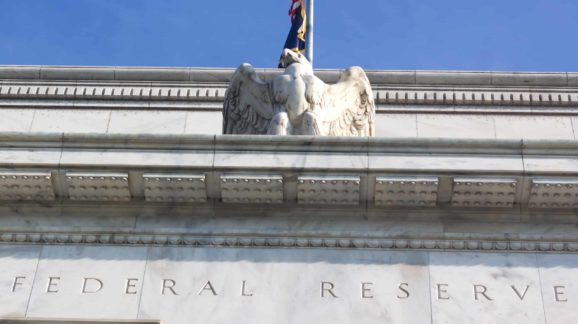
Photo Credit: Getty
Alan Greenspan passed away this week. National Review was kind enough to run my remembrance of him:
There are political people, and there are ideas people. Alan Greenspan was the rare person who was both. From his early days as a Juilliard-trained clarinetist and an Ayn Rand acolyte to his 18-year tenure as Federal Reserve Chair, Greenspan’s career was varied and accomplished. His life, which ended this week at age 100 in his Washington, D.C., home, has valuable lessons for anyone trying to navigate the tension between principles and politics.
I also emphasize his most overlooked contribution to monetary policy:
Greenspan continued Volcker’s work and made an important addition: a monetary policy rule that would let people predict what the Fed would do on interest rates.
Though he never made it formal policy, Greenspan mostly followed a Taylor rule, named for the Stanford economist John B. Taylor. During a boom, the Taylor rule’s equation recommends high interest rates in order to prevent possible inflation. During recessions, it recommends low rates to provide stimulus. The Taylor rule’s main virtues are that it is predictable, and that it can prevent impulsive Fed behavior. If the economy does X, then the Fed will automatically respond with Y.
Read the whole thing here. For more on sound monetary policy, see the inflation chapter in CEI’s most recent Agenda for Congress.