The Jones Act: High seas, higher costs than necessary
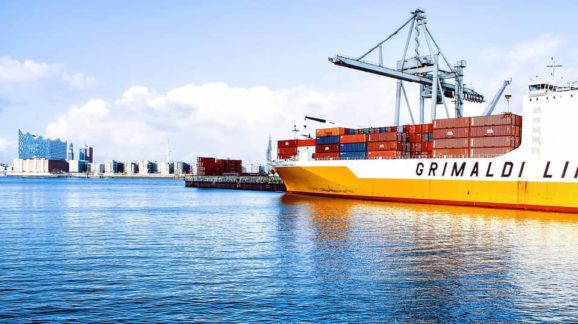
As the war with Iran intensifies, the Strait of Hormuz, through which about one-fifth of global oil flows, has seen dramatic disruptions that have helped push crude prices above $100 a barrel and reverberated across US markets. With global energy prices spiking, Americans are already feeling the pinch at the pump and in the grocery aisle.
In response, President Trump temporarily waived the Jones Act, a century-old law intended to protect the US shipping industry, to help move fuel and goods along domestic coasts. Trump is hardly the first president to waive the Jones Act, an action that my colleague Ryan Young described as a temporary win. President George W. Bush did so with Hurricanes Katrina and Rita, as did President Obama with the Libyan crisis. In fact, waiving the Jones Act is a tradition that dates back to World War II.
The repeated need to suspend the law highlights a simple truth: the Jones Act is liability during emergencies. It may not sink the economy, but it keeps everyday costs higher than they need to be.
A 100-plus-year-old shipping law dictating modern prices
The Jones Act is the informal name for Section 27 of the Merchant Marine Act of 1920, a federal law intended to support a US merchant marine fleet that could serve commerce and national defense.
While the law is over a century old, its effects are painfully current. The law requires that any cargo transported between US ports be carried on ships that are US-built, US-owned, US-flagged, and primarily crewed by Americans. These restrictions apply to all domestic waterborne trade, limiting which ships can move goods between US ports.
Justified at the time by such World War I–era threats as German U-boats, the law’s rationale was always questionable. As former CEI Senior Fellow Mario Loyola described in his analysis on the issue, the Jones Act shrank the US fleet it was meant to preserve, drove up shipping costs, and eroded maritime capacity by shifting both commercial and defense needs toward foreign shipping.
A century of shipwrecked competition
If the law’s rationale was questionable even in 1920, it is even harder to defend today. Yet Americans are still paying the price.
As the number of Jones Act-compliant vessels dwindled over time, domestic waterborne shipping declined and consumer prices in coastal states have risen modestly. One econometric study from University of Hawaii at Mānoa finds that reduced capacity of compliant vessels contributed to about a 1.35 percent increase in consumer prices in coastal states from 1997 to 2016. This reflects how higher shipping costs ripple into local markets.
This distortion reflects deeper cost disparities in the shipping market. Research indicates that shipping goods between US ports on Jones Act‑compliant vessels can be up to three times more expensive than using foreign‑flagged ships, raising the cost of moving freight within the world’s largest economy and constraining alternative transport options.
At the same time, the domestic fleet has shrunk drastically since the Act’s enactment, meaning fewer ships are available to move goods between US ports. In contrast, a study from the Organization for Economic Co-operation and Development assessed that removing the US-build requirement would grow the industry’s output by 71 percent since it would stimulate a massive increase in domestic demand for the vessels.
To further this point, a 1999 US International Trade Commission study found that the Jones Act’s restrictions are roughly equivalent to a 64 percent tariff on domestic coastal shipping. This is a stark illustration of how protective and distortionary the law historically has been.
These higher costs are not isolated; they are built into the system. One study in Maritime Economics & Logistics calculates that elevated shipbuilding and operating costs under the Jones Act impose billions in cumulative welfare losses, including nearly $1 billion annually in higher operating costs alone.
Broadening competition could have measurable economic effects. A 2025 Southern Methodist University study estimates that allowing foreign ships to operate on domestic waterways would increase GDP by $3.2 billion annually. Taken together, these studies point out that the Jones Act imposes unnecessary costs that Americans ultimately absorb.
Energy bottlenecks on the homefront
Energy markets provide a clear case study of the Jones Act’s structural distortions. By limiting which tankers can move fuel between domestic ports and raising costs roughly threefold compared with foreign vessels, the law constrains domestic shipping and forces regions like the East Coast and Puerto Rico to rely on imports that could otherwise be supplied domestically.
Most US crude and refined products are concentrated on the Gulf Coast, especially Texas and Louisiana. By contrast, the East Coast consumes a large share of these fuels but has a much smaller portion of national refinery capacity.
Under a more flexible system, Gulf Coast shipments could meet much of that demand. However, due to the restrictions, it often relies on foreign imports to meet consumer demand. Research from the National Bureau of Economic Research indicates that fuel prices would fall modestly if domestic shipping constraints were eased, illustrating how limited tanker availability affects prices even under today’s system.
The problem is not confined to the US mainland. Loyola highlights Puerto Rico in his extensive study on the Jones Act, where limited local refining and high shipping costs force consumers to import 97 percent of its energy supplies from foreign countries. A World Bank paper estimated that the Jones Act inflates the cost of goods in Puerto Rico by $200 per person, or an average of about 1 percent of Puerto Rican household spending.
Hawaii also gets walloped by the Jones Act. The Grassroot Institute of Hawaii calculated that each Hawaiian pays an extra $62 per year for gasoline, which is part of the $1,800 per year the Jones Act as whole costs every Hawaiian citizen.
Across regions, the Jones Act narrows tanker options, limits competition, and makes domestic shipments less practical, making it a clear case of regulatory inefficiency.
Time to sink the Jones Act
The Jones Act was intended to strengthen American shipping, but instead created a smaller fleet, higher shipping costs, and less efficient domestic trade. From energy markets to everyday goods, the law makes it more expensive to move products within the US than it should be.
The problem is not that the Jones Act causes dramatic price spikes overnight, but that it quietly raises the cost of moving goods across the economy. Over time, these costs add up to a system where Americans pay more than necessary to move goods.
The repeated need to waive the law during crises only reinforces the point about affordability. The better solution is not temporary relief, but permanent reform. Repealing the Jones Act would restore competition and make the movement of goods more efficient and more affordable over time.