What permitting reform should and shouldn’t include
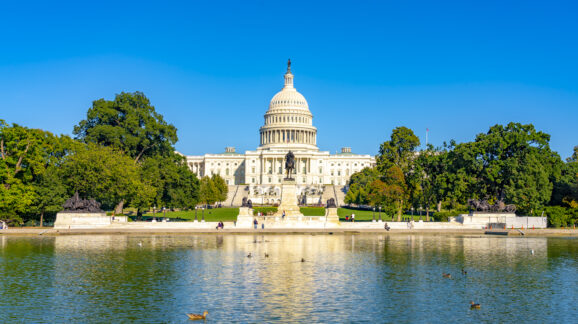
Photo Credit: Getty
Congress is working on bipartisan permitting reform. This is a good sign, but any such efforts need to ensure they deliver genuine permitting reform that will ease the burden for projects across the board, including water and energy infrastructure.
Too often, permitting reform is heavily focused on the National Environmental Policy Act (NEPA), but such an approach ignores many other laws that need to be addressed, arguably far more than NEPA. For example, laws such as the Clean Air Act (CAA) and Clean Water Act (CWA) contribute to delays and costs that also must be addressed. These statutes directly impose permitting requirements (unlike NEPA) and, in addition to their own substantive requirements, trigger the need for NEPA review.
This isn’t to say that NEPA reform isn’t important, but it is only one piece of the puzzle. Further, following the decision in the US Supreme Court case Seven County Infrastructure Corporation v. Eagle County, NEPA is less of a roadblock than in the past. The Court’s decision limited the scope of NEPA analysis in numerous ways and clarified that the law is purely procedural in nature. The Court explained:
NEPA is a purely procedural statute that, as relevant here, simply requires an agency to prepare an EIS [environmental impact statement]—in essence, a report. Importantly, NEPA does not require the agency to weigh environmental consequences in any particular way.
Rather, an agency may weigh environmental consequences as the agency reasonably sees fit under its governing statute and any relevant substantive environmental laws.
Simply stated, NEPA is a procedural cross-check, not a substantive roadblock. The goal of the law is to inform agency decision making, not to paralyze it.
House Natural Resources Committee Chairman Bruce Westerman (R-AR) has introduced NEPA legislation, the SPEED Act (H.R. 4776), which recently passed out of committee. This bipartisan bill helps in addressing NEPA issues, in part by seeking to codify the Seven County decision.
Another bill, the PERMIT Act (H.R. 3898), makes many important reforms to the CWA, including addressing abuses that have existed under the Section 401 certification process. This CWA provision enables states to have a voice when it comes to whether a federal permit or license is issued for certain projects. The certification process, however, has been abused by states to block projects for reasons that have nothing to do with water quality. Further, the Biden EPA issued a final rule that would allow states to block projects even if the reasons have nothing to do with key elements of the CWA: discharges, point sources, or navigable waters.
These two bills provide a good start for proper permitting reform. They should be combined with additional reforms to the CAA, the Endangered Species Act, and other statutes to develop a more comprehensive permitting reform package.
One concern is a likely effort to incorporate transmission reform into permitting reform efforts. This could very well sabotage permitting reform efforts if done incorrectly. Transmission reform shouldn’t be a way to connect unreliable electricity sources to the grid at the expense of consumers or the reliability and resilience of the grid. Unfortunately, past legislative efforts have tried to build out transmission at the expense of ratepayers, traditional state authority, and grid reliability.
Ultimately, the goal of a good permitting reform effort should be to achieve a broad-based, technology-neutral permitting structure that allows new development without favoring certain industries over others.
Americans should be able to build, innovate, and use their property without unnecessary government obstacles. This can be done through the reasonable application of environmental laws, not through the overreach that often undermines individual freedom, private property rights, and the well-being of our country. If a project has real problems, then fine, they should be addressed. But that concern shouldn’t be a pretext for meddling that goes way beyond what is necessary.
Congress is right to focus on permitting reform. It needs to be done correctly though, and it needs to be meaningful. Bipartisan reform is fine, but ineffective reform to simply show something has been done is not.
Americans need and deserve genuine permitting reform. Hopefully lawmakers will make that happen in 2026.