Featured Posts

Blog
Forecasts, not puppet strings: The myth that prediction markets rig reality (Part I)
Prediction markets have become an increasingly prominent tool for forecasting elections, economic indicators, geopolitical events, and other uncertain outcomes. As their popularity has grown,…
Blog
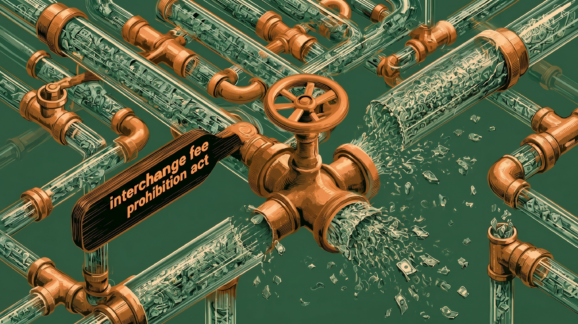
Three consequences of Illinois’ interchange fee law
In my new CEI paper, I examine the Illinois Interchange Fee Prohibition Act and what policymakers can learn from previous efforts to restrict…

Blog
How the Bank Holding Company Act helped shape modern banking consolidation
Back in the 1950s, Congress feared a future in which a small number of powerful banking organizations would dominate the financial sector.
Search Posts
Crowd Fund Insider
House Subcommittee on Financial Institutions Schedules Hearing to Discuss Banking and Need to Update Regulations in Line with Emerging Technology
CEI’s John Berlau is cited on Crowd Fund Insider on banking regulations: The House Subcommittee on Financial Institutions and Monetary Policy, part of…
Blog
FTX Hearings Should Probe Fraud Charges and the SEC’s Misplaced Priorities
In the wake of the arrest of and charges of fraud against Sam Bankman-Fried, the disgraced founder and former CEO of the…
Blog
Gensler Fiddled with ESG and Power Grabs while FTX Burned
When asked on CNBC about the implosion of crypto exchange FTX, Securities and Exchange Commission (SEC) Chairman Gary Gensler turned the focus away from…
Blog
Not Your Grandfather’s Bank Branch
What should financial services do? And how should they look like going forward as they try to serve more people? Some presenters are…
Blog
Excerpts from Austin Keynote: How CBDCs Could Be the New Operation Choke Point
This week, I attended the exciting INFiN MoneyTrends conference in Austin, where I gave the Regulatory Keynote address on Monday. The conference is…
News Release
CEI Report: Stablecoin Benefits Threatened by Lawmakers, Regulators
Stablecoins can revolutionize payment systems, provide a stable store of value for people living under totalitarian or corrupt regimes, and lower transaction costs (particularly…