There are two main areas in which Congress can enact meaningful reform. The first is to rein in regulatory guidance documents, which we refer to as “regulatory dark matter,” whereby agencies regulate through Federal Register notices, guidance documents, and other means outside standard rulemaking procedure. The second is to enact a series of reforms to increase agency transparency and accountability of all regulation and guidance. These include annual regulatory report cards for rulemaking agencies and regulatory cost estimates from the Office of Management and Budget for more than just a small subset of rules.
In 2019, President Trump signed two executive orders aimed at stopping the practice of agencies using guidance documents to effectively implement policy without going through the legally required notice and comment process.
Featured Posts

Blog
The regulatory costs we still aren’t counting
Several years ago, I assembled a “Costberg” working paper surveying the largely impenetrable and undisclosed costs of regulation. The project grew out of…

Blog
The week in regulations: Voting by mail and $100,000 visas
The number of new final regulations in 2026 topped the 2,000 mark. President Trump escalated his trade war against Canada and issued an executive…
Blog
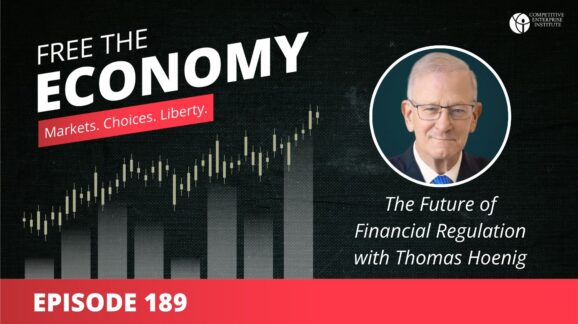
Free the Economy podcast: The future of financial regulation with Thomas Hoenig
In this week’s episode we cover the status of occupational licensing in the 50 states, the coming crack-up over entitlement spending,…
Search Posts
Blog
This Week in Ridiculous Regulations
Facebook co-founder Chris Hughes called for breaking up the company; CEI’s Iain Murray and Kent Lassman explain why that’s a bad idea. CEI also released…
Blog
VIDEO: Report Card on Regulatory Reform
Earlier this week I had the good fortune to spend some time at the historic Mayflower hotel here in Washington, D.C. attending the Federalist Society’s 7th…
Blog
Re-Prioritizing Regulatory Reform
The 2019 edition of Wayne Crews’ Ten Thousand Commandments: An Annual Snapshot of the Federal Regulatory State is out now.
National Review
President Trump Should Rediscover Regulatory Reform
President Trump, who made regulatory reform a priority early in his term, claims to have reduced federal regulatory burdens by $23 billion in fiscal…
News Release
Federal Government Illegally Fails to Account for at Least $1.9 Trillion in Estimated Regulatory Costs
The Competitive Enterprise Institute (CEI) today released the 2019 edition of Ten Thousand Commandments: An Annual Snapshot of the Federal Regulatory State (10KC 2019), CEI’s annual survey of…
Products
Liberate to Stimulate
Download Chapter 11 as a PDF Policy makers frequently propose spending stimulus as a way to grow economies. It rarely goes well. A regulatory…
Staff & Scholars

Clyde Wayne Crews
Fred L. Smith Fellow in Regulatory Studies
- Business and Government
- Consumer Freedom
- Deregulation

Ryan Young
Senior Economist and Director of Publications
- Antitrust
- Business and Government
- Regulatory Reform

Fred L. Smith, Jr.
Founder; Chairman Emeritus
- Automobiles and Roads
- Aviation
- Business and Government

Sam Kazman
Counsel Emeritus
- Antitrust
- Automobiles and Roads
- Banking and Finance

Marlo Lewis, Jr.
Senior Fellow
- Climate
- Energy
- Energy and Environment