There are two main areas in which Congress can enact meaningful reform. The first is to rein in regulatory guidance documents, which we refer to as “regulatory dark matter,” whereby agencies regulate through Federal Register notices, guidance documents, and other means outside standard rulemaking procedure. The second is to enact a series of reforms to increase agency transparency and accountability of all regulation and guidance. These include annual regulatory report cards for rulemaking agencies and regulatory cost estimates from the Office of Management and Budget for more than just a small subset of rules.
In 2019, President Trump signed two executive orders aimed at stopping the practice of agencies using guidance documents to effectively implement policy without going through the legally required notice and comment process.
Featured Posts

Blog
The week in regulations: Mailing live animals and crash test dummy comments
A Trump administration envoy to Russia called Vladimir Putin a humanitarian. The Justice Department announced it will sue if the Republican Senate candidate in…
Blog
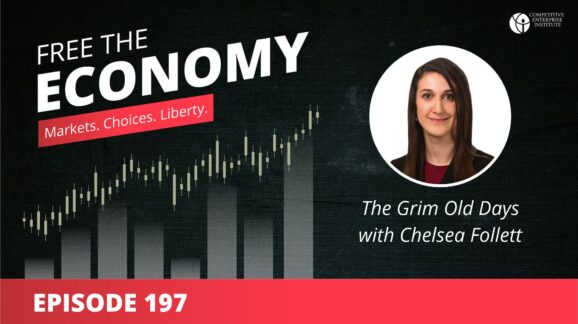
Free the Economy podcast: The Grim Old Days with Chelsea Follett
In this week’s episode we cover global energy security, a new lawsuit against Section 338 tariffs, and fresh talent in…

News Release
CEI challenges Wisconsin’s treatment of election prediction-market contracts
The Competitive Enterprise Institute has filed a federal lawsuit on behalf of Wisconsin voter and Green Bay radio host Joseph Giganti, Sr., challenging the…
Search Posts
Blog
Free the Economy podcast: Total boomer luxury communism with Russ Greene
In this week’s episode we talk about Trump’s 10 percent credit card interest proposal (and the dangers of populist economics in…
Blog
The 2026 Unconstitutionality Index: 18 rules for every law
Article I of the Constitution vests enumerated legislative powers solely with Congress. In practice, however, administrative agencies do most of the lawmaking. Congress enacts…
Blog
The week in regulations: Taconite and label shapes
President Trump deposed Venezuelan dictator Nicolas Maduro and embarked on a nation-building project. ICE agents killed an American citizen in Minnesota. Agencies issued new…
Blog
Free the Economy podcast: FDR’s political legacy with David Beito
In this week’s episode we talk about communist housing policy in New York City, the best economics and history books to…
News Release
Report urges yearly sunset for all government regulations following Idaho success
A new Competitive Enterprise Institute report urges an annual sunset date for all government regulations, offering a case study on this reform already implemented…
Blog
New CEI study: Zero-based regulations
A new CEI study by Alex Adams looks at a regulatory reform approach that succeeded in Idaho: zero-based regulation. The idea is similar…
Staff & Scholars

Clyde Wayne Crews
Fred L. Smith Fellow in Regulatory Studies
- Business and Government
- Consumer Freedom
- Deregulation

Ryan Young
Senior Economist and Director of Publications
- Antitrust
- Business and Government
- Regulatory Reform

Fred L. Smith, Jr.
Founder; Chairman Emeritus
- Automobiles and Roads
- Aviation
- Business and Government

Sam Kazman
Counsel Emeritus
- Antitrust
- Automobiles and Roads
- Banking and Finance

Marlo Lewis, Jr.
Senior Fellow
- Climate
- Energy
- Energy and Environment