There are two main areas in which Congress can enact meaningful reform. The first is to rein in regulatory guidance documents, which we refer to as “regulatory dark matter,” whereby agencies regulate through Federal Register notices, guidance documents, and other means outside standard rulemaking procedure. The second is to enact a series of reforms to increase agency transparency and accountability of all regulation and guidance. These include annual regulatory report cards for rulemaking agencies and regulatory cost estimates from the Office of Management and Budget for more than just a small subset of rules.
In 2019, President Trump signed two executive orders aimed at stopping the practice of agencies using guidance documents to effectively implement policy without going through the legally required notice and comment process.
Featured Posts
Blog
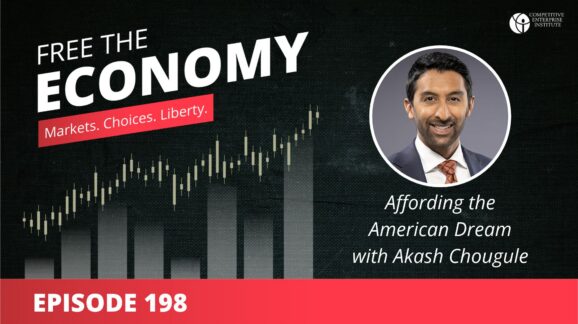
Free the Economy podcast: Affording the American Dream with Akash Chougule
In this week’s episode we cover what’s making housing so expensive, the common good of the Constitution, and more jawboning…

Blog
The week in regulations: Mailing live animals and crash test dummy comments
A Trump administration envoy to Russia called Vladimir Putin a humanitarian. The Justice Department announced it will sue if the Republican Senate candidate in…
Blog
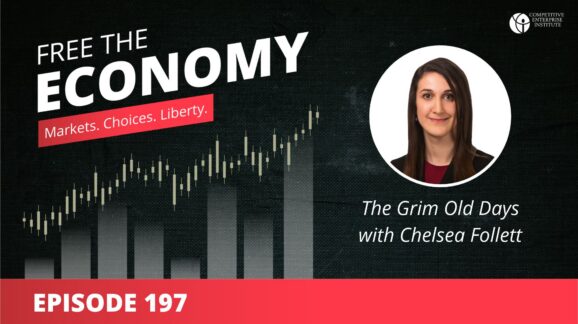
Free the Economy podcast: The Grim Old Days with Chelsea Follett
In this week’s episode we cover global energy security, a new lawsuit against Section 338 tariffs, and fresh talent in…
Search Posts
Blog
New York’s “BitLicense” on Trial
A lawsuit again New York's “BitLicense” regulation is challenging the state's targeting of Bitcoin-based businesses.
Blog
Making the Case for a Free Market in Space
For commercialized space (and alas, for other sectors) we need a regulatory heatshield, a HOT Act (“Hands Off Technology”).
Blog
This Week in Ridiculous Regulations
As the regulatory freeze marches on, most new regulations coming out are garden-variety FAA airworthiness directives and Coast Guard drawbridge and safety zone rules.
Washington Post
The administrative state is huge, and it’s only getting bigger
The Washington Post highlights Wayne Crews’s research on the federal regulatory state. Just what White House chief strategist Stephen K. Bannon meant when…
Blog
A Congressional Review Act ‘Game-Changer’ Steps into the Spotlight
A new interpretation of the Congressional Review Act would allow Congress to quickly repeal federal regulations from as far back as the mid-1990s.
Study
Time to End the Madness around March Madness
View Full Document as PDF This March, millions of Americans will join friends, relatives, and coworkers in the annual rite of betting…
Staff & Scholars

Clyde Wayne Crews
Fred L. Smith Fellow in Regulatory Studies
- Business and Government
- Consumer Freedom
- Deregulation

Ryan Young
Senior Economist and Director of Publications
- Antitrust
- Business and Government
- Regulatory Reform

Fred L. Smith, Jr.
Founder; Chairman Emeritus
- Automobiles and Roads
- Aviation
- Business and Government

Sam Kazman
Counsel Emeritus
- Antitrust
- Automobiles and Roads
- Banking and Finance

Marlo Lewis, Jr.
Senior Fellow
- Climate
- Energy
- Energy and Environment