There are two main areas in which Congress can enact meaningful reform. The first is to rein in regulatory guidance documents, which we refer to as “regulatory dark matter,” whereby agencies regulate through Federal Register notices, guidance documents, and other means outside standard rulemaking procedure. The second is to enact a series of reforms to increase agency transparency and accountability of all regulation and guidance. These include annual regulatory report cards for rulemaking agencies and regulatory cost estimates from the Office of Management and Budget for more than just a small subset of rules.
In 2019, President Trump signed two executive orders aimed at stopping the practice of agencies using guidance documents to effectively implement policy without going through the legally required notice and comment process.
Featured Posts

Blog
The regulatory costs we still aren’t counting
Several years ago, I assembled a “Costberg” working paper surveying the largely impenetrable and undisclosed costs of regulation. The project grew out of…

Blog
The week in regulations: Voting by mail and $100,000 visas
The number of new final regulations in 2026 topped the 2,000 mark. President Trump escalated his trade war against Canada and issued an executive…
Blog
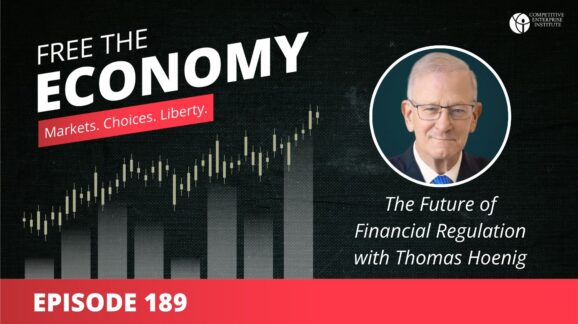
Free the Economy podcast: The future of financial regulation with Thomas Hoenig
In this week’s episode we cover the status of occupational licensing in the 50 states, the coming crack-up over entitlement spending,…
Search Posts
One News Now
Is a clean slate ahead?
One News Now speaks with Ryan Young on how the Trump administration can lead regulatory reform. With the incoming Trump administration, many people…
Blog
Federal Register Hits 4th Highest Ever Count, Will Top 80,000 Pages Tuesday
Yesterday the Federal Register hit its fifth-highest count of 79,380 pages.
Sun-Sentinel
Five ways President Trump could jump-start economic growth
Too many Americans feel left behind by the weak economic growth and diminished job opportunities under the Obama administration. Too many people have seen their…
Blog
Free Market Opportunities for the Trump Administration
This election has given us one more demonstration that knowledge is dispersed and “trusting the experts” to know the future is foolish. The unexpected success…
Blog
Federal Register Hits 5th Highest Ever Count, Days from All-Time High
We’ve documented here throughout November that the Federal Register is steamrolling through 2016, Obama’s final year.
Forbes
How President-Elect Donald Trump Can Fast-Track Deregulation And Wealth Creation
On this, the day after the election of Donald J. Trump as the 45th president (yes, he has already updated his Twitter profile), President…
Staff & Scholars

Clyde Wayne Crews
Fred L. Smith Fellow in Regulatory Studies
- Business and Government
- Consumer Freedom
- Deregulation

Ryan Young
Senior Economist and Director of Publications
- Antitrust
- Business and Government
- Regulatory Reform

Fred L. Smith, Jr.
Founder; Chairman Emeritus
- Automobiles and Roads
- Aviation
- Business and Government

Sam Kazman
Counsel Emeritus
- Antitrust
- Automobiles and Roads
- Banking and Finance

Marlo Lewis, Jr.
Senior Fellow
- Climate
- Energy
- Energy and Environment