There are two main areas in which Congress can enact meaningful reform. The first is to rein in regulatory guidance documents, which we refer to as “regulatory dark matter,” whereby agencies regulate through Federal Register notices, guidance documents, and other means outside standard rulemaking procedure. The second is to enact a series of reforms to increase agency transparency and accountability of all regulation and guidance. These include annual regulatory report cards for rulemaking agencies and regulatory cost estimates from the Office of Management and Budget for more than just a small subset of rules.
In 2019, President Trump signed two executive orders aimed at stopping the practice of agencies using guidance documents to effectively implement policy without going through the legally required notice and comment process.
Featured Posts
Blog
Here’s how one-in, ten-out is successfully cutting rules — but not draining the swamp
It’s October already, and while there’s no real fiscal year for federal regulation, the September 30 closing of the 2026 budgetary fiscal year marks…

Blog
The week in regulations: Drug prices and inedible almonds
Sen. Eric Schmitt (R-MO) learned the difference between the Atlanta Hawks and the Iowa Hawkeyes. President Trump rolled back some China tariffs and published…
Blog
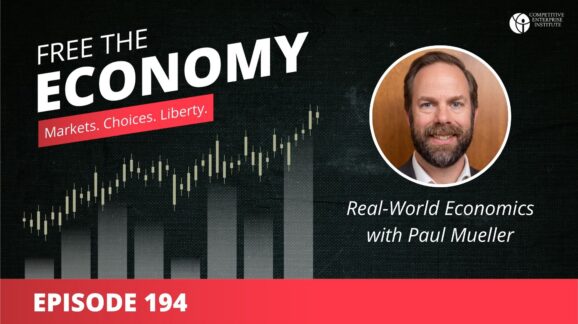
Free the Economy podcast: Real-world economics with Paul Mueller
In this week’s episode we cover spiraling health care costs, reforming state-level regulations, and how to keep asset managers accountable…
Search Posts
Blog
Washington Examiner: “Congress: Obamacare To Boost Premiums To $7,186 — A Year”
Paul Bedard of the Washington Examiner reports on massive premium increases due to Obamacare: Health insurance companies, facing new and costly rules and…
Blog
Obama’s Immigration Bill Forces Employers To Pay Illegal Immigrants
Nothing in this headline is a typo or an exaggeration. President Obama’s recently-leaked Comprehensive Immigration Reform Act of 2013 would require employers to employ…
Blog
Costco CEO Favors Minimum Wage Hike
An overlooked argument in the minimum wage debate is that a high minimum wage gives big businesses an artificial competitive advantage over their smaller competitors.
Blog
Making The FCC More Transparent
If there's one thing the regulatory state could use more of, it's transparency. In today's ?Washington Times?, I shine a little light on the FCC:…
Washington Times
Who Regulates the Regulators?
In Beltway terms, the Federal Communications Commission’s $350 million budget request for 2013 is practically a rounding error. Yet it costs the American people a…
Blog
Lessons On Regulatory Reform: Texas
Overview of Regulatory Reform in Texas In 1977, the Texas legislature passed the Texas Sunset Act which would forever improve state government.
Staff & Scholars

Clyde Wayne Crews
Fred L. Smith Fellow in Regulatory Studies
- Business and Government
- Consumer Freedom
- Deregulation

Ryan Young
Senior Economist and Director of Publications
- Antitrust
- Business and Government
- Regulatory Reform

Fred L. Smith, Jr.
Founder; Chairman Emeritus
- Automobiles and Roads
- Aviation
- Business and Government

Sam Kazman
Counsel Emeritus
- Antitrust
- Automobiles and Roads
- Banking and Finance

Marlo Lewis, Jr.
Senior Fellow
- Climate
- Energy
- Energy and Environment