There are two main areas in which Congress can enact meaningful reform. The first is to rein in regulatory guidance documents, which we refer to as “regulatory dark matter,” whereby agencies regulate through Federal Register notices, guidance documents, and other means outside standard rulemaking procedure. The second is to enact a series of reforms to increase agency transparency and accountability of all regulation and guidance. These include annual regulatory report cards for rulemaking agencies and regulatory cost estimates from the Office of Management and Budget for more than just a small subset of rules.
In 2019, President Trump signed two executive orders aimed at stopping the practice of agencies using guidance documents to effectively implement policy without going through the legally required notice and comment process.
Featured Posts
Blog
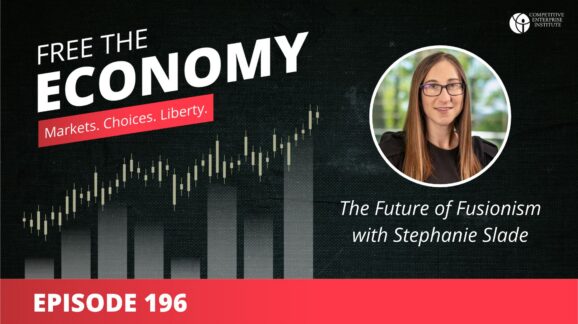
Free the Economy podcast: The future of Fusionism with Stephanie Slade
In this week’s episode we cover federal vs. state rules for prediction markets, the difference between Detroit and Pittsburgh, and a…

Blog
The week in regulations: Mariner training and Maryland trash
The federal government’s annual budget deficit hit $2 trillion. Defense Secretary Pete Hegseth pledged to livestream an execution. Thirty-year Treasury bond interest rates continued…
Blog
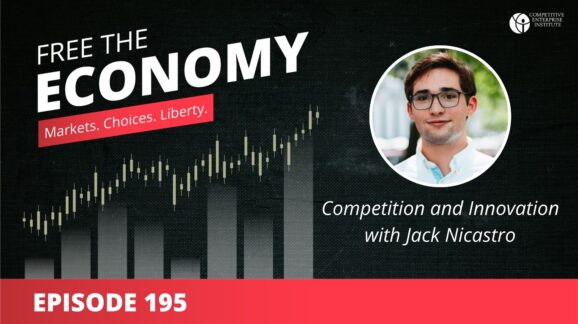
Free the Economy podcast: Competition and innovation with Jack Nicastro
In this week’s episode we cover the case of Suncor v. Boulder County at the Supreme Court, the problems with the Los…
Search Posts
Blog
Regulation And Government “Science” Cost Us More Than Dollars
Today, the Independent Women's Forum blog highlights a new NERA Economic Consulting study (produced for Manufacturers Alliance for Productivity and Innovation) on the costs…
Blog
CEI’s Battered Business Bureau: The Week In Regulation
65 new rules, from offshore drilling to closed captioning.
Blog
Regulation Roundup
Fines for inaccurate weather forecasts, illegal chocolate egg smuggling, plus more.
Blog
West Nile Outbreak Warrants Pest Control — Pesticide Spraying Included
This year, Texas is experiencing its worst outbreak of the mosquito-transmitted West Nile virus ever. Fortunately, most people who get it won't suffer…
Blog
Regulation And The Setting Sun
Agencies are well-equipped for passing regulations, but not for repealing them. This becomes a problem as the years march on, and dusty old rules that…
Blog
California’s Unconstitutional Proposition 37
Writing in the Daily Caller, legal commentator Walter Olson says that California's Proposition 37 is bad policy that will only enrich opportunistic lawyers:…
Staff & Scholars

Clyde Wayne Crews
Fred L. Smith Fellow in Regulatory Studies
- Business and Government
- Consumer Freedom
- Deregulation

Ryan Young
Senior Economist and Director of Publications
- Antitrust
- Business and Government
- Regulatory Reform

Fred L. Smith, Jr.
Founder; Chairman Emeritus
- Automobiles and Roads
- Aviation
- Business and Government

Sam Kazman
Counsel Emeritus
- Antitrust
- Automobiles and Roads
- Banking and Finance

Marlo Lewis, Jr.
Senior Fellow
- Climate
- Energy
- Energy and Environment