There are two main areas in which Congress can enact meaningful reform. The first is to rein in regulatory guidance documents, which we refer to as “regulatory dark matter,” whereby agencies regulate through Federal Register notices, guidance documents, and other means outside standard rulemaking procedure. The second is to enact a series of reforms to increase agency transparency and accountability of all regulation and guidance. These include annual regulatory report cards for rulemaking agencies and regulatory cost estimates from the Office of Management and Budget for more than just a small subset of rules.
In 2019, President Trump signed two executive orders aimed at stopping the practice of agencies using guidance documents to effectively implement policy without going through the legally required notice and comment process.
Featured Posts
Blog
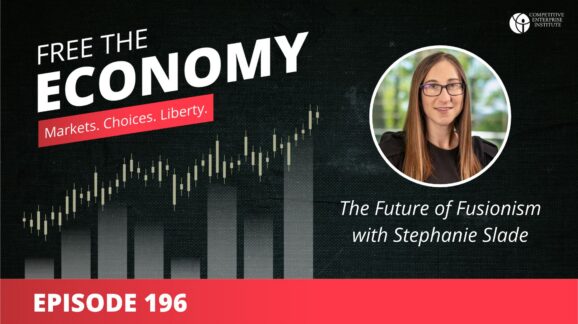
Free the Economy podcast: The future of Fusionism with Stephanie Slade
In this week’s episode we cover federal vs. state rules for prediction markets, the difference between Detroit and Pittsburgh, and a…

Blog
The week in regulations: Mariner training and Maryland trash
The federal government’s annual budget deficit hit $2 trillion. Defense Secretary Pete Hegseth pledged to livestream an execution. Thirty-year Treasury bond interest rates continued…
Blog
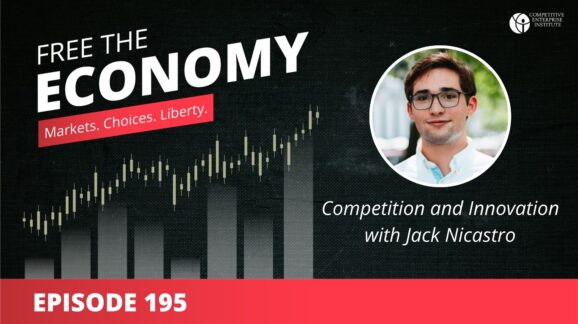
Free the Economy podcast: Competition and innovation with Jack Nicastro
In this week’s episode we cover the case of Suncor v. Boulder County at the Supreme Court, the problems with the Los…
Search Posts
Blog
Unruly Lead Paint Rule
The U.S. House of Representatives Committee on Oversight and Government Reform recently released an interesting report on regulatory impediments to job creation. Among the…
Blog
CEI’s Battered Business Bureau: The Week In Regulation
86 new rules last week, covering everything from Florida tomatoes to tug boat races.
Blog
Amendment to Cybersecurity Act Would Deter Federal Government Privacy Abuses
[caption id="attachment_58589" align="alignright" width="150"] Lord Acton's beard absolutely knows that power corrupts[/caption] In the ongoing debate over the Senate’s Cybersecurity Act of 2012 (…
Blog
New Regulations Threaten To Wipe Out Community Banks
The new Basel III capital requirement regulations are supposed to strengthen the international financial system, with their avowed effect being to: improve the banking…
Blog
Bloomberg Soda Ban Blocks Sale of Low-Calorie Drinks
As I’ve written before, Mayor Bloomberg’s big-soda ban is ill-conceived, unjust, invasive, and useless, among other things. As Seth Goldman, the CEO of Honest…
Blog
CEI Podcast for July 24, 2012: Unfunded Mandate Reform
Research Associate David Deerson explains why past efforts to rein in unfunded mandates failed, and why new legislation that Congress is set to vote on…
Staff & Scholars

Clyde Wayne Crews
Fred L. Smith Fellow in Regulatory Studies
- Business and Government
- Consumer Freedom
- Deregulation

Ryan Young
Senior Economist and Director of Publications
- Antitrust
- Business and Government
- Regulatory Reform

Fred L. Smith, Jr.
Founder; Chairman Emeritus
- Automobiles and Roads
- Aviation
- Business and Government

Sam Kazman
Counsel Emeritus
- Antitrust
- Automobiles and Roads
- Banking and Finance

Marlo Lewis, Jr.
Senior Fellow
- Climate
- Energy
- Energy and Environment