There are two main areas in which Congress can enact meaningful reform. The first is to rein in regulatory guidance documents, which we refer to as “regulatory dark matter,” whereby agencies regulate through Federal Register notices, guidance documents, and other means outside standard rulemaking procedure. The second is to enact a series of reforms to increase agency transparency and accountability of all regulation and guidance. These include annual regulatory report cards for rulemaking agencies and regulatory cost estimates from the Office of Management and Budget for more than just a small subset of rules.
In 2019, President Trump signed two executive orders aimed at stopping the practice of agencies using guidance documents to effectively implement policy without going through the legally required notice and comment process.
Featured Posts
Blog
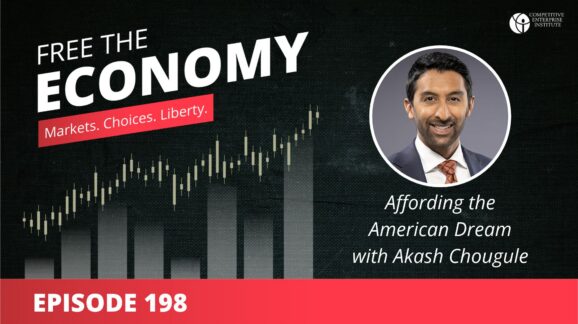
Free the Economy podcast: Affording the American Dream with Akash Chougule
In this week’s episode we cover what’s making housing so expensive, the common good of the Constitution, and more jawboning…

Blog
The week in regulations: Mailing live animals and crash test dummy comments
A Trump administration envoy to Russia called Vladimir Putin a humanitarian. The Justice Department announced it will sue if the Republican Senate candidate in…
Blog
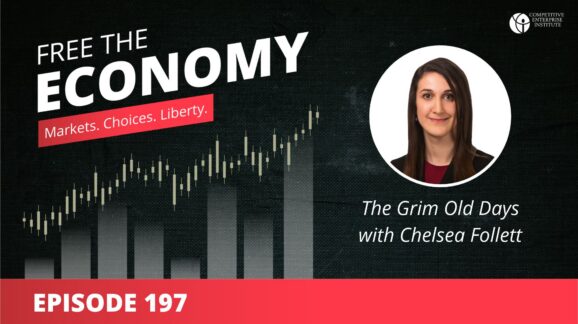
Free the Economy podcast: The Grim Old Days with Chelsea Follett
In this week’s episode we cover global energy security, a new lawsuit against Section 338 tariffs, and fresh talent in…
Search Posts
Blog
Senate Vote Today on FDA, Supplements, and Energy Drinks
Today, the Senate will vote to reauthorize and modify the Food and Drug Administration’s (FDA) prescription drug and medical device user-fee program (…
Blog
MWAA: A Government-Authorized Fiefdom
Should Congress’s power extend to creating taxpayer-funded government entities that are free from state and federal laws concerning ethics, transparency, and disclosure? No, but it…
Blog
Is the Obama Administration Anti-Business?
If President Obama has found it hard in responding to critics who accuse him of being “anti-business,” he really only has his own administration’s policies…
Blog
Facebook’s Fall and the Post-Sarbanes-Oxley “Cheers IPOs”
How Over-Regulation is Robbing Investors of Wealth from Smaller IPOs When I wrote pieces here and at the Daily Caller late last week injecting a…
Blog
H.R. 1909 — Unfinished Free-Market Business to Lift Barriers to Lending
They said it couldn't be done. That Congress couldn't pass a bipartisan bill in an election year to help the economy. Particularly one that lessens…
Blog
Techno-Phobic California Politicians “NHTSA” Google’s Driverless Car
Last week, I wrote about Google’s amazing new self-driving car, which CEI General Counsel Sam Kazman and I had the opportunity to test-ride in…
Staff & Scholars

Clyde Wayne Crews
Fred L. Smith Fellow in Regulatory Studies
- Business and Government
- Consumer Freedom
- Deregulation

Ryan Young
Senior Economist and Director of Publications
- Antitrust
- Business and Government
- Regulatory Reform
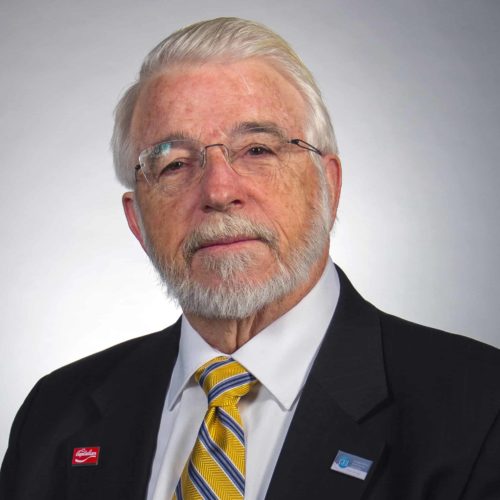
Fred L. Smith, Jr.
Founder; Chairman Emeritus
- Automobiles and Roads
- Aviation
- Business and Government

Sam Kazman
Counsel Emeritus
- Antitrust
- Automobiles and Roads
- Banking and Finance

Marlo Lewis, Jr.
Senior Fellow
- Climate
- Energy
- Energy and Environment