There are two main areas in which Congress can enact meaningful reform. The first is to rein in regulatory guidance documents, which we refer to as “regulatory dark matter,” whereby agencies regulate through Federal Register notices, guidance documents, and other means outside standard rulemaking procedure. The second is to enact a series of reforms to increase agency transparency and accountability of all regulation and guidance. These include annual regulatory report cards for rulemaking agencies and regulatory cost estimates from the Office of Management and Budget for more than just a small subset of rules.
In 2019, President Trump signed two executive orders aimed at stopping the practice of agencies using guidance documents to effectively implement policy without going through the legally required notice and comment process.
Featured Posts
Blog
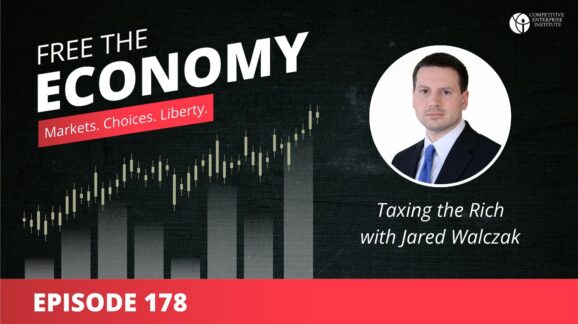
Free the Economy podcast: Taxing the rich with Jared Walczak
In this week’s episode we cover America’s low-income churn, reforms to civil asset forfeiture, changes to vehicle emissions testing, a shout…

Blog
The week in regulations: Bone void filler and halibut action
May’s job numbers were strong for the third month in a row, though job growth since Liberation Day remains under 100,000, for a labor force…
Blog
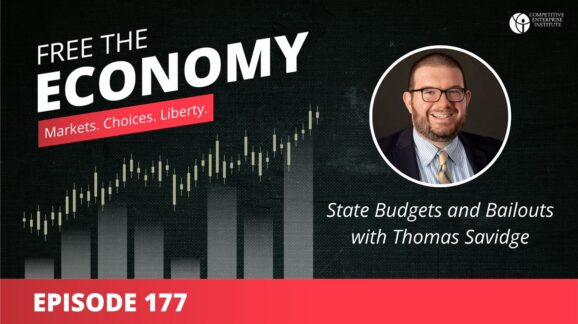
Free the Economy podcast: State budgets and bailouts with Thomas Savidge
In this week’s episode we cover promising new classroom technology, increasing productivity (and avoiding layoffs) with AI, and the repeal of the…
Search Posts
Blog
Regulation, Jobs, and Creating Wealth
Lobbying, politicking, and special favors are part and parcel of the regulatory process. The result is that many regulation-created jobs are not created on the…
Blog
Lame Duck Sen. Herb Kohl Continues Quixotic Battle Against Rail Carriers in Senate Highway Bill
Sen. Herb Kohl (D-Wisc.), who will not be seeking reelection this November, decided that he would make one last-ditch attempt to get his awful piece…
Blog
Misconceptions about the Obama Administration’s Contraception Mandate for Religious Employers
There are a number of misconceptions about the Obama administration’s recent rule requiring employers’ health insurance policies (including those of religious schools and hospitals) to…
Blog
Regulation of the Day 209: Playing on the Beach
A recent Los Angeles County ordinance made it illegal to throw balls and even Frisbees on the city’s beaches.
Blog
Global Biotech Crop Acreage Up, Plus Clayton Yeutter on the Miracle of American Agriculture
Global planting of biotech crops grew 8 percent last year, to a record high of 395 million total acres, according to…
Blog
Government Thwarts Cancer Cures and Production of Life-Saving Drugs
The federal government thwarted a promising cancer treatment. The Food and Drug Administration (FDA) put Dr. Stanislaw Burzynski on trial twice, saying “it did…
Staff & Scholars

Clyde Wayne Crews
Fred L. Smith Fellow in Regulatory Studies
- Business and Government
- Consumer Freedom
- Deregulation

Ryan Young
Senior Economist and Director of Publications
- Antitrust
- Business and Government
- Regulatory Reform
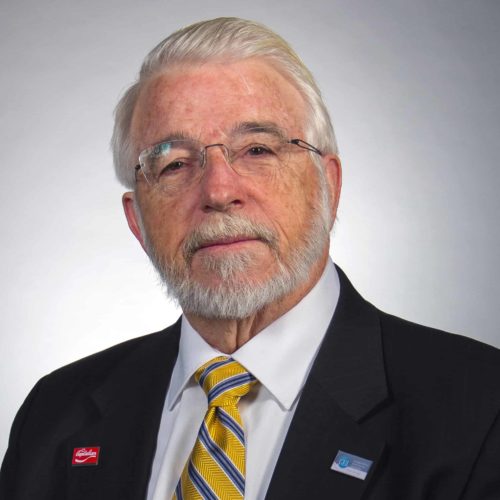
Fred L. Smith, Jr.
Founder; Chairman Emeritus
- Automobiles and Roads
- Aviation
- Business and Government

Sam Kazman
Counsel Emeritus
- Antitrust
- Automobiles and Roads
- Banking and Finance

Marlo Lewis, Jr.
Senior Fellow
- Climate
- Energy
- Energy and Environment