There are two main areas in which Congress can enact meaningful reform. The first is to rein in regulatory guidance documents, which we refer to as “regulatory dark matter,” whereby agencies regulate through Federal Register notices, guidance documents, and other means outside standard rulemaking procedure. The second is to enact a series of reforms to increase agency transparency and accountability of all regulation and guidance. These include annual regulatory report cards for rulemaking agencies and regulatory cost estimates from the Office of Management and Budget for more than just a small subset of rules.
In 2019, President Trump signed two executive orders aimed at stopping the practice of agencies using guidance documents to effectively implement policy without going through the legally required notice and comment process.
Featured Posts

National Review
From Munitions Shortage to Ebola, Dodd–Frank Minerals Measure Makes Things Worse
A scan of news headlines warns readers of two seemingly unrelated dangers around the globe. One is a potential shortage of missiles, interceptors, and…

Blog
The week in regulations: School libraries and sport pilots
The Federal Reserve raised interest rates. Congress passed a Russia sanctions bill that gives President Trump more tariff authority. Agencies issued new regulations ranging…
Blog
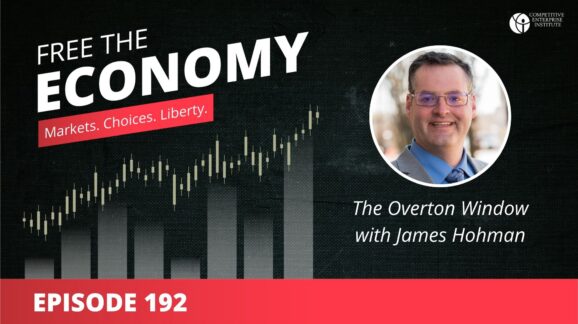
Free the Economy podcast: The Overton Window with James Hohman
In this week’s episode we cover Treasury yields, oil prices, US-China-Taiwan security policy, and Trump’s $5,000 dividend checks. Our…
Search Posts
Blog
New bill would increase spending transparency, more regulatory transparency needed
Galileo may not have uttered the famous words, “Measure what is measurable, and make measurable what is not so,” but the sentiment behind that…
Blog
This week in ridiculous regulations: airline fees and greenhouse gas reporting
The Federal Register grew at nearly triple its usual pace last week. It is on pace for its first-ever 100,000-page year. GDP growth slowed…
The Center Square
Study: Mixed record on permitting reform offers some hope
CEI’s James Broughel provided comments to The Center Square about a study he authored: “Pennsylvania’s a state where energy is very important…
Forbes
Libertarian Victory: You Mean We Can Shut Down Government Without Even Passing A Law?
It is happening again. Congress will enact another bloated, pork-laden and largely unread omnibus spending bill to complete formal appropriations for the 2024 fiscal…
Blog
CEI briefs the public on the need for administrative law court reform
The Competitive Enterprise Institute recently hosted our first Capitol Hill event of the year, urging Congress to propose administrative law court (ALC) reform.
Forbes
The Quiet Threat To Science Posed By ‘Indigenous Knowledge’
“Indigenous knowledge” is in the spotlight thanks to President Biden, who issued an executive order within days of taking office, aimed at…
Staff & Scholars

Clyde Wayne Crews
Fred L. Smith Fellow in Regulatory Studies
- Business and Government
- Consumer Freedom
- Deregulation

Ryan Young
Senior Economist and Director of Publications
- Antitrust
- Business and Government
- Regulatory Reform

Fred L. Smith, Jr.
Founder; Chairman Emeritus
- Automobiles and Roads
- Aviation
- Business and Government

Sam Kazman
Counsel Emeritus
- Antitrust
- Automobiles and Roads
- Banking and Finance

Marlo Lewis, Jr.
Senior Fellow
- Climate
- Energy
- Energy and Environment