There are two main areas in which Congress can enact meaningful reform. The first is to rein in regulatory guidance documents, which we refer to as “regulatory dark matter,” whereby agencies regulate through Federal Register notices, guidance documents, and other means outside standard rulemaking procedure. The second is to enact a series of reforms to increase agency transparency and accountability of all regulation and guidance. These include annual regulatory report cards for rulemaking agencies and regulatory cost estimates from the Office of Management and Budget for more than just a small subset of rules.
In 2019, President Trump signed two executive orders aimed at stopping the practice of agencies using guidance documents to effectively implement policy without going through the legally required notice and comment process.
Featured Posts

Blog
The week in regulations: Cyber sanctions and tinnitus relief devices
Inflation is now more than double the Federal Reserve’s target. The Iran war heated up again. Agencies issued new regulations ranging from vending stands to…
Blog
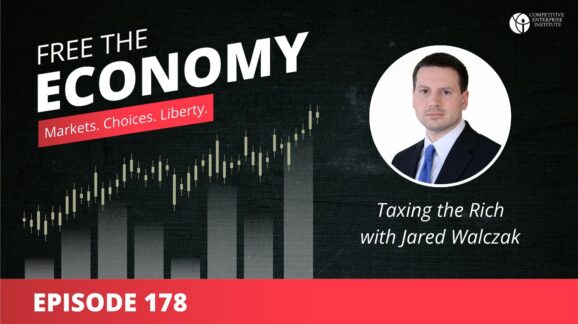
Free the Economy podcast: Taxing the rich with Jared Walczak
In this week’s episode we cover America’s low-income churn, reforms to civil asset forfeiture, changes to vehicle emissions testing, a shout…

Blog
The week in regulations: Bone void filler and halibut action
May’s job numbers were strong for the third month in a row, though job growth since Liberation Day remains under 100,000, for a labor force…
Search Posts
Citation
A Plan Better than Obama’s to Create Jobs
News Release
CEI Presents Alternative to American Jobs Act
Washington, D.C., September 9, 2011—Last night, President Obama presented Congress with a $447 billion “American Jobs Act.” The high price tag covers yet another…
Blog
Obama’s Costly, Unaffordable, Harmful New Stimulus: The “American Jobs Act”
President Obama wants Congress to pass a $447 billion proposal called the "American Jobs Act," a costly set of recycled stimulus plans that contains no new ideas…
Blog
My Fantasy Obama Jobs Speech
The following is my fantasy speech on jobs from Barack Obama. He looks at CEI's websites, realizes his big-government approach has been all wrong, but…
Blog
The “Overhead Smash” Of ITAR
Over at Beltway Confidential today, Tim Carney asks if one of the unintended (or perhaps not-so-unintended) consequences of Dodd-Frank will be to…
Op-Eds
Jobs Speech Won’t Do the Job
Presidential candidate Mitt Romney released his own jobs agenda this week in anticipation of President Obama’s Thursday address to Congress. The most important idea is…
Staff & Scholars

Clyde Wayne Crews
Fred L. Smith Fellow in Regulatory Studies
- Business and Government
- Consumer Freedom
- Deregulation

Ryan Young
Senior Economist and Director of Publications
- Antitrust
- Business and Government
- Regulatory Reform

Fred L. Smith, Jr.
Founder; Chairman Emeritus
- Automobiles and Roads
- Aviation
- Business and Government

Sam Kazman
Counsel Emeritus
- Antitrust
- Automobiles and Roads
- Banking and Finance

Marlo Lewis, Jr.
Senior Fellow
- Climate
- Energy
- Energy and Environment