There are two main areas in which Congress can enact meaningful reform. The first is to rein in regulatory guidance documents, which we refer to as “regulatory dark matter,” whereby agencies regulate through Federal Register notices, guidance documents, and other means outside standard rulemaking procedure. The second is to enact a series of reforms to increase agency transparency and accountability of all regulation and guidance. These include annual regulatory report cards for rulemaking agencies and regulatory cost estimates from the Office of Management and Budget for more than just a small subset of rules.
In 2019, President Trump signed two executive orders aimed at stopping the practice of agencies using guidance documents to effectively implement policy without going through the legally required notice and comment process.
Featured Posts

Blog
Free the Economy podcast: The culture of free enterprise with Larry Reed
In this week’s episode we cover social mobility around the world, new inflation numbers, and the rise of robotaxis. Our…

Blog
The week in regulations: Deepwater port licenses and nuclear credit ratings
Voters made known their feelings about tariffs, gas prices, and corruption. The FAA announced that it still uses floppy disks for air traffic control…
Blog
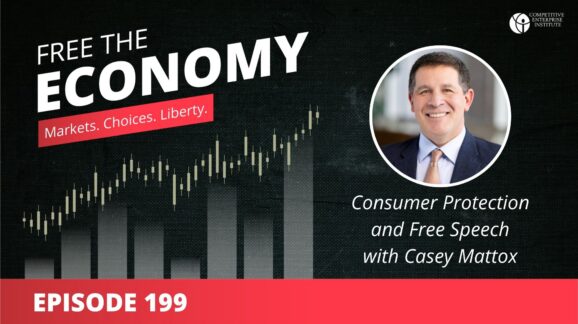
Free the Economy podcast: Consumer protection and free speech with Casey Mattox
In this week’s episode we cover the debt load of state and local governments, advances in nuclear waste storage, and hope…
Search Posts
Study
End Bailouts and Government Ownership in Fannie/Freddie, GM, AIG, and Other Entities
Liberate to Stimulate Index On October 3, 2010, the federal government’s authority under the Troubled Asset Relief Program (TARP) officially expired. Rushed…
Study
Recognize the Elitist Nature of Anti-Sprawl Measures
Liberate to Stimulate Index For the greater part of the last century, many people have sought the American Dream by raising their…
Study
Affirm the Role of Property Rights in Water Rights Policies
Liberate to Stimulate Index Battles over limited water supplies in the United States and around the world have long produced conflicts and…
Study
Reject the Precautionary Principle, a Threat to Technological Progress
Liberate to Stimulate Index Increasingly, governments and environmental activists are demanding that producers of both new and old technologies prove that their…
Study
Deregulate to Stimulate
Liberate to Stimulate Index When it comes to our economy, how did we get into this mess and how do we get…
Study
Reduce Burdensome Regulation of Medicines and Medical Devices
Liberate to Stimulate Index Over the past century, American consumers have benefited from thousands of new pharmaceuticals and medical devices to help…
Staff & Scholars

Clyde Wayne Crews
Fred L. Smith Fellow in Regulatory Studies
- Business and Government
- Consumer Freedom
- Deregulation

Ryan Young
Senior Economist and Director of Publications
- Antitrust
- Business and Government
- Regulatory Reform

Fred L. Smith, Jr.
Founder; Chairman Emeritus
- Automobiles and Roads
- Aviation
- Business and Government

Sam Kazman
Counsel Emeritus
- Antitrust
- Automobiles and Roads
- Banking and Finance

Marlo Lewis, Jr.
Senior Fellow
- Climate
- Energy
- Energy and Environment