There are two main areas in which Congress can enact meaningful reform. The first is to rein in regulatory guidance documents, which we refer to as “regulatory dark matter,” whereby agencies regulate through Federal Register notices, guidance documents, and other means outside standard rulemaking procedure. The second is to enact a series of reforms to increase agency transparency and accountability of all regulation and guidance. These include annual regulatory report cards for rulemaking agencies and regulatory cost estimates from the Office of Management and Budget for more than just a small subset of rules.
In 2019, President Trump signed two executive orders aimed at stopping the practice of agencies using guidance documents to effectively implement policy without going through the legally required notice and comment process.
Featured Posts
Blog
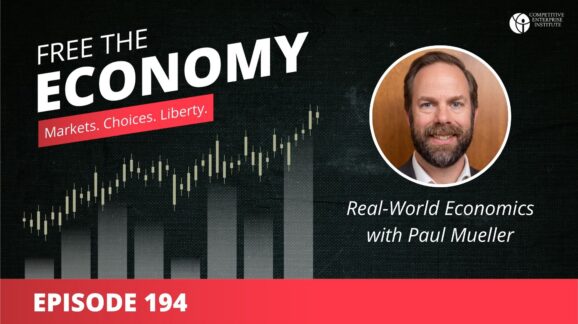
Free the Economy podcast: Real-world economics with Paul Mueller
In this week’s episode we cover spiraling health care costs, reforming state-level regulations, and how to keep asset managers accountable…

Blog
The week in regulations: Safe explosives and baker’s yeast
President Trump proposed an export ban on diesel fuel. Mortgage rates topped 7 percent. Agencies issued new regulations ranging from bank mergers to window…
Blog
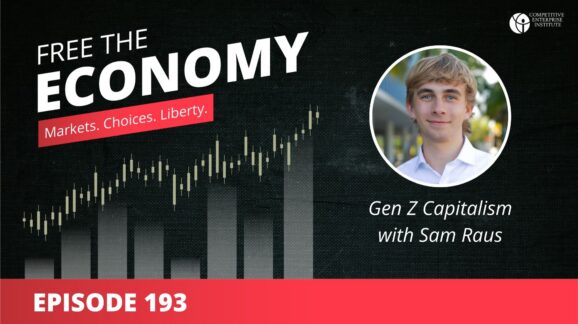
Free the Economy podcast: Gen Z capitalism with Sam Raus
In this week’s episode we cover how data centers power our lives, how modern technology is fueling family togetherness, and the…
Search Posts
Blog
Congress should block Biden’s harmful environmental regulations with power of the purse
Congress shouldn’t sit back and watch as the Biden administration proposes and finalizes costly and harmful energy and environmental regulation. Instead, it needs to…
Blog
Do more deregulation in debt limit deal
The internal GOP debate this week is over lower-case “d” default if a June 6 deadline for an increase in the debt…
Blog
Free the Economy podcast: Transparency for government, privacy for people with Brian Hawkins
In this week’s episode we talk discuss Tim Carney’s view on why big government is good for big business, Stone Washington on…
Blog
Let’s get this huge ‘hidden tax’ of regulation out into the open
Smack dab in the middle of contentious debt limit negotiations, the House Budget Committee held another in its series of hearings on American economic…
Testimony
Testimony of Wayne Crews: Removing the Burdens of Government Overreach
I appreciate the opportunity to discuss issues surrounding Removing the Burdens of Government Overreach, and I thank Chairman Arrington, Ranking Member Boyle, and Members…
Blog
A remembrance: C. Boyden Gray, 1943-2023
We mourn the passing of C. Boyden Gray. He was a man of his family, the law, and his country. Boyden served in…
Staff & Scholars

Clyde Wayne Crews
Fred L. Smith Fellow in Regulatory Studies
- Business and Government
- Consumer Freedom
- Deregulation

Ryan Young
Senior Economist and Director of Publications
- Antitrust
- Business and Government
- Regulatory Reform
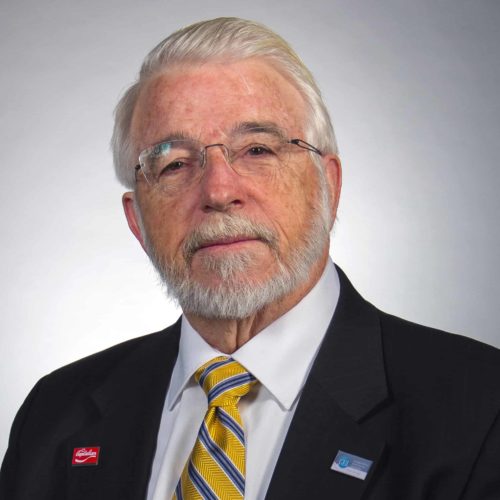
Fred L. Smith, Jr.
Founder; Chairman Emeritus
- Automobiles and Roads
- Aviation
- Business and Government

Sam Kazman
Counsel Emeritus
- Antitrust
- Automobiles and Roads
- Banking and Finance

Marlo Lewis, Jr.
Senior Fellow
- Climate
- Energy
- Energy and Environment