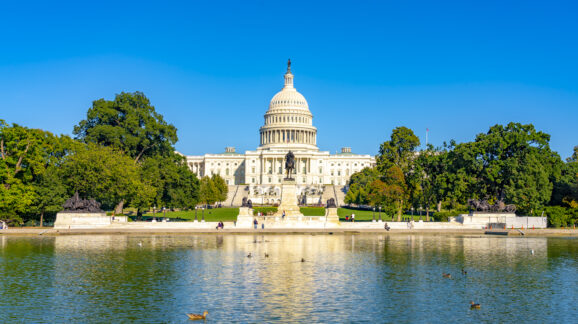
There are two main areas in which Congress can enact meaningful reform. The first is to rein in regulatory guidance documents, which we refer to as “regulatory dark matter,” whereby agencies regulate through Federal Register notices, guidance documents, and other means outside standard rulemaking procedure. The second is to enact a series of reforms to increase agency transparency and accountability of all regulation and guidance. These include annual regulatory report cards for rulemaking agencies and regulatory cost estimates from the Office of Management and Budget for more than just a small subset of rules.
In 2019, President Trump signed two executive orders aimed at stopping the practice of agencies using guidance documents to effectively implement policy without going through the legally required notice and comment process.
Featured Posts

Blog
The week in regulations: Mariner training and Maryland trash
The federal government’s annual budget deficit hit $2 trillion. Defense Secretary Pete Hegseth pledged to livestream an execution. Thirty-year Treasury bond interest rates continued…

Blog
Free the Economy podcast: Competition and innovation with Jack Nicastro
In this week’s episode we cover the case of Suncor v. Boulder County at the Supreme Court, the problems with the Los…
Blog
Here’s how one-in, ten-out is successfully cutting rules — but not draining the swamp
It’s October already, and while there’s no real fiscal year for federal regulation, the September 30 closing of the 2026 budgetary fiscal year marks…
Search Posts
Citation
USA Today Cheers Proposed Financial Protection Agency
Blog
New Federal Interference With Oil-Spill Clean-Up: Feds Stop Louisiana From Dredging Needed to Create Protective Sand Berms
A TV station in New Orleans reports that “the federal government is shutting down the dredging that was being done to create protective sand…
Blog
Stimulus Package to Cost $75 Billion More Than Predicted; Plus, Government-Employee Bailout Sought
The stimulus package is going to cost at least $75 billion more than the $787 billion the Obama administration claimed, according to the Congressional…
Newsletter
Elena Kagan, Five Years of Kelo and Offshore Oil Drilling
More details about Supreme Court nominee Elena Kagan come to light. Today is the 5-year anniversary of the landmark property rights decision in the case…
Op-Eds
The Walgreen Amendment
In passing the financial regulation bill, U.S. Senators made a point of how they were going after the “fat cats” on Wall Street.
Blog
Judge Blocks Gulf Drilling Ban, Citing Deception by Obama Administration; Obama Continues to Delay Gulf Clean-Up
A federal judge has just blocked the Obama administration from imposing a blanket ban on drilling in the Gulf of Mexico.
Staff & Scholars

Clyde Wayne Crews
Fred L. Smith Fellow in Regulatory Studies
- Business and Government
- Consumer Freedom
- Deregulation

Ryan Young
Senior Economist and Director of Publications
- Antitrust
- Business and Government
- Regulatory Reform

Fred L. Smith, Jr.
Founder; Chairman Emeritus
- Automobiles and Roads
- Aviation
- Business and Government

Sam Kazman
Counsel Emeritus
- Antitrust
- Automobiles and Roads
- Banking and Finance

Marlo Lewis, Jr.
Senior Fellow
- Climate
- Energy
- Energy and Environment