There are two main areas in which Congress can enact meaningful reform. The first is to rein in regulatory guidance documents, which we refer to as “regulatory dark matter,” whereby agencies regulate through Federal Register notices, guidance documents, and other means outside standard rulemaking procedure. The second is to enact a series of reforms to increase agency transparency and accountability of all regulation and guidance. These include annual regulatory report cards for rulemaking agencies and regulatory cost estimates from the Office of Management and Budget for more than just a small subset of rules.
In 2019, President Trump signed two executive orders aimed at stopping the practice of agencies using guidance documents to effectively implement policy without going through the legally required notice and comment process.
Featured Posts
Blog
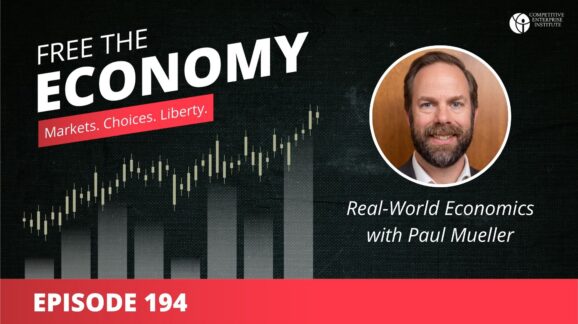
Free the Economy podcast: Real-world economics with Paul Mueller
In this week’s episode we cover spiraling health care costs, reforming state-level regulations, and how to keep asset managers accountable…

Blog
The week in regulations: Safe explosives and baker’s yeast
President Trump proposed an export ban on diesel fuel. Mortgage rates topped 7 percent. Agencies issued new regulations ranging from bank mergers to window…
Blog
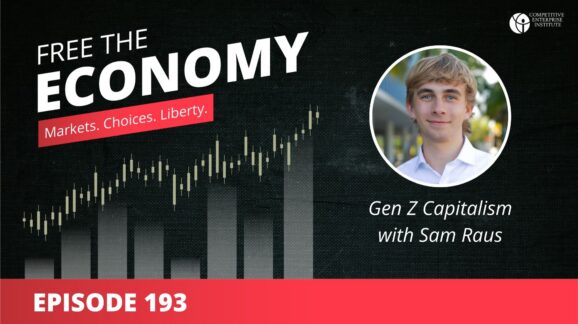
Free the Economy podcast: Gen Z capitalism with Sam Raus
In this week’s episode we cover how data centers power our lives, how modern technology is fueling family togetherness, and the…
Search Posts
Blog
ObamaCare’s Enormous Cost Is Hidden by Dishonest Gimmicks, Says New York Times Columnist Who Supported Obama in 2008
New York Times columnist David Brooks, like other columnists at that staunchly liberal newspaper, supported Obama in the 2008 election. But even he can…
Blog
Gov’t report backs up my Prius hoax revelation
As I reported in Forbes Online on Friday, and am scheduled to discuss tomorrow on NBC’s Today Show (beginning at 7AM EST), the Balloon…
Blog
$3,000,000,000,000 in Tax Increases in President Obama’s Budget
The president’s proposed budget raises taxes by three trillion dollars over the next ten years, notes Washington fiscal analyst…
Blog
“Toyota Hybrid Hoax,” my piece in Forbes Online
Yes, you suspected it all along. Now I’ve proved it. Mr. Sikes’s wild ride was a fabrication. The only reason his accelerator was stuck…
Blog
CEI Weekly: CEI Argues Against Climate Change Policies
CEI weekly is a compilation of articles and blogs from CEI's staff. This week features Will Yeatman and Chris Horner's dual op-eds in the Washington…
Blog
How Do These People Avoid Cognitive Dissonance?
Supporters of the health care bill spend a lot of time attacking health insurance companies. The health care bill would legally require people to give…
Staff & Scholars

Clyde Wayne Crews
Fred L. Smith Fellow in Regulatory Studies
- Business and Government
- Consumer Freedom
- Deregulation

Ryan Young
Senior Economist and Director of Publications
- Antitrust
- Business and Government
- Regulatory Reform
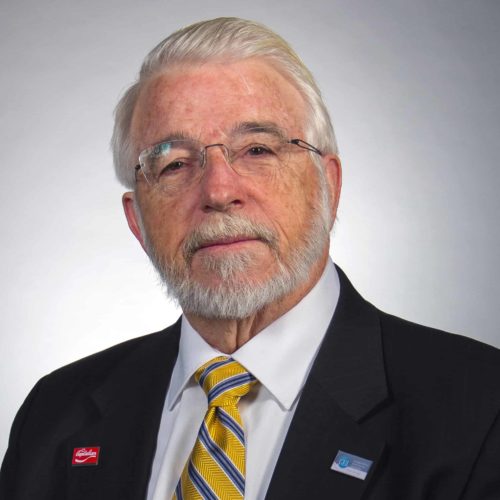
Fred L. Smith, Jr.
Founder; Chairman Emeritus
- Automobiles and Roads
- Aviation
- Business and Government

Sam Kazman
Counsel Emeritus
- Antitrust
- Automobiles and Roads
- Banking and Finance

Marlo Lewis, Jr.
Senior Fellow
- Climate
- Energy
- Energy and Environment