There are two main areas in which Congress can enact meaningful reform. The first is to rein in regulatory guidance documents, which we refer to as “regulatory dark matter,” whereby agencies regulate through Federal Register notices, guidance documents, and other means outside standard rulemaking procedure. The second is to enact a series of reforms to increase agency transparency and accountability of all regulation and guidance. These include annual regulatory report cards for rulemaking agencies and regulatory cost estimates from the Office of Management and Budget for more than just a small subset of rules.
In 2019, President Trump signed two executive orders aimed at stopping the practice of agencies using guidance documents to effectively implement policy without going through the legally required notice and comment process.
Featured Posts
Blog
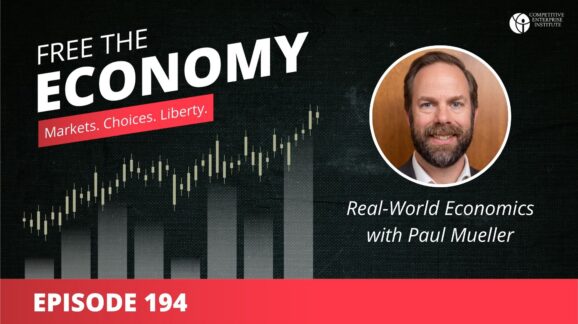
Free the Economy podcast: Real-world economics with Paul Mueller
In this week’s episode we cover spiraling health care costs, reforming state-level regulations, and how to keep asset managers accountable…

Blog
The week in regulations: Safe explosives and baker’s yeast
President Trump proposed an export ban on diesel fuel. Mortgage rates topped 7 percent. Agencies issued new regulations ranging from bank mergers to window…
Blog
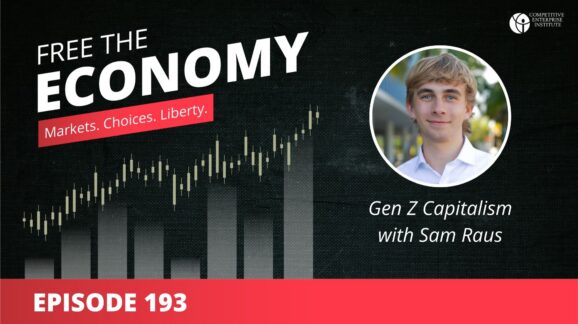
Free the Economy podcast: Gen Z capitalism with Sam Raus
In this week’s episode we cover how data centers power our lives, how modern technology is fueling family togetherness, and the…
Search Posts
Blog
A Sustained Recovery Needs a Deregulatory Stimulus
Over in The Hill, Wayne Crews and I argue that more deficit spending won’t help the COVID recovery. Regulatory reform is more powerful…
The Hill
Sustained Economic Growth Needs Congressional Regulatory Reform
Former President Trump was the first president in 30 years to take a serious interest in regulatory reform. You might have to go back to…
News Release
CEI Supports Sen. Rick Scott and Rep. Byron Donald’s New Regulatory Reform Bill to Prune Unneeded Rules
WASHINGTON – Sen. Rick Scott (R-FL) recently introduced S. 2239, the Unnecessary Agency Regulations Act of 2021, a law that would require the…
FEE
Households Face Up to $14,000 in ‘Hidden’ Federal Taxes Every Year, New Report Reveals
FEE cites CEI’s 10KC study by Vice President for Policy Wayne Crews: The fiscally-conservative Competitive Enterprise Institute (CEI) just released its…
News Release
New Ten Thousand Commandments report evaluates the sweeping hidden tax of regulation; Provides definitive assessment of Trump deregulatory legacy
The Competitive Enterprise Institute issued Ten Thousand Commandments 2021: An Annual Snapshot of the Federal Regulatory State today, a report by Vice President…
Blog
The 2021 Edition of Ten Thousand Commandments Is Out Now
How much does regulation cost? It’s hard to tell, due to a lack of transparency. The government is legally required to tell the public…
Staff & Scholars

Clyde Wayne Crews
Fred L. Smith Fellow in Regulatory Studies
- Business and Government
- Consumer Freedom
- Deregulation

Ryan Young
Senior Economist and Director of Publications
- Antitrust
- Business and Government
- Regulatory Reform

Fred L. Smith, Jr.
Founder; Chairman Emeritus
- Automobiles and Roads
- Aviation
- Business and Government

Sam Kazman
Counsel Emeritus
- Antitrust
- Automobiles and Roads
- Banking and Finance

Marlo Lewis, Jr.
Senior Fellow
- Climate
- Energy
- Energy and Environment