There are two main areas in which Congress can enact meaningful reform. The first is to rein in regulatory guidance documents, which we refer to as “regulatory dark matter,” whereby agencies regulate through Federal Register notices, guidance documents, and other means outside standard rulemaking procedure. The second is to enact a series of reforms to increase agency transparency and accountability of all regulation and guidance. These include annual regulatory report cards for rulemaking agencies and regulatory cost estimates from the Office of Management and Budget for more than just a small subset of rules.
In 2019, President Trump signed two executive orders aimed at stopping the practice of agencies using guidance documents to effectively implement policy without going through the legally required notice and comment process.
Featured Posts

Blog
The week in regulations: Library pictures and aerobatic airplanes
The Iran war entered its fourth week. ICE agents might be reassigned to airport security. The Federal Reserve held interest rates steady. President Trump expressed…
Blog
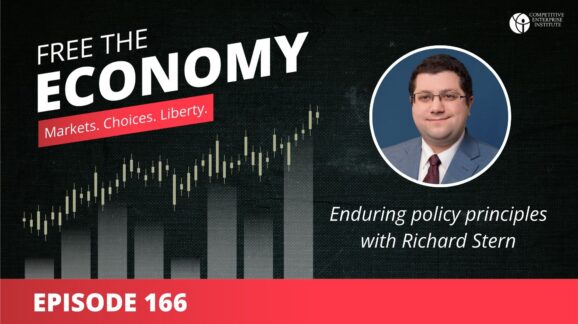
Free the Economy podcast: Enduring policy principles with Richard Stern
In this week’s episode we cover housing affordability, labor unions and train safety, the late Paul Ehrlich (1932-2026), and the late…

Blog
Idaho’s successful regulatory reform
Over at National Review, my colleague Hayden Stolzenberg and I examine some of Idaho’s recent regulatory reforms, as outlined in a recent CEI paper.
Search Posts
Citation
carbon dioxide and The Clean Air Act
Citation
auto industry bailout
Newsletter
White House Summit, Auto Bailout and Oil Drilling
Leaders of twenty nations gather at the White House to discuss the global financial downturn. Lawmakers prepare to debate a financial…
Op-Eds
Another housing crisis brewing
As it continues to pick up the pieces from the mortgage mess, Congress needs to take note of another housing-related crisis that threatens…
Citation
“midnight” regulations
Citation
regulatory reform and Sarbanes-Oxley
Staff & Scholars

Clyde Wayne Crews
Fred L. Smith Fellow in Regulatory Studies
- Business and Government
- Consumer Freedom
- Deregulation

Ryan Young
Senior Economist and Director of Publications
- Antitrust
- Business and Government
- Regulatory Reform

Fred L. Smith, Jr.
Founder; Chairman Emeritus
- Automobiles and Roads
- Aviation
- Business and Government

Sam Kazman
Counsel Emeritus
- Antitrust
- Automobiles and Roads
- Banking and Finance

Marlo Lewis, Jr.
Senior Fellow
- Climate
- Energy
- Energy and Environment