There are two main areas in which Congress can enact meaningful reform. The first is to rein in regulatory guidance documents, which we refer to as “regulatory dark matter,” whereby agencies regulate through Federal Register notices, guidance documents, and other means outside standard rulemaking procedure. The second is to enact a series of reforms to increase agency transparency and accountability of all regulation and guidance. These include annual regulatory report cards for rulemaking agencies and regulatory cost estimates from the Office of Management and Budget for more than just a small subset of rules.
In 2019, President Trump signed two executive orders aimed at stopping the practice of agencies using guidance documents to effectively implement policy without going through the legally required notice and comment process.
Featured Posts

Blog
The week in regulations: Mailing live animals and crash test dummy comments
A Trump administration envoy to Russia called Vladimir Putin a humanitarian. The Justice Department announced it will sue if the Republican Senate candidate in…
Blog
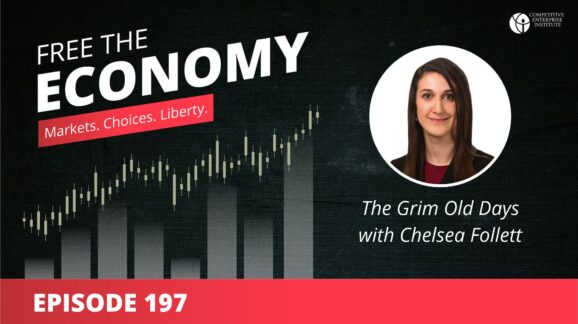
Free the Economy podcast: The Grim Old Days with Chelsea Follett
In this week’s episode we cover global energy security, a new lawsuit against Section 338 tariffs, and fresh talent in…

News Release
CEI challenges Wisconsin’s treatment of election prediction-market contracts
The Competitive Enterprise Institute has filed a federal lawsuit on behalf of Wisconsin voter and Green Bay radio host Joseph Giganti, Sr., challenging the…
Search Posts
Blog
The Not So Good, the Bad, and the Really Ugly
Not all stimulus programs are created equal. If the goal of the latest economic bailout package that Congress is considering is as President Elect Obama…
Newsletter
Full Stop on New Regulations, Infrastructure Confusion and the Problem with ‘Priming the Pump ‘
President Obama orders a halt to implementation of all pending federal regulations. President Obama calls for increased spending on roads, bridges and electrical grids. President…
Blog
New Federal Regulation Hits a Full Stop
According to press reports, President Barack Obama has ordered a full stop to all pending federal regulations. Funny, I didn’t hear anything about that…
Blog
Milton Friedman counters Kennedy inaugural–and Obama’s
Before President Barack Obama gave his inaugural address, it had been reported that he was heavily studying John F. Kennedy’s speech at…
Blog
HIGH NOON PASSES–Global Warming Doesn’t Show Up At The Inaugural
Well, the noon temperature in Washington DC at the President Obama’s swearing-in was 28 degrees F., eight degrees colder than when Bush…
Blog
Barack Obama’s ‘Digital Lines’ to Nowhere
When Barack Obama said in his inaugural address, "We will build the roads and bridges, the electric grids and digital lines that feed our commerce…
Staff & Scholars

Clyde Wayne Crews
Fred L. Smith Fellow in Regulatory Studies
- Business and Government
- Consumer Freedom
- Deregulation

Ryan Young
Senior Economist and Director of Publications
- Antitrust
- Business and Government
- Regulatory Reform
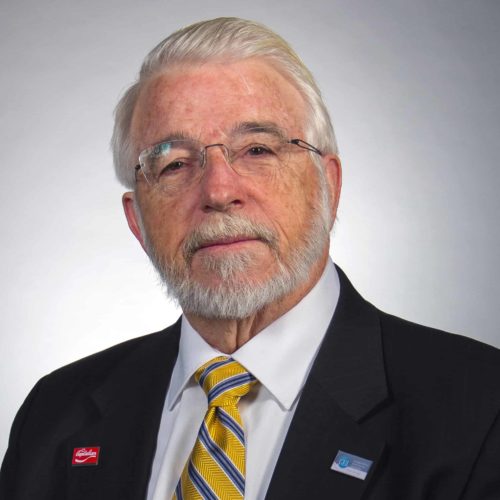
Fred L. Smith, Jr.
Founder; Chairman Emeritus
- Automobiles and Roads
- Aviation
- Business and Government

Sam Kazman
Counsel Emeritus
- Antitrust
- Automobiles and Roads
- Banking and Finance

Marlo Lewis, Jr.
Senior Fellow
- Climate
- Energy
- Energy and Environment