There are two main areas in which Congress can enact meaningful reform. The first is to rein in regulatory guidance documents, which we refer to as “regulatory dark matter,” whereby agencies regulate through Federal Register notices, guidance documents, and other means outside standard rulemaking procedure. The second is to enact a series of reforms to increase agency transparency and accountability of all regulation and guidance. These include annual regulatory report cards for rulemaking agencies and regulatory cost estimates from the Office of Management and Budget for more than just a small subset of rules.
In 2019, President Trump signed two executive orders aimed at stopping the practice of agencies using guidance documents to effectively implement policy without going through the legally required notice and comment process.
Featured Posts

National Review
From Munitions Shortage to Ebola, Dodd–Frank Minerals Measure Makes Things Worse
A scan of news headlines warns readers of two seemingly unrelated dangers around the globe. One is a potential shortage of missiles, interceptors, and…

Blog
The week in regulations: School libraries and sport pilots
The Federal Reserve raised interest rates. Congress passed a Russia sanctions bill that gives President Trump more tariff authority. Agencies issued new regulations ranging…
Blog
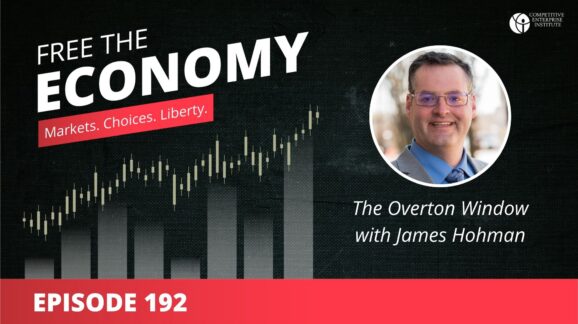
Free the Economy podcast: The Overton Window with James Hohman
In this week’s episode we cover Treasury yields, oil prices, US-China-Taiwan security policy, and Trump’s $5,000 dividend checks. Our…
Search Posts
News Release
A Free Market Agenda for the 110th Congress
Contact: Richard Morrison, 202.331.2273 Washington, D.C., January 10, 2007—Today the Competitive Enterprise Institute releases its policy recommendations for the new leadership…
Newsletter
The Competitive Enterprise Institute Daily Update
Issues in the News 1. CONGRESS Unions leaders mingle with celebrities and politicians as Democrats celebrate their return…
Op-Eds
Big Labor’s Agenda for the 110th Congress, Part I: The Minimum Wage
This month the first session of the 110th Congress begins with Democrats in control of both chambers for the first time since 1994. Control…
Newsletter
The Competitive Enterprise Institute Daily Update
Issues in the News 1. CONGRESS Democratic leaders in Congress begin work on their first 100 hour agenda.
Op-Eds
Democrats: There Is Such a Thing as Too Much Regulation
As Democrats take power in Congress, speculation has swirled around the question of why Republicans lost. But there is a factor – a…
News Release
District Smoking Ban Threatens Economic Liberty
Contact: Christine Hall, (202) 331-2258 Washington, D.C., January 2, 2007 – The District of Columbia today became the newest city in…
Staff & Scholars

Clyde Wayne Crews
Fred L. Smith Fellow in Regulatory Studies
- Business and Government
- Consumer Freedom
- Deregulation

Ryan Young
Senior Economist and Director of Publications
- Antitrust
- Business and Government
- Regulatory Reform

Fred L. Smith, Jr.
Founder; Chairman Emeritus
- Automobiles and Roads
- Aviation
- Business and Government

Sam Kazman
Counsel Emeritus
- Antitrust
- Automobiles and Roads
- Banking and Finance

Marlo Lewis, Jr.
Senior Fellow
- Climate
- Energy
- Energy and Environment