There are two main areas in which Congress can enact meaningful reform. The first is to rein in regulatory guidance documents, which we refer to as “regulatory dark matter,” whereby agencies regulate through Federal Register notices, guidance documents, and other means outside standard rulemaking procedure. The second is to enact a series of reforms to increase agency transparency and accountability of all regulation and guidance. These include annual regulatory report cards for rulemaking agencies and regulatory cost estimates from the Office of Management and Budget for more than just a small subset of rules.
In 2019, President Trump signed two executive orders aimed at stopping the practice of agencies using guidance documents to effectively implement policy without going through the legally required notice and comment process.
Featured Posts

Blog
The week in regulations: School libraries and sport pilots
The Federal Reserve raised interest rates. Congress passed a Russia sanctions bill that gives President Trump more tariff authority. Agencies issued new regulations ranging…
Blog
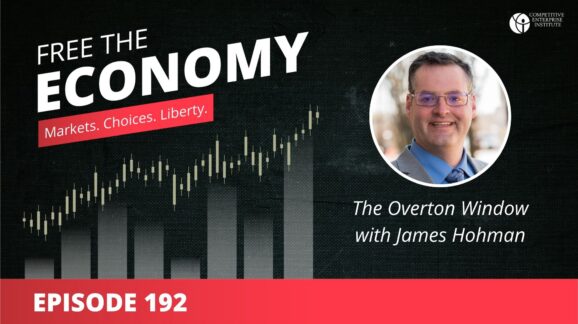
Free the Economy podcast: The Overton Window with James Hohman
In this week’s episode we cover Treasury yields, oil prices, US-China-Taiwan security policy, and Trump’s $5,000 dividend checks. Our…

Blog
How The No Surprises Act worsened the problem of surprise bills
Next week, Sen. Bill Cassidy (R-LA) will convene a roundtable to discuss adjustments to the 2020 No Surprises Act, which has come under…
Search Posts
News Release
Free Market Reaction to the State of the Union
Contact: Richard Morrison, 202.331.2273 Washington, D.C., February 2, 2005—President Bush’s State of the Union address tonight will expound his vision of an “Ownership Society,” in…
Study
The Viability of Municipal Wi-Fi Networks
Full Document Available in PDF Ownership of broadband networks by municipalities,…
Op-Eds
Different Technology, Similar Service
In the absence of competition, regulations serve to protect consumers against monopoly market power. This is, in theory, the reason why the telecommunications…
Products
Medicine Could Reach for Stars, FDA Willing
Full Document Available in PDF When Bill Gates and Paul Allen…
CEI Planet
CEI Planet: November 2004
Full Document Available in PDF In this issue: “Freeing the Biotech Revolution” by Henry…
News Release
Study: Consumers Could be Hurt by Federal Regulation of Insurance Industry
Contact for interviews: <?xml:namespace prefix = o ns = “urn:schemas-microsoft-com:office:office” /> Richard Morrison, 202.331.2273 <?xml:namespace prefix = st1…
Staff & Scholars

Clyde Wayne Crews
Fred L. Smith Fellow in Regulatory Studies
- Business and Government
- Consumer Freedom
- Deregulation

Ryan Young
Senior Economist and Director of Publications
- Antitrust
- Business and Government
- Regulatory Reform

Fred L. Smith, Jr.
Founder; Chairman Emeritus
- Automobiles and Roads
- Aviation
- Business and Government

Sam Kazman
Counsel Emeritus
- Antitrust
- Automobiles and Roads
- Banking and Finance

Marlo Lewis, Jr.
Senior Fellow
- Climate
- Energy
- Energy and Environment