There are two main areas in which Congress can enact meaningful reform. The first is to rein in regulatory guidance documents, which we refer to as “regulatory dark matter,” whereby agencies regulate through Federal Register notices, guidance documents, and other means outside standard rulemaking procedure. The second is to enact a series of reforms to increase agency transparency and accountability of all regulation and guidance. These include annual regulatory report cards for rulemaking agencies and regulatory cost estimates from the Office of Management and Budget for more than just a small subset of rules.
In 2019, President Trump signed two executive orders aimed at stopping the practice of agencies using guidance documents to effectively implement policy without going through the legally required notice and comment process.
Featured Posts
Blog
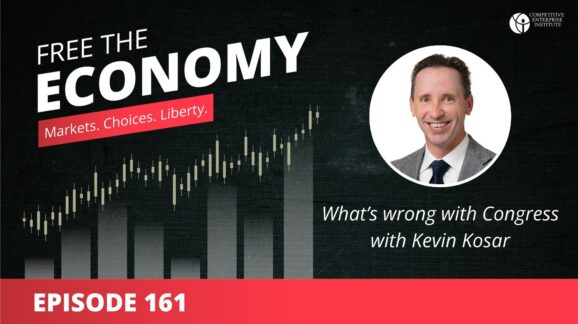
Free the Economy podcast: What’s wrong with Congress with Kevin Kosar
In this week’s episode we talk about we talk about Consumer-Regulated Electricity, the amazing falling US poverty rate, and how smart…

Blog
Trump’s deregulation meets invisible rulemaking: The real 2026 challenge
After a brief shutdown, most fiscal year 2026 appropriations have been enacted, despite continued debate over Department of Homeland Security (DHS) funding. We may soon…

Blog
The week in regulations: Beet food coloring and crab housekeeping
Culture warriors got upset over the Super Bowl halftime show. A mini-shutdown over ICE funding delayed some labor market indicators. Agencies issued new regulations ranging…
Search Posts
Blog
VIDEO: Road Map to Reopening
The U.S. Chamber of Commerce hosted a fascinating video conference this week entitled “Big Picture: Road Map to Reopening,” with the Chamber’s Suzanne Clark and…
Op-Eds
How The White House “Guidance For Regulation Of Artificial Intelligence” Invites Overregulation
Excessive top-down federal funding and governance of scientific and technology research will be increasingly incompatible with a future of lightly regulated science and…
Blog
How to Spot a #NeverNeeded Regulation
Not every regulation on the books is directly harming the COVID-19 response. There are a lot of other regulations that need reform, but the #NeverNeeded…
Inside Sources
Post-Virus Economics – Working Toward a Small Business Recovery
When the stay-at-home orders are lifted, we’ll be in a race to get millions of Americans back to work. Large companies will be in a…
Blog
This Week in Ridiculous Regulations
When Congress convenes next week, it will likely begin work on a Phase 4 stimulus bill. CEI analysts have made the case that addressing #NeverNeeded…
Real Clear Markets
An Effective Pandemic Response Would Be Deregulation
During a pandemic, regulations should not get between sick people and health care, or between hungry people and food. This also applies in normal times.
Staff & Scholars

Clyde Wayne Crews
Fred L. Smith Fellow in Regulatory Studies
- Business and Government
- Consumer Freedom
- Deregulation

Ryan Young
Senior Economist and Director of Publications
- Antitrust
- Business and Government
- Regulatory Reform

Fred L. Smith, Jr.
Founder; Chairman Emeritus
- Automobiles and Roads
- Aviation
- Business and Government

Sam Kazman
Counsel Emeritus
- Antitrust
- Automobiles and Roads
- Banking and Finance

Marlo Lewis, Jr.
Senior Fellow
- Climate
- Energy
- Energy and Environment