There are two main areas in which Congress can enact meaningful reform. The first is to rein in regulatory guidance documents, which we refer to as “regulatory dark matter,” whereby agencies regulate through Federal Register notices, guidance documents, and other means outside standard rulemaking procedure. The second is to enact a series of reforms to increase agency transparency and accountability of all regulation and guidance. These include annual regulatory report cards for rulemaking agencies and regulatory cost estimates from the Office of Management and Budget for more than just a small subset of rules.
In 2019, President Trump signed two executive orders aimed at stopping the practice of agencies using guidance documents to effectively implement policy without going through the legally required notice and comment process.
Featured Posts

Blog
The week in regulations: Pipeline safety and NFL Draft security
Federal Reserve Chair nominee Kevin Warsh had his confirmation hearing, and President Trump dropped his criminal investigation into Jerome Powell. The government is poised to…
Blog
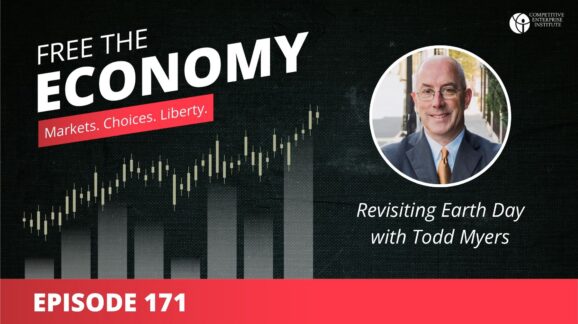
Free the Economy podcast: Revisiting Earth Day with Todd Myers
In this week’s episode we cover the dwindling number of US public companies (via Todd Zywicki of George Mason University), a pro-consumer…

Blog
The week in regulations: Drone settlements and gambling losses
The 2026 Federal Register topped 20,000 pages. President Trump got into a feud with the Pope. Agencies issued new regulations ranging from mail standards to…
Search Posts
Blog
Why The Sequester Budget Cuts Are Good
As we noted earlier, the automatic budget cuts contained in the sequester will help the economy in the long run, even if they are…
Blog
Europe’s Latest Wake-Up Call: Italian Elections
Europe, which has been enjoying a recent respite from financial chaos, is about to get a rude awakening: Italian elections. Voters will go to the…
Blog
CEI’s Battered Business Bureau: The Week In Regulation
53 new regulations, from the mental states of federal employees to giving rides to sick or injured people.
Citation
Obama Issued $216 Billion in New Regulations in 2012
One solution to this problem comes from the Competitive Enterprise Institute, a “free-market” conservative think tank in Washington, D.C. CEI has…
Blog
Regulatory Report Card: Federal Communications Commission
Regulatory agencies need to be much more transparent. One way to do that is through an annual report card with important information about each agency…
Study
Regulatory Report Card: FCC
Full Document Available in PDF It may come as a surprise that the Federal Communications Commission (FCC) is the third most expensive…
Staff & Scholars

Clyde Wayne Crews
Fred L. Smith Fellow in Regulatory Studies
- Business and Government
- Consumer Freedom
- Deregulation

Ryan Young
Senior Economist and Director of Publications
- Antitrust
- Business and Government
- Regulatory Reform

Fred L. Smith, Jr.
Founder; Chairman Emeritus
- Automobiles and Roads
- Aviation
- Business and Government

Sam Kazman
Counsel Emeritus
- Antitrust
- Automobiles and Roads
- Banking and Finance

Marlo Lewis, Jr.
Senior Fellow
- Climate
- Energy
- Energy and Environment