There are two main areas in which Congress can enact meaningful reform. The first is to rein in regulatory guidance documents, which we refer to as “regulatory dark matter,” whereby agencies regulate through Federal Register notices, guidance documents, and other means outside standard rulemaking procedure. The second is to enact a series of reforms to increase agency transparency and accountability of all regulation and guidance. These include annual regulatory report cards for rulemaking agencies and regulatory cost estimates from the Office of Management and Budget for more than just a small subset of rules.
In 2019, President Trump signed two executive orders aimed at stopping the practice of agencies using guidance documents to effectively implement policy without going through the legally required notice and comment process.
Featured Posts
Blog
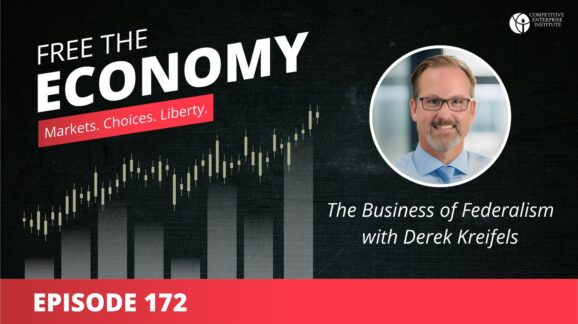
Free the Economy podcast: The business of Federalism with Derek Kreifels
In this week’s episode we cover childcare in the 50 states, how to fix rising healthcare costs, the new Institute for…

Blog
The week in regulations: Pipeline safety and NFL Draft security
Federal Reserve Chair nominee Kevin Warsh had his confirmation hearing, and President Trump dropped his criminal investigation into Jerome Powell. The government is poised to…
Blog
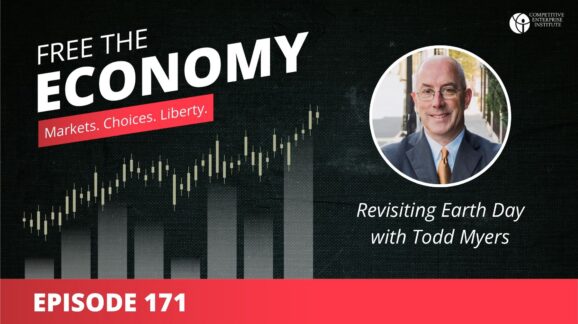
Free the Economy podcast: Revisiting Earth Day with Todd Myers
In this week’s episode we cover the dwindling number of US public companies (via Todd Zywicki of George Mason University), a pro-consumer…
Search Posts
Blog
The National Labor Relations Act Turns 76
The National Labor Relations Act (NLRA) turns 76 today. This day should give pause to those who have been following the National Labor Relations…
Blog
Regulation of the Day 181: Offensive Bumper Stickers
Tennessee drivers can be fined $50 if someone else finds their bumper sticker offensive.
Blog
Sour Attitudes on Raw Milk
In a letter to the Washington Post over this past weekend, a “food safety consultant” in northern Virginia named Thomas L.
Blog
Failed Stimulus Spending Erodes America’s International Competitiveness, Wipes Out Wealth
In the Daily Caller, Chris Edwards has an interesting article about why government spending doesn’t “stimulate” the economy over the short-run or the long-run. Rather than…
Washington Times
Employers Doubt Obama’s Vow of Less Red Tape
The Washington Times references Wayne Crews's study on the size of the federal regulatory burden. Mr. Kovacs noted that the Government Accountability Office…
Blog
Chicago Mayor Emanuel Gives Unions a Choice: Concessions or Layoffs
Leaders of government employee unions must be feeling lonely these days. Across the country, Democratic state and local elected officials — traditional union allies —…
Staff & Scholars

Clyde Wayne Crews
Fred L. Smith Fellow in Regulatory Studies
- Business and Government
- Consumer Freedom
- Deregulation

Ryan Young
Senior Economist and Director of Publications
- Antitrust
- Business and Government
- Regulatory Reform

Fred L. Smith, Jr.
Founder; Chairman Emeritus
- Automobiles and Roads
- Aviation
- Business and Government

Sam Kazman
Counsel Emeritus
- Antitrust
- Automobiles and Roads
- Banking and Finance

Marlo Lewis, Jr.
Senior Fellow
- Climate
- Energy
- Energy and Environment