There are two main areas in which Congress can enact meaningful reform. The first is to rein in regulatory guidance documents, which we refer to as “regulatory dark matter,” whereby agencies regulate through Federal Register notices, guidance documents, and other means outside standard rulemaking procedure. The second is to enact a series of reforms to increase agency transparency and accountability of all regulation and guidance. These include annual regulatory report cards for rulemaking agencies and regulatory cost estimates from the Office of Management and Budget for more than just a small subset of rules.
In 2019, President Trump signed two executive orders aimed at stopping the practice of agencies using guidance documents to effectively implement policy without going through the legally required notice and comment process.
Featured Posts

Blog
The week in regulations: Safe explosives and baker’s yeast
President Trump proposed an export ban on diesel fuel. Mortgage rates topped 7 percent. Agencies issued new regulations ranging from bank mergers to window…
Blog
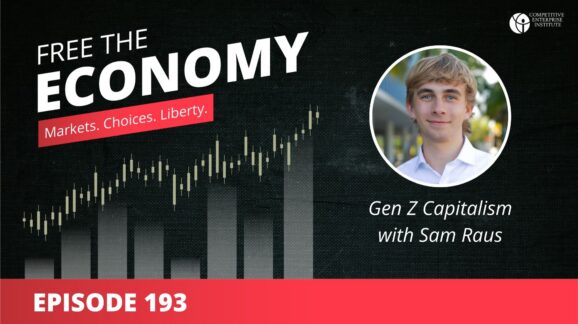
Free the Economy podcast: Gen Z capitalism with Sam Raus
In this week’s episode we cover how data centers power our lives, how modern technology is fueling family togetherness, and the…

National Review
From Munitions Shortage to Ebola, Dodd–Frank Minerals Measure Makes Things Worse
A scan of news headlines warns readers of two seemingly unrelated dangers around the globe. One is a potential shortage of missiles, interceptors, and…
Search Posts
Op-Eds
Credit card ricochet
“Partners in plunder.” That's how an intriguing new book describes the hidden relationship between big government and big business. <?xml:namespace prefix = o…
Op-Eds
The Ratings Game
It's a familiar experience for many moviegoers: You walk out of a theater scratching your head, wondering why a movie was given a…
Newsletter
The Competitive Enterprise Institute Daily Update
<?xml:namespace prefix = o ns = “urn:schemas-microsoft-com:office:office” /> Issues in the News 1. SAFETY A recent…
Newsletter
The Competitive Enterprise Institute Daily Update
Issues in the News 1. Retail Politics The New York Times reports on Wal-Mart’s funding of research groups. CEI…
Newsletter
The Competitive Enterprise Institute Daily Update
Issues in the News 1. HEALTH The Food and Drug Administration approves the first fully implantable artificial heart.
Op-Eds
Welcome to Washington, Wal-Mart
WASHINGTON – As liberal politicians, vocal unions and editorial pages argue that Wal-Mart underpays and mistreats its employees (The Boston Globe even implied that Wal-Mart…
Staff & Scholars

Clyde Wayne Crews
Fred L. Smith Fellow in Regulatory Studies
- Business and Government
- Consumer Freedom
- Deregulation

Ryan Young
Senior Economist and Director of Publications
- Antitrust
- Business and Government
- Regulatory Reform

Fred L. Smith, Jr.
Founder; Chairman Emeritus
- Automobiles and Roads
- Aviation
- Business and Government

Sam Kazman
Counsel Emeritus
- Antitrust
- Automobiles and Roads
- Banking and Finance

Marlo Lewis, Jr.
Senior Fellow
- Climate
- Energy
- Energy and Environment