Turn Shutdown Theater Into A Slim-Down: Cut Spending And Regulation At Once
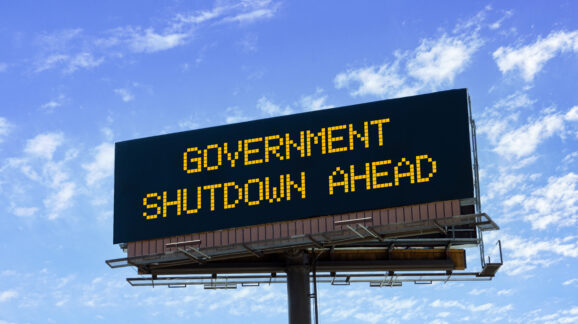
Looming federal government shutdowns should be treated as opportunities to cut both spending and regulation. So as we barrel toward a potential shutdown that will likely end with a resumption of COVID-era spending levels and $2 trillion deficits despite all the drama, let’s take a beat.
Each side blames the other for holding the federal government hostage over contentious continuing resolutions when fiscal-year deadlines approach, but the federal government does not truly shut down. Taxes are still withheld from paychecks and spent, federal borrowing continues, and many “essential” federal functions—functions that the GOP now in charge once weakly opposed—resume with renewed legitimacy upon reopening.
Yet a “clean” continuing resolution without challenging those supposedly abhorred programs from a GOP majority bestows even greater legitimacy.
The real crisis is not a temporary shutdown but a Congress acting far beyond its fiscal means and constitutional limits. Both parties reliably keep open even parts of government that should be shut down despite all the theater.
Government is now so large that, along with the debt limit, shutdowns may be the last remaining institutional pressure point to impose fiscal and regulatory restraint. By and large, these episodes are quickly forgotten when next elections roll around – and that should make them ripe for “exploitation” to taxpayers advantage by wise and forward-thinking policymakers.
Rather than seeing the GOP extract major concessions to begin dismantling the spending/regulation trap, we’re in a perplexing situation in which current spending is maintained in exchange for simply keeping the government open. The White House—via an undated and untitled memo to department heads and general counsels—ordered agencies to prepare Reduction in Force (RIF) plans that would extend well beyond conventional furloughs in the event of a shutdown (“With respect to those Federal programs whose funding would lapse and which are otherwise unfunded, such programs are no longer statutorily required to be carried out”). That infuriated House and Senate minority leaders and set off consternation in the media. But note this is not a condition of avoiding a shutdown; it is only to occur if one happens. This episode is a reminder that the very steps needed to pare back government surface only under duress—yet shutting down programs and agencies remains both the most necessary and the most difficult part of deconstruction.
Read more at Forbes