Free the Appliances!
Turn out the lights on federal efficiency standards
Introduction
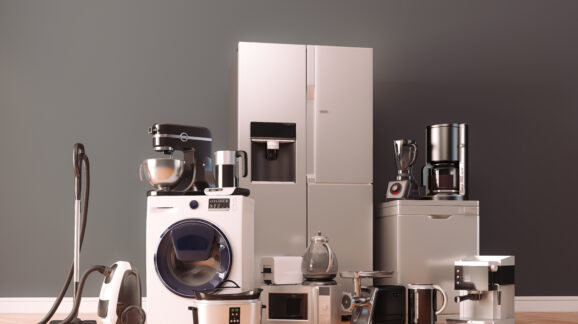
The Department of Energy’s (DOE) appliance efficiency standards program has been in place for decades, subjecting nearly every major home appliance to multiple rounds of increasingly stringent regulations. Although these rules are often promoted as consumer-friendly measures to reduce energy use and costs, they have frequently produced the opposite effect: raising prices, limiting product choice, and undermining performance, reliability, and longevity.
In many cases, such as dishwashers, washing machines, and light bulbs, the standards have proven far more troublesome than anticipated. More recently, the program has been stretched well beyond its statutory intent and used as a vehicle for climate policy. While the ideal solution would be to sunset the program entirely, meaningful reform legislation could at least impose clear limits on future rulemaking and repeal existing standards that do not serve the interests of consumers.
History of federal appliance regulations
Home appliances have made a dramatic difference in our lives. Whether it is the heat-related deaths averted by air conditioning, foodborne illnesses prevented by refrigeration, improvements in indoor air quality enabled by gas or electric stoves, or the liberation of women facilitated by washing machines and other labor-saving devices, these appliances have improved the human condition considerably over the past century or so.
Home appliances are a free-market success story. Virtually every one of them was developed and introduced by the private sector, mostly in the US. These same manufacturers also succeeded in bringing prices down over time, and they did so while maintaining and often improving upon quality. The federal government quite sensibly took a hands-off approach, at least until the 1970s.
Federal regulation of home appliances dates back to the Energy Policy and Conservation Act of 1975 (EPCA), a reaction to the oil shocks of that era. Among other things, this statute and subsequent amendments created a program enabling the DOE to set energy efficiency requirements for most home appliances. The original statute did not mandate specific standards but required the agency to set them upon determining that they were “technologically feasible and economically justified,” and would result in “significant conservation of energy.”
For the first several years of the program, no standards were finalized. In the early 1980s, the Reagan administration DOE considered but declined to regulate eight major home appliances (central air conditioners, room air conditioners, refrigerators, freezers, furnaces, water heaters, washing machines, and dryers) on the grounds that the statutory requirements were not met. In effect, the Reagan DOE concluded that there was no market failure justifying federal intervention.

In 1985, these so-called “no-standards standards” were successfully challenged in federal court, which remanded the issue back to the agency to either promulgate standards or provide a legally stronger explanation for not doing so. In response, President Ronald Reagan encouraged Congress to legislate an acceptable solution, leading to the National Appliance Energy Conservation Act of 1987 (NAECA). NAECA statutorily set out initial energy efficiency standards for these appliances, and also required subsequent reviews of them. When reviewing existing standards, the statute gives the agency the option of either retaining a standard or tightening it, but it does not allow an existing standard to be made less stringent – the so-called anti-backsliding provision.
By the 1990s, it was already evident that appliance overregulation was becoming a problem, and the Clinton administration DOE finalized a series of process reforms in 1996. These included a more thorough analysis of the costs and benefits of each proposed rule, including potentially disproportionate adverse effects on consumer subgroups such as low-income and senior households. It also encouraged the consideration of non-regulatory approaches in lieu of regulations. However, these measures were not judicially reviewable and have made little difference.
In the decades since, a pattern has emerged where a Republican administration would take a much more cautious approach to new appliance regulations (and often face litigation for doing so), followed by a Democratic administration that tried to make up for lost time with a very aggressive regulatory agenda.
This back and forth also included an effort during the first Trump administration to expand upon the Clinton-era DOE process reforms and make them judicially reviewable, as well as measures providing more regulatory flexibility for dishwashers, washing machines, light bulbs, and furnaces. However, these provisions were later reversed by the Biden administration.
By now, most home appliances have been subjected to three, four, five, or even six rounds of successively tighter standards. In addition to the sizable bureaucracy at DOE that works on appliance regulations, there are quite a few activists, consultants, lobbyists, and lawyers who also owe their livelihoods to the program and are predisposed to see it continue.
The manufacturers of these appliances typically support federal standards. They often argue that uniform national requirements are preferable to a patchwork of state and local ones, though it should be noted that there is considerable debate on the question of when such state and local measures are federally preempted. Further, once a new appliance standard is in effect and manufacturers have already incurred the transition costs, they have little incentive to go back, even if there is consumer dissatisfaction with the results. Among the many pro-standards advocates, the interests of consumers have played a relatively minor role in the standards-setting process.
Anti-consumer effects of appliance regs
EPCA contains numerous provisions protecting consumers against overregulation. For example, DOE is required to consider the costs as well as the benefits of proposed rules and is expressly forbidden from setting a standard that compromises any product characteristics valued by consumers.
Despite the pro-consumer thrust of EPCA’s appliance provisions, many standards harm consumers by adding to net costs and/or impacting appliance choice, features, performance, reliability, and longevity. The consumer protections in the law have been routinely sidestepped, and sensible regulatory stopping points ignored. Some of the worst rules are the recent ones for appliances that have already been regulated multiple times, and several more such rules are scheduled to take effect in the years ahead.
The effect of four rounds of successively tighter standards for dishwashers has been especially annoying for consumers. Models today take two or more hours to complete a normal cycle, double the time it took before regulations. The agency has admitted that its rules are the cause, stating that “[t]o help compensate for the negative impact on cleaning performance associated with decreasing water use and water temperature, manufacturers will typically increase the cycle time.” It should be noted that the dishwasher standards are not just bad policy, they likely violate the law as well. The standards target both energy and water use, though EPCA only allows the former. The Trump DOE has proposed rules that would help address this overreach and eliminate the water requirements. Note that the anti-backsliding provision does not protect rules, such as this one, that the agency had no legitimate authority to set in the first place.
Washing machine standards (the subject of successively tighter regulations in 1988, 1994, 2004, 2007, 2015, 2018, and a 2024 final rule that will take effect in 2028) have led to cleaning performance and reliability problems that were never anticipated by the agency and have not been acknowledged since. They have also led to accumulation of foul-smelling mold in many machines, necessitating a new market in products designed to eliminate the smell. The need to occasionally wash the washing machine by running it empty with these special cleaners is not only an inconvenience, but also undercuts the agency’s claimed energy and water savings. The same is true of the increased need to run loads more than once due to diminished cleaning performance. The Trump administration is also revisiting these standards.
Other appliance regulations will likely raise the up-front cost more than can be justified by the energy savings. This includes upcoming furnace and water heater regulations promulgated during the Biden administration and scheduled to take effect in 2028 and 2029, respectively. DOE predicts a cost boost for a gas furnace of up to $867 and an electric water heater increase of $953, and some industry insiders believe these may be significant underestimates. EPCA contains the very sensible yardstick that standards should not raise the up-front cost any more than is likely to be earned back in energy savings within three years, but this three-year payback provision is not mandatory and is frequently exceeded by the agency.
New appliance rules are promulgated with little regard for the problems caused by previous ones. Indeed, DOE insists that it has no obligation to do any retrospective reviews, so long as each rule is based on what it considers to be “the best available data at the time.”
The costs keep rising with each successive round of regulations. For example, the past regulations that knocked incandescent light bulbs off the market have paved the way for more expensive light-emitting diode (LED) bulbs. And now, the latest Biden DOE rule cracks down hard on LEDs and will further raise their price by an agency-estimated $2.70, from $2.98 to $5.68 per bulb.
It all starts to add up to a significant price boost, not just for existing homeowners but for new homebuyers as well. Indeed, the National Association of Home Builders estimates that regulatory costs at all levels of government contribute 25 percent to the costs of housing. Appliance regulations are a significant contributor, especially for first-time homebuyers. And it will only get worse with the wave of costly Biden DOE regulations that will come into force in the years ahead, several of which cannot be easily reversed by the Trump administration due to the anti-backsliding provision.
Other appliance regulations completely eliminate choices and features valued by some consumers, such as incandescent light bulbs that are no longer available or non-condensing gas furnaces that will disappear in 2028 as a result of the above-mentioned furnace rule. The loss of non-condensing gas furnaces underscores the one-size-fits-all problem with several such rules, as this type of furnace is most suitable for a significant number of homes for which other options present installation challenges. Such restrictive provisions quite arguably violate the provisions in EPCA forbidding standards that compromise any appliance characteristics. Fortunately, a rule that would have done the same for non-condensing tankless water heaters was recently repealed under the Congressional Review Act (CRA), but many other rules were finalized too early to fall within the CRA window.
There is also evidence of reduced product lifetimes as a result of stringent appliance regulations. This is not surprising given that these rules often necessitate considerably more complicated and less reliable mechanical systems to comply. And when repair costs rise, a point is reached where replacement is the more sensible option. For example, estimates of the useful life of refrigerators have declined from 19 to 12 years or less over the span DOE has regulated them. Note that overstated product lifetimes greatly increase the costs to consumers and undercut the claimed energy savings and environmental benefits.
The gas stove controversy of 2023
In one case, consumer opposition managed to prevent an onerous appliance regulation. This occurred in 2023 with the regulatory targeting of gas stoves. Although it began with a commissioner on the Consumer Product Safety Commission stating that gas stoves may need to be banned, it expanded to a proposed DOE efficiency standard that was tailor-made to discourage gas stoves in favor of electric versions.
Only after a surprisingly powerful grassroots backlash against such government meddling did both agencies back off. DOE did finalize a rule affecting gas stoves, but it was much less stringent than the one originally proposed. This episode serves as a useful reminder for the federal government that the American people dislike the idea of being told what they can and cannot have in their homes.
Mission creep and climate change
The 2023 controversy over gas stove regulations was also part of an alarming evolution of the appliance standards program into a climate policy tool. This trend began with the Obama administration but accelerated greatly under President Biden. Indeed, the Biden DOE fully embraced the whole-of-government prioritization of climate change concerns.
EPCA contains provisions protecting the interests of consumers in setting appliance standards, and these provisions cannot be superseded by environmental considerations like climate change. Heedless, the Biden DOE proclaimed that “[a]ddressing the effects of climate change is a top priority of the Energy Department,” and that this new agency-wide agenda includes “working to dramatically increase the efficiency of appliances….”
All of the Biden administration appliance regulations – light bulbs, furnaces, water heaters, air conditioners, stoves, dishwashers, refrigerators, washing machines, and others – included calculations of the claimed climate benefits. These benefits were based on the highly flawed estimates of the social cost of carbon, which the Trump administration has sensibly ordered all regulatory agencies to stop relying upon. Nonetheless, it was used by the Biden DOE as a finger on the scale justifying many appliance rules that are still on the books or scheduled to take effect in the years ahead.
In addition to using climate change as a rationale for new appliance efficiency standards, the agency has also used the program to discourage the residential use of natural gas, a fossil fuel. This was done via standards that disproportionately burden the gas versions of appliances in favor of electric versions. While public opposition prevented a DOE appliance standard that disproportionately targeted natural gas stoves, it did not stop a furnace standard which decidedly tilts the balance away from gas in favor of electric heat.
Anti-natural gas appliance regulations were part of the Biden administration’s broad-based electrification agenda, as well as the efforts of many well-funded environmental groups aggressively pursuing the goal of making electricity the only energy option for homeowners. These efforts received a massive funding boost from the Inflation Reduction Act, which included generous federal rebates for electric appliances but not gas versions, as well as funding for advocacy efforts to change state and local building codes to restrict natural gas.
The use of appliance regulations to discourage gas versions of appliances constrains choices that should be made by the consumer, and it does so even though EPCA contains clear provisions against fuel switching. It also undercuts EPCA’s primary purpose of saving people money, as natural gas is three and a half times cheaper than electricity on a per unit energy basis.
Ideas for reform
Reagan was right. Federal appliance standards were a costly solution in search of a problem, and they still are. Thus, sunsetting the entire program would be the ideal approach. There is no downside to consumers from eliminating these regulations, since those who prefer ultra-efficient appliances will still be free to choose them, and manufacturers have shown that they will offer models that go above and beyond current standards. Federal mandates only serve to foist such choices on everyone, whether they make sense or not. Here are several ideas for legislative reforms to the program:
Revise or nix current standards: Short of repeal, ending the anti-backsliding provision and allowing the agency to revisit existing standards would be the best option available to Congress. H.R. 4626, the Don’t Mess With My Home Appliances Act, would accomplish this. As it is now, the anti-backsliding provision in EPCA prevents the agency from revising or repealing regulations already on the books, no matter how badly they have turned out. This commonsense reform was recommended in a National Academies of Sciences study and is long overdue. Importantly, the bill clarifies that any change to existing federal regulations in no way diminishes the preemption of conflicting state and local measures for impacted appliances.
Closely scrutinize consumer benefits: The National Academies also recommended that DOE closely scrutinize each proposed new rule to determine whether it really is justified and would benefit consumers, and the bill contains several measures furthering this goal. This includes a more comprehensive analysis of costs of appliance rules – not just higher equipment costs but also higher installation costs, maintenance costs, reduced product lifetimes as well as other factors often downplayed or ignored by the agency. It also requires additional analysis of any disproportionate impacts on low-income households who are often hardest hit by these regulations. It also quantifies what is considered significant conservation of energy so this statutory provision cannot be so easily sidestepped, and it makes the 3-year payback period a requirement rather than a suggestion.
Exclude climate change considerations: The Don’t Mess With My Home Appliances Act contains provisions explicitly forbidding climate considerations. These provisions are essential to preventing mission creep towards an environmental agenda that is at odds with the best interests of consumers.
Limit range of covered products: Unfortunately, the Don’t Mess With My Home Appliances Act still leaves a lot to the discretion of the agency, and we have increasingly seen DOE willing to say just about anything in its analysis to get these regulations across the finish line, especially during the last administration. That is why Congress should take at least some regulatory authority off the table. For example, the home appliances that have already been badly overregulated – dishwashers, washing machines, and light bulbs are prime examples – could be exempted from any further rules. H.R. 3341 and S. 1568, the Liberating Incandescent Technology (LIT) Act of 2025, does this for light bulbs and could serve as a template for other products. Residential stoves as a category should have never been regulated in the first place – they use too little energy for standards to achieve significant savings – and ought to be excluded from this program. In addition, some of the recent rules that missed the CRA window and are still scheduled to take effect in the coming years also should be rescinded before they can do any harm. Overall, if Congress can’t sunset the program entirely, it can at least limit the future damage to homeowners by some judicious pruning.
Preserve fuel choice: Further, any and all efforts to deprive homeowners of the option of natural gas appliances should be blocked. The choice of using natural gas or electricity ought to rest with the homeowner, not the government. The Don’t Mess With My Home Appliances Act has provisions designed to preserve fuel choice. In addition, H.R. 4758, the Homeowner Energy Freedom Act takes the critical step of ending several Inflation Reduction Act programs providing federal funding to pursue this unwanted agenda – needless to say, the American people don’t want to see our tax dollars spent to take away our energy choices. Note that this bill would go beyond the spending cuts already in the One Big Beautiful Bill Act and would completely revoke these programs.
Agency-level reforms: In contrast to legislation, agency-level reforms are less durable, as was evidenced by the Biden administration’s reversal of the ones instituted during the first Trump administration. Nonetheless, they also have value and should be pursued. The agency is currently considering repealing several of the most legally questionable regulations, including the above-mentioned dishwasher and washing machine standards. DOE should also revise and expand upon the process reforms from the first Trump administration.
Conclusion
Overall, the more constraints Congress places on statutes like EPCA and the Inflation Reduction Act, the better for the American people. A good rule of thumb for appliance regulatory reform is that if you are expanding consumer choice you are doing the right thing, but if you are limiting consumer choice in favor of government restrictions, you are doing the wrong thing.
The backlash over potential gas stove restrictions amply demonstrated that the American people do not want federal micromanagement of their appliance choices. Thus, the combination of legislative and agency-level restraints on this regulatory program could be the next 80/20 issue and is well worth pursuing.