Questions for Kevin Warsh
Key issues are Federal Reserve independence, inflation control
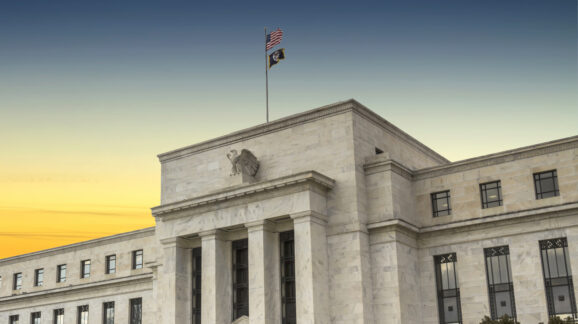
Kevin Warsh is President Trump’s choice to succeed Jerome Powell as the Chair of the Board of Governors of the Federal Reserve System. Warsh’s credentials make him well qualified for the chairmanship. Warsh was a member of the Board of Governors of the Federal Reserve System from 2006 to 2011, making him the youngest Governor in the Federal Reserve’s history. Prior to his time at the Federal Reserve, Warsh served as Special Assistant to the President for Economic Policy and Executive Secretary of the White House National Economic Council. Warsh currently serves as the Shepard Family Distinguished Visiting Fellow in Economics at the Hoover Institution. He is also a member of the Panel of Economic Advisers of the Congressional Budget Office. His upcoming confirmation hearing before the Senate Banking Committee is an opportunity to learn about the direction in which he would take US monetary policy if confirmed.
The following questions focus on the Federal Reserve’s role and Warsh’s stance on different aspects of monetary policy. Warsh inherits a difficult situation. On one hand, inflation has been above the Fed’s 2 percent target for the past five years. This is usually a reason for the Fed to raise interest rates.
On the other hand, employment growth and GDP growth have slowed in the past year because of policy instability. That is usually a reason for the Fed to lower interest rates. The Fed is unable to fulfill both parts of its dual mandate, which means it must prioritize either the low-inflation or the low-unemployment half of its mission. It cannot prioritize both.
While the Fed is navigating these tradeoffs, President Trump is putting heavy pressure on the Fed to lower interest rates and pursue an expansionary monetary policy, to the point of opening politicized criminal investigations into outgoing Fed Chair Jerome Powell and Federal Reserve Governor Lisa Cook.
It is crucial that the Senate get a clear idea of how Warsh would handle both the policy and politics of the Fed chair’s job.
Federal Reserve independence
The most important issue facing the Federal Reserve is its independence. Warsh’s defense or abdication of the Fed’s independence is more important for determining his fitness for the job than any policy decision facing the Fed. At what level interest rates are set at a given Federal Open Market Committee (FOMC) meeting is less important than who makes that decision. If Warsh or other FOMC members are seen as acting on the president’s orders, rather than making their own decisions based on economic data, the Fed will lose credibility. This can result in higher interest rates for government debt and higher long-run inflation. The list of countries harmed by political control of central banks spans the alphabet, from Argentina to Zimbabwe.
- When the president pressures you or other committee members to lower interest rates, how would you respond?
- Do you have any institutional reforms in mind that would safeguard the Fed’s independence? One possibility is reducing the Fed’s dual mandate to a single mandate, under which the Fed focuses solely on keeping inflation low. Another possibility is binding the Fed to a policy rule, such as a Taylor rule or Nominal Gross Domestic Product targeting. Presidents cannot tell Fed officials what to do if Fed officials do not have the discretion to follow those orders.
- Do you have additional ideas for defending the Fed’s independence from political interference?
Fed-Treasury coordination
Close coordination between central banks and fiscal authorities has often resulted in monetary policy being used to facilitate government borrowing, which can weaken Fed independence and undermine confidence in price stability. While some advocates argue that formal arrangements could allow coordination without subordinating monetary policy, experience suggests that any partnership carries significant risks. Even structured coordination may create pressures or expectations that compromise the Fed’s ability to act solely in pursuit of its statutory mandate.
- You have advocated for greater coordination between the Federal Reserve and the Treasury. How would you define “coordination” in practice so that it provides transparency and guidance to markets while explicitly preventing fiscal dominance? What institutional or procedural safeguards would you implement to ensure that coordination during periods of financial stress does not compromise the Fed’s independence or result in effective monetization of government debt?
- Do you believe the 1951 Fed-Treasury accord should be revisited? What is the proper balance of power between the Treasury and the Fed? Is it currently tilted too far in one side’s favor?
Interest rate policy
Since the 2007–08 financial crisis, the Federal Reserve has cycled through extended periods of exceptionally low interest rates, punctuated by relatively brief tightening episodes. Rates remained near zero for years following the financial crisis, returned to the zero lower bound during the pandemic, rose sharply to above 4 percent by the end of 2022, and began declining again around mid-2024. This pattern of prolonged accommodation followed by rapid tightening and renewed easing raises questions about how firmly interest rate policy is anchored to a durable framework rather than the FOMC’s discretion.
- What macroeconomic developments justify your recent support for lower interest rates?
- What objective benchmarks or indicators should guide decisions about whether interest rates are too loose or too tight?
- What lessons should be drawn from the extended post-crisis period of low rates?
- How can the Federal Reserve ensure that interest rate policy remains insulated from short-term political or market pressures?
- The national debt will soon reach $40 trillion. As interest payments on federal debt take up a greater percentage of federal revenues, do you see fiscal concerns eventually dominating monetary policy concerns in the Fed’s interest rate decisions?
Reducing the balance sheet
The Fed’s balance sheet expanded following the 2007–08 financial crisis and even more so during the pandemic. Large-scale asset purchases introduced during periods of market stress evolved into long-term holdings. Although there has been balance sheet reduction, total assets remain well above pre-COVID norms.
As the Fed continues operating with a larger post-pandemic balance sheet, questions remain about how interest rate adjustments and balance sheet management can be sequenced and calibrated in light of the potential for unintended consequences and the uncertainty inherent in managing such complex policy interactions.
- When reserves are ample, balance sheet reduction requires keeping interest rates high enough to avoid reserve scarcity or market disruption. How do you reconcile support for lowering interest rates with the objective of materially reducing the balance sheet?
- Under what specific and objective conditions should large-scale asset purchases be permitted?
- What is the correct and proper role for quantitative easing, and how do you prevent it from inflating asset prices?
- Should there be statutory or rule-based limits on balance sheet size relative to GDP or other benchmarks?
- Do you support automatic sunset provisions for emergency asset-purchase programs?
- What sequencing principles would guide your decisions if rate policy and balance sheet trimming are in tension?
Forward guidance
Forward guidance was introduced in the aftermath of the 2007–08 financial crisis to help guide market expectations when interest rates were near zero and conventional policy was constrained. Forward guidance has become a central feature of the Fed’s toolkit for shaping market behavior and expectations about future policy. While intended to provide clarity, overreliance on forward guidance can create credibility risks if markets react differently than expected or if guidance needs to be revised frequently. Policymakers must weigh flexibility against the potential for misaligned signals that may undermine the intended stabilization effects.
- Given that you have stated forward guidance “has little role to play in normal times,” on what alternative mechanisms would you rely to anchor market expectations? How confident are you that those mechanisms would function under stress?
- Should the Fed reduce the frequency or detail of projections and dot plots as part of eliminating or reducing forward guidance? How would you prevent overreliance on these signals from distorting market behavior?
- Do you believe discretionary communication without forward guidance is less prone to misinterpretation than a rules-based framework, or could removing guidance increase uncertainty and reduce policy credibility?
Central bank digital currencies
In 2018, Warsh penned a Wall Street Journal (WSJ) op-ed proposing a central bank digital currency (CBDC) in the form of a “digital dollar” backed by the Fed. Warsh wrote that the Fed “might prudently consider introducing its own digital currency to gain the benefits of innovation without sanctioning the illicit behavior that bitcoin and its brethren have attracted.” In 2022, Warsh reiterated his support for CBDCs in a second WSJ op-ed, but this time argued that they should be used only for “wholesale” transactions with banks and foreign nations.
In 2025, President Trump issued an executive order banning CBDCs. But there is a question as to whether this executive order applies to the Fed, since the Fed is an independent agency. Once confirmed, a Fed chairman could likely pursue a CBDC if he or she wished, unless Congress specifically bans it.
- Do you still support a central bank digital currency for general consumer and/or wholesale transactions?
- Do you still believe, as you wrote in the Wall Street Journal in 2022, that a CBDC is superior to privately issued stablecoins in boosting the dollar? Dollar-pegged stablecoins currently account for more than 90 percent of stablecoins issued.
- Regardless of whether you support a CBDC, do you agree to abide by President Trump’s executive order prohibiting “any action to establish, issue, or promote CBDCs within the jurisdiction of the United States or abroad”?
- Avik Roy, chairman of the Foundation for Research on Equal Opportunity, has argued in Forbes that “Warsh’s ‘guardrail’ protecting consumers from CBDC surveillance and censorship is about as strong as a sheet of Kleenex.” He has written: “[O]nce an American CBDC is live, all it would take is a flick of a legal switch to bring it to every user of the U.S. dollar.” How do you respond to such privacy objections, especially given that both this and past administrations have been accused of weaponizing financial regulations against political opponents? What would stop future administrations from abusing CBDC surveillance powers?
- What is your response to concerns that a CBDC could crowd out innovation from the private cryptocurrency and fintech sector, create inflation, and pose privacy risks stemming from the government having instant access to consumer transactions?
FedNow
In 2019, the Fed launched FedNow, a service to facilitate instant “real time” payments, despite several private sector alternatives. The Fed is now attempting to sell FedNow to the very banks it regulates, in direct competition with unsubsidized private payment services such as Zelle and the Clearing House’s RTP.
- When the Fed approved FedNow in 2019, then-Vice Chair for Supervision Randal Quarles issued a blistering dissent. He said the government should step in only “when the evidence of market failure is clear and alternative means to achieve public goals are not feasible,” and that “in this case, I do not see a strong justification for the Federal Reserve to move into this area and crowd out innovation when viable private-sector alternatives are available.” Do you agree with former Vice Chair Quarles on FedNow? If so, will you get rid of it?
- Assuming FedNow still exists during your Fed tenure, how do you assure the banks under the Fed’s supervision that they will not face retaliation if they choose not to purchase FedNow?
- As with a central bank digital currency, FedNow collects substantial data on consumer transactions. Assuming FedNow exists during your tenure, how will this data be safeguarded against criminal hacks and government abuse?
The dual mandate
The Fed’s longtime mission was to keep inflation low. In 1977, Congress added to the Fed’s mission the mandate “to promote effectively the goals of maximum employment, stable prices, and moderate long-term interest rates.” Fulfilling the dual mandate has proven to be an elusive task. Attempting to balance the contradictory objectives of maximizing employment and stabilizing prices can create policy ambiguity.
- Do you believe that the dual mandate increases discretionary policymaking in a way that creates market uncertainty?
- How would you balance short-term employment gains against long-term inflation risks?
- Should Congress maintain the dual mandate or replace it with an alternative, such as a single mandate focused on price stability?
Rule-based policy
Over time, the Federal Reserve has accumulated broad authority to set interest rates and expand its balance sheet with few binding constraints. While discretionary policymaking allows flexibility, it can also increase inflation risk and reduce accountability for policy choices. A rules-based framework could reduce the likelihood of overshooting targets, clarify accountability for policy outcomes, and ensure that monetary policy decisions are made independently of fiscal or political pressures.
- You have stated that “inflation is a choice.” How does this perspective inform your support for adopting a formal monetary policy rule to guide interest rate and balance sheet decisions (e.g., the Taylor rule, nominal GDP targeting)?
- Should the Fed be required to publicly explain deviations from such a rule to ensure accountability when inflation outcomes differ from targets?
Role as banking regulator
In addition to its monetary policy duties, the Fed also has a role as a major banking regulator. It supervises bank holding companies, sets capital and liquidity requirements, conducts stress tests, approves mergers, and assesses systemic risk, among other functions.
- Are there tensions between the Fed’s duties as a monetary policymaker and those as a banking regulator?
- Is it appropriate for the Fed to set capital requirements or should those be left to the market?
- What risks do you see in overly stringent capital requirements?
- What is your opinion of the Fed’s March joint proposal with the Office of the Comptroller of the Currency and the Federal Deposit Insurance Corporation to pull away from the strict rules of the international Basel III banking accords and significantly reduce capital requirements on US banks?
- Given the unreliability of stress tests, what role do you see for them going forward?
- Is it appropriate for the Fed to approve bank mergers or should that authority be transferred to the FDIC and OCC, which already approve mergers of many types of banks? If the Fed continues to handle merger approvals, should it emulate the OCC, which grants automatic approval to merger applicants 15 days after the comment period unless the OCC specifically denies or calls for more time to review the merger? Will you work to expedite the Fed’s review process for approving bank mergers so that it looks more like that of the OCC?
Interest on reserve bank deposits
The Fed has long required member banks to hold a certain amount of reserves with the Fed. This can prevent bank runs by ensuring that banks always have a certain minimum amount of liquidity. After the 2008 financial crisis, the Fed began paying interest on these reserves, which it had never done before. This policy is called interest on reserve bank deposits, or IORB. In 2024, the Fed’s IORB payments to banks were roughly $180 billion, which more than explains the Fed’s operating losses that year of nearly $78 billion.
- How do you respond to criticisms that interest on reserve bank deposits is a subsidy for big Wall Street banks and foreign banks?
- Does IORB incentivize the Fed to keep interest rates lower than it otherwise would if its only concern were responding to economic data? Would it be better for the Fed’s interest rate policy to focus on the economy and avoid considering IORB payments or other factors unrelated to inflation and unemployment?
- Would ending IORB help reduce the federal deficit, at least by a small amount?
Conclusion
Preserving the Federal Reserve’s independence is the most important economic issue facing the country. The monetary policy set by the Federal Reserve has profound implications for the US economy and global markets alike. It is important that policy decisions be made on the merits, not dictated by politicians. The chair’s policy preferences and decision-making approach can also meaningfully shape outcomes. Senators have an important responsibility to explore these views thoroughly with pointed questions like the ones provided in this paper. These questions will help senators gauge how Warsh would manage monetary policy in economic expansions and downturns alike.
About the authors
Steve Swedberg is a Policy Analyst with the Competitive Enterprise Institute’s Center for Economic Freedom, focusing on financial, monetary, and transportation policy.
John Berlau is a Senior Fellow and Director of Finance Policy at the Competitive Enterprise Institute. His work focuses on how public policy affects access to capital, entrepreneurship, and investments made by the public and business community alike. He is also the author of the book George Washington: Entrepreneur: How Our Founding Father’s Private Business Pursuits Changed America and the World.
Ryan Young is Senior Economist and Director of Publications at the Competitive Enterprise Institute. He specializes in trade, regulatory reform, antitrust policy, monetary policy, and other issues.
Iain Murray also contributed to this report. Mr. Murray is Vice President for Strategy and Senior Fellow at the Competitive Enterprise Institute. He is the author of the best-selling books, The Really Inconvenient Truths, Stealing You Blind: How Government Fat Cats Are Getting Rich Off of You, and The Socialist Temptation.