Yes, executive branch employees should answer to the executive
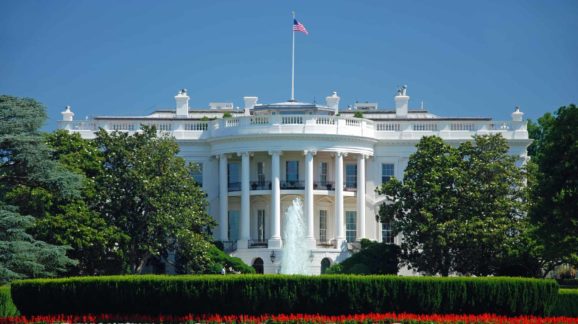
Photo Credit: Getty
The Office of Personnel Management (OPM) has issued a new rule that has some in Washington aghast. The rule says that executive branch federal workers must be answerable to the White House.
That’s the gist of OPM’s creation of “Schedule Policy/Career,” a new category of federal workers that can be removed at-will by the White House if they refuse to carry out the administration’s policies. The Competitive Enterprise Institute wrote in favor of creating this new category.
The rule will improve federal regulatory agencies by making them more responsive to the executive branch and, through that, responsive to the broader American public. Too many federal agencies exist outside the oversight of the executive, legislative, or judicial branches, allowing them to wield power autonomously. This allows them to create policies with little to no oversight, a process known as “regulatory dark matter.”
Federal government unions aren’t happy with the rule. The American Federation of Government Employees called it, “a direct assault on a professional, nonpartisan, merit-based civil service and the government services the American people rely on every day.”
This ignores that the new category is limited to employees with higher-level “policy-determining or policy-making” functions. That is, the people inside the agencies calling the shots and who therefore should be answerable to the executive branch. It is estimated that the new category will apply to only 50,000 of the nearly three million civilian employees of the federal government. It doesn’t require them to endorse those policies either, just carry them out, so First Amendment concerns aren’t an issue.
Presidents have long expressed frustration that the federal bureaucracy is slow and sclerotic, making it difficult for them to enact their agendas and/or fulfill the government’s necessary duties. President Franklin D. Roosevelt in 1938 decentralized much of the work of the Civil Service Commission and required federal departments to set up professional personnel offices. Roosevelt was reacting to the perceived slowness of the government in executing his New Deal policies.
The Civil Service Reform Act of 1978, signed by President Jimmy Carter, was intended in part to give federal managers more flexibility and to allow merit pay that would provide performance-based incentives. “Even the best organized government will only be as effective as the people who carry out its policies,” Carter said in his 1978 State of the Union address.
President George W. Bush signed the Homeland Security Act in 2002, consolidating 22 existing government agencies under a single department. A key goal of that reorganization was to ensure accountability for the newly-created Department of Homeland Security’s workers. The 2002 proposal to create the department stated, “When a job needs to be done the Department should be able to fill it promptly, at a fair compensation level, and with the right person. Likewise, employees should receive recognition for their achievements, but in cases where performance falls short, they should be held accountable.”
There is, in short, a long-standing bipartisan awareness that executive branch agencies need periodic reform and restructuring to ensure that the workers are fully aligned with executive branch policies and can be held accountable for not fulfilling them. The new OPM rule is merely the latest iteration of this.
Finally, this is one Trump administration rulemaking that a prospective future Democratic administration is unlikely to rescind. After all, that hypothetical administration will want to see the government get rolling on enacting its agenda too.