House Passes Bill Pushing Back on Federal Appliance Meddling
President Reagan’s argument that these regulations are unnecessary and harmful to consumers has proven to be prescient.
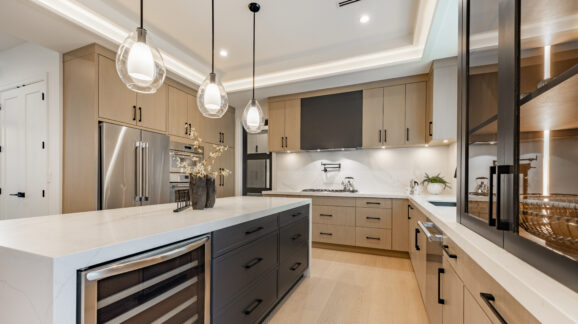
They’re the regulations that literally hit home, and rarely in a good way. The Department of Energy sets energy efficiency standards for just about every kind of household appliance, and by now many have been subjected to multiple rounds of successively tighter measures over the years. Most of these changes raise appliance prices, and some also reduce choice, features, performance, and/or reliability. Fortunately, the Trump DOE has pushed back against several such measures through regulatory reforms, but lasting relief will require legislation. On February 24, the House of Representatives took a positive step in that direction by passing HR 4626, the Home Appliance Protection and Affordability Act.
Federal meddling in refrigerators, washing machines, air conditioners, furnaces, water heaters, dishwashers, and others began in the 1970s. The 1973 Arab oil embargo sparked a series of ill-advised congressional responses that may have inflicted more damage than the embargo itself. Some persist to this day, including the Energy Policy and Conservation Act of 1975 that created a program for regulating energy use in home appliances. It and subsequent amendments set out initial energy efficiency standards and required the DOE to periodically consider making them more stringent — a one-way ratchet.
If this sounds like a formula for regulation run amok, that is exactly what has happened. Fast-forward to today, and washing machines have been regulated six times, dishwashers four times, refrigerators four times, air conditioners three times, and stoves and furnaces twice. Several face an additional round of even more aggressive DOE energy use limits enacted during the Biden administration and scheduled to take effect over the next few years. Note that several of these appliances also face environmental regulations from the Environmental Protection Agency.
Incidentally, President Ronald Reagan tried to stop this tinkering with appliance standards back in the early 1980s, but he lost in federal court in a case brought by environmental activists. Too bad, because Reagan’s argument that these regulations are unnecessary and harmful to consumers has proven to be prescient. Just one more reason to love the Gipper.
Nearly all such regulations raise the up-front cost of appliances, and often by more than is likely to be earned back in the form of marginal energy savings. Some of the worst are yet to come, including a Biden-era furnace rule estimated by the DOE to raise purchase and installation costs by as much as $867 when it takes effect in 2028 and one for electric water heaters that will boost prices by $953 in 2029. And, to take a little more money out of our wallets, already-overregulated light bulbs will nearly double in price when the next regulation takes effect in 2028.
Read more at National Review