9/11 and presidential power
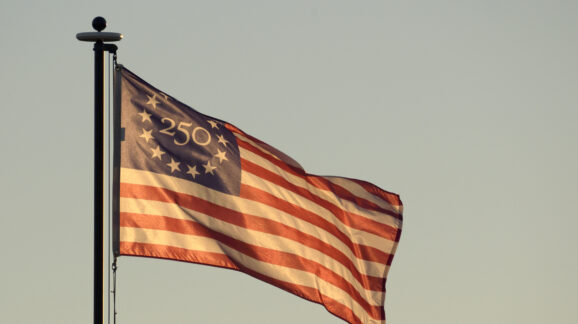
Photo Credit: Getty
America is a complicated country, founded on a simple idea: no kings. Even so, nearly every president since at least John Adams has grown presidential power, regardless of party. The political response to the September 11, 2001 terrorist attacks grew executive power like few other events in American history.
We will never get back the people we lost that day. However, the self-inflicted damage to American institutions in the aftermath of 9/11 is reversible. This is cause for hope on a solemn anniversary.
CEI does not generally take foreign policy stances, and I will not editorialize here. I will point out that one power grab tends to beget others, and that all freedoms are connected. As Hayek argued in The Road to Serfdom, freedom is a package deal. Eroding personal freedoms also means eroding economic freedoms, and vice versa.
Hayek also argued that the road to serfdom is a two-way street. The post-9/11 power grabs took us farther down that road than America’s founders intended. But policymakers can also turn back.
Less than a week after the attacks, on September 14, 2001, Congress passed an Authorization for Use of Military Force (AUMF). This essentially gave President George W. Bush a blank check on using military force abroad that he used in Afghanistan, Iraq, and elsewhere. The Stimson Center’s Chris Preble points out that “the AUMF included no sunset provision, no expiration date. It was similarly vague with respect to who exactly would be targeted.” Congress willingly handed over one of its key powers to the president.
On October 26, 2001, Bush signed into law the USA PATRIOT Act, which passed Congress by votes of 357-66 in the House and 98-1 in the Senate. It grants powers like warrantless surveillance, sneak-and-peek searches, gag orders, indefinite detentions, and other provisions. Civil libertarians argue that the PATRIOT Act violates a good portion of the Bill of Rights.
The 9/11 crisis policy flurry also gave birth to the Department of Homeland Security and the Transportation Security Administration while expanding the authority of existing agencies such as the National Security Agency.
The Obama, Biden, and both Trump administrations expanded on these precedents and used them in areas having nothing to do with terrorism. Journalist Radley Balko recently chronicled some of their abuses for the New York Times.
Some examples of post-9/11 mission creep are in the news right now. These include Congress’ failure to weigh in on the Iran war or provide oversight on ICE’s immigration enforcement tactics, and the rise of Flock surveillance cameras across the country. These current events did not emerge out of a vacuum.
The ratchet effect, pioneered by Crisis and Leviathan author Robert Higgs, is a useful concept for understanding how 9/11 grew presidential power. During a crisis, a government will take on special emergency powers. After the crisis passes, the government will relinquish some of those powers, but not all of them. Like a ratchet, the result is that, on net, government powers tend to grow over time with each new crisis adding another turn of the ratchet.
Overuse of executive power can become an addictive habit. Even if this overuse started with civil liberties, it soon expanded to economic regulation, as my CEI colleague Wayne Crews shows in his Abuse of Crisis paper. America has had three major crises this century: September 11, the 2007-2008 financial crisis, and the COVID-19 pandemic. Each one spawned new powers, new regulations, new spending, and a more powerful presidency.
Bush’s then-record $400 billion wartime budget deficits gave way to $1 trillion budget deficits under Obama. Trump and Biden both oversaw massive COVID-era emergency spending programs measured in the trillions of dollars. Total federal debt now exceeds $40 trillion.
Biden oversaw the first 100,000-page Federal Register. Trump has reduced formal regulations and formal page counts, but his off-book and informal regulations are arguably more interventionist than Biden. These range from pressure tactics to lawsuits to tariffs, often with little or no involvement from Congress. In the case of the more than 30 government equity stakes in private businesses, Trump’s policies can reasonably be called socialist.
Some of these interventionist policies would have happened even without 9/11 executive power grabs paving the way. But those earlier power grabs certainly made them easier to implement.
They may also enable future power grabs by an Ocasio-Cortez or Vance administration. Inertia is a powerful force in politics, and all the momentum currently favors increasing presidential power.
It has now been 25 years since 9/11, and 250 years since the Declaration of Independence. It is important to remember the former and honor the values of the latter. As we mourn our losses from the attacks, we should double down on our efforts to restore the freedoms that America was founded to protect. A significant part of that project is limiting the presidential powers that have emptied our pocketbooks and eroded our liberties.