Camelot and misuse of the public interest
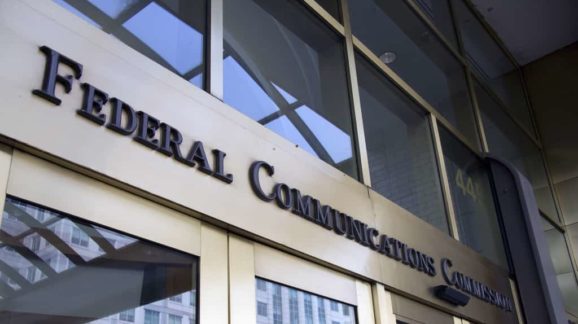
Federal Communications Commission (FCC) Chair Brendan Carr has used the Communications Act’s public interest obligation to pressure broadcast licensees. This includes threatening ABC over Jimmy Kimmel’s callous comments regarding Charlie Kirk’s assassination.
But Carr is not the first to wield the public interest obligation against broadcast licensees. The oft-celebrated Camelot era had its own public interest pressure campaigns.
Kennedy-era FCC Chair Newton Minow was one of the best-known figures to lead the agency. He was not shy about using the powers of the FCC to pressure broadcasters in the name of the public interest.
Minow is renowned for his 1961 speech to the National Association of Broadcasters in which he criticized television programming quality, deeming it a “vast wasteland.” While declaring, “Above all, I am here to uphold the public interest,” Minow effectively defined the public interest as television programming sufficiently elevated to suit his own tastes.
After lecturing broadcasters on program quality, Minow directly threatened them:
Clearly at the heart of the FCC’s authority lies its power to license, to renew or fail to renew, or to revoke a license. As you know, when your license comes up for renewal, your performance is compared with your promises. I understand that many people feel that in the past licenses were often renewed pro forma. I say to you now: renewal will not be pro forma in the future. There is nothing permanent or sacred about a broadcast license.
There was nothing subtle about his message. Like Carr, Minow grounded his interpretation of the public interest not in First Amendment freedoms but in his own standards. As FCC chair, he would judge whether a broadcaster was meeting those standards when its license came up for renewal.
In Camelot, however, Minow’s public interest pressure was the least of it. A 1975 New York Times Magazine article by former CBS News executive Fred W. Friendly revealed the Kennedy administration’s misuse of the fairness doctrine—an FCC-created public interest regulation. Created in 1949 but abolished in 1987, the doctrine required broadcasters presenting one side of an issue to offer opportunities for opposing views.
According to Friendly, the underlying complaint in the Supreme Court’s Red Lion Broadcasting Co. v. FCC decision—upholding the constitutionality of the fairness doctrine—grew out of a campaign to use the doctrine to harass stations airing right-wing commentary. Friendly stated that, unbeknownst to the Court, it had “granted implicit legal sanction” to what he termed “an unsavory project of political censorship by the Democrats.”
Friendly recounted that President Kennedy was concerned a nuclear test-ban treaty with the Soviet Union was “being jeopardized by right-wing commentators who denounced the treaty and argued against its ratification.” Kennedy’s political strategists monitored radio stations broadcasting such commentary and prompted test-ban advocates to demand time to reply. The administration believed that “this political use of the fairness doctrine had made an important contribution to the eventual Senate vote to ratify” the treaty.
Friendly reported that the Kennedy administration and the Democratic National Committee (DNC) then used the fairness doctrine for political advantage. White House aide Kenneth O’Donnell asked whether it could be used for “partisan political purposes” to counter right-wing radio commentators—some of whom were considered “right-wing extremists.” The plan was to “harass the radio stations by getting officials and organizations that had been attacked by extremist radio commentators to request reply time” under the fairness doctrine. The effort resulted in more than 500 radio replies.
Friendly described how the strategy expanded in 1964 to help President Johnson win the presidential election against Republican nominee Sen. Barry Goldwater. The DNC raised an estimated $200,000 for the project and a public relations consultant bluntly stated, “Our massive strategy was to use the fairness doctrine to challenge and harass right-wing broadcasters and hope that the challenges would be so costly to them that they would be inhibited and decide it was too expensive to continue.”
The effort was believed to have resulted in 1,700 free radio broadcasts, but one participant said that “even more important than the free radio time, however, was the effectiveness of this operation in inhibiting the political activity of these right-wing broadcasts.”
As these episodes show, misuse of the broadcast licensee public interest obligation is not new. The temptation to use vague legal requirements such as the “public interest” to advance partisan political ends is simply too great. And prior misuse of the public interest obligation does not justify misuse now.
In the musical Camelot, King Arthur’s noble ideals falter under human ambition. The American Camelot reminds us that the temptation to misuse noble ideals such as the “public interest” is ever present.