CEI study says it’s time to unplug federal appliance regulations
Photo Credit: Getty
Stoves, air conditioners, ceiling fans, water heaters, light fixtures, refrigerators, washing machines, furnaces, dishwashers, and more – nearly everything that plugs in or fires up around the house has been hit by federal appliance regulations that harm the very consumers they were supposed to help. The Trump administration has taken several steps to fight back, and pending congressional legislation would do even more, as I set out in my new analysis, Free the Appliances: Turn Out the Lights on Federal Efficiency Standards.
Most of these regulations are Department of Energy (DOE) efficiency standards that have been accumulating for decades. For example, washing machines have endured six successive rounds of tighter standards, while dishwashers and refrigerators have each faced four.
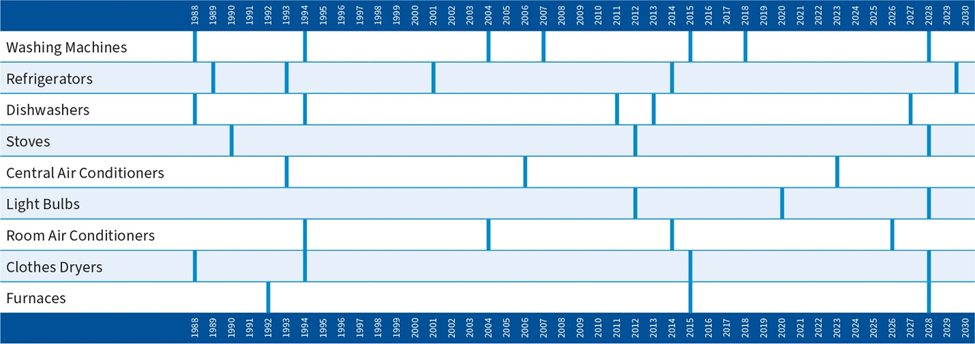
And all now face yet another round of ill-advised restrictions, thanks to Biden-era regulations that will take effect in the years ahead.
These rules raise the up-front cost of appliances. The upcoming light bulb rule will nearly double prices, according to DOE. The latest electric water heater rule will raise installed costs by an agency-estimated $953 when it takes effect in 2029. And the upcoming 2028 gas furnace standard, which will raise costs by up to $867, would make this choice prohibitively expensive for millions of homeowners. Industry sources also fear that these DOE cost estimates are understatements.
The cumulative effect of past and upcoming appliance regulations is exerting significant negative pressure on housing affordability, especially for low-income and first-time homebuyers.
Other rules compromise appliance choice, features, performance, reliability, and longevity. Dishwashers now take two hours or more to clean a normal load of dishes – a process that took closer to one hour before Washington decided to “improve” them. There is evidence that washing machines are less reliable, and that refrigerators don’t last as long. In every case, consumers bear the burden.
The Biden administration piled on four years of aggressive new standards for nearly every home appliance, including the already-overregulated ones. Climate change became the latest finger on the scale justifying the crackdown.
But elections have consequences, and President Trump is an outspoken critic of these measures. Several recent regulations, such as one effectively outlawing an entire class of water heaters, have been blocked by Congress and the president using the Congressional Review Act (CRA). However, others were not eligible to be reconsidered under the CRA and are still scheduled to take effect.
The Trump administration is also enacting reforms at the agency level, including changes to the rules that messed up dishwashers. These efforts are important, but unfortunately, they can be reversed by a subsequent administration, just as the Biden DOE did to most of the appliance reforms under the first Trump administration.
That is why legislation is the best way to protect consumers. Congress should sunset the appliance standards program entirely, but failing that it can take steps to make it easier to revoke the most troublesome regulations while raising the bar on any additional ones. Legislation should also end the practice of using appliance regulation as a climate policy tool. H.R. 4626, the Don’t Mess With My Home Appliances Act of 2025, contains these and other useful provisions and is well worth consideration, along with other potential legislative reforms I discuss in my analysis.
Done right, limiting or even ending federal appliance meddling could become the next 80/20 issue, and it deserves to be high up on the regulatory and legislative agenda for 2026.