Court rejects New York bid to take over federal labor enforcement
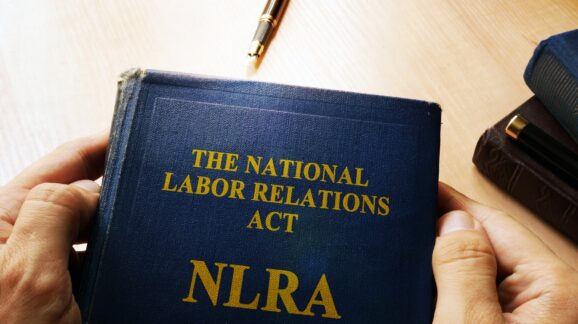
Photo Credit: Getty
An effort by the New York legislature to usurp the role of the National Labor Relations Board (NLRB), the main federal labor law enforcement agency, has been dealt a major blow by the courts. However, Congress still needs to act to prevent similar ploys by other states, most notably California.
Unions have been pushing labor-friendly states to pass laws allowing state officials to take over workplace enforcement matters when the NLRB cannot respond in a timely manner. New York and California have been leading in this effort, passing laws to that effect in September. The laws give unions a potentially major legal advantage over businesses in workplace disputes, including contested union elections.
The laws would only come into play if the NLRB itself is inactive, but that’s been an increasingly common phenomenon in recent years. The NLRB’s five-member board is currently down to just one member due to a combination of members’ terms expiring, some firings by the Trump administration, and slow Senate confirmations. The NLRB consequently lacks a quorum to act. The proposed laws from California and New York are intended to exploit this.
A federal judge ruled Wednesday that New York’s law was unconstitutional. The ruling said that the National Labor Relations Act (NLRA), the law that created the NLRB, does not allow for any other entities to usurp its federal role. The ruling puts California’s law in similar peril, though it may be a long while before the courts fully resolve the issue.
Labor law is one area where it makes sense to have a strong federal role because businesses and unions are frequently inter-state operations. Having to contend with multiple different legal regimes would be problematic.
The NLRB will remain in limbo for the foreseeable future. Senate Majority Leader John Thune (R-SD) is expected to announce confirmation votes before the full Senate for various administration nominees in the first half of December, including NLRB nominee James Murphy. Should Murphy be confirmed, that would give the board still only have two members—not enough for a quorum.
Another NLRB nominee put forward by the Trump administration, Boeing lawyer Scott Mayer, has been stalled ever since Sen. Josh Hawley (R-MO) raised objections to his nomination. Hawley was angered by Boeing’s treatment of striking machinists in his state. The senator has carved out an unusual niche as the GOP’s most reliably pro-union member of Congress. The Senate Health, Education, Labor and Pensions Committee has a 12-11 Republican majority, giving Hawley effective veto power in party-line votes.
Even if Mayer were confirmed by the Senate, the NLRB would still have only the bare minimum number of members for a functioning quorum. Should any member have to recuse themselves from a case or become incapacitated, the NLRB would once again be unable to act. It would still be able to handle various day-to-day functions, but the board would not be able to vote in major cases.
In the past, the NLRB becoming inactive wasn’t a huge concern for most lawmakers. It just meant that the federal government was operating even slower than usual. Some in the business community probably even preferred it, as unions were the ones mostly left at a disadvantage. The New York and California laws show that unions are now looking for end runs around federal laws. Congress and the White House can nip this in the bud by appointing a full board to the NLRB. It is what they’re supposed to be doing anyway.