How permitting is a hidden tax on housing
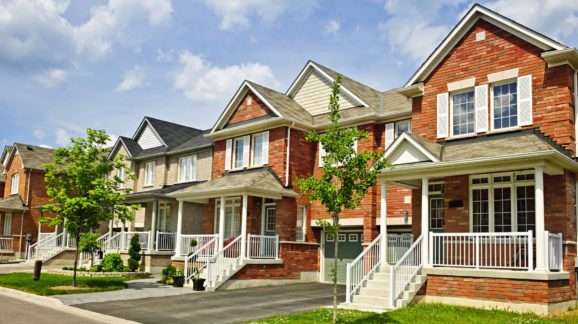
Imagine being a housing developer so entangled in permits, legal challenges, and environmental reviews that it takes five decades to have a housing project approved. That is what happened at the Saddleback Meadows development in Trabuco Canyon in Orange County, California.
First proposed in the 1970s, the project was repeatedly scaled back and delayed as it moved through environmental review and litigation. It took 50 years before ultimately being approved.
Fortunately, few housing developments endure such an extraordinary delay. But projects do not need to spend decades in permitting for the process to have negative consequences. Even routine permitting can make housing more expensive than it would otherwise be.
While permitting is meant to protect public health, safety, and orderly development, it increasingly functions as a tax on housing production that ultimately affects the price paid by renters and homebuyers alike.
Before considering reforms, it is important to understand what permitting entails and why it has become such an expensive part of housing production. Housing permitting is the process by which developers obtain government approval before construction can begin.
Depending on the project and jurisdiction, that process may include zoning review, site plan approval, environmental review, utility coordination, building permits, inspections, and issuance of certificates of occupancy. These requirements are intended to ensure that new development complies with local laws and meets basic standards for health and safety.
In practice, however, permitting is rarely a single approval. It is often a series of reviews involving multiple agencies, each with its own requirements, timelines, and opportunities for revisions.
These steps cumulatively impose real costs on developers and, ultimately, on housing availability and affordability. The first category of costs comes directly from the permitting process itself. A recent study from the National Association of Home Builders (NAHB) calculated the cost of government regulations for constructing a new home.
According to the NAHB, permitting-related requirements add about $38,000 to the price of an average new home ($499,500), or about 7.6 percent. That figure reflects a combination of three distinct categories of costs identified in the NAHB study.
The first category is direct costs associated with permitting. The process begins with zoning and land-use applications, which account for about $7,000. This is the initial gatekeeping stage, where developers must pay to apply for permission to build, appear before local planning bodies, and secure the entitlements needed to proceed.
Second, compliance requirements and mandatory studies add nearly $11,000, as developers are required to commission technical reports on environmental impacts, traffic conditions, and infrastructure capacity in order to secure approval.
The final category includes permit issuance, inspections, and required utility connections, which together add over $20,000. Utility hookups are included here because homes cannot receive a final certificate of occupancy without being connected to essential services such as water, sewer, and electricity. Essentially, they function as part of the permitting process.
Permitting also imposes indirect costs through delays. Even when direct permitting fees are fixed and predictable, time spent waiting for approval functions as a cost of production.
The NAHB estimates that permitting delays during the development phase add about $4,100 to the cost of a typical new single-family home. That estimate is based solely on the additional interest that accrues on development loans during average permitting delays.
The NAHB delay estimate is conservative because it isolates baseline financing expenses under average permitting conditions. It does not capture the full range of carrying costs associated with extended or highly variable approval timelines. For example, the national architecture firm LAI Design Group estimates that regulatory delay can reduce project value by 1 to 3 percent per month.
That is because every additional month spent in the approval process keeps capital tied up in projects that cannot move forward. Developers continue paying interest on loans, property taxes, insurance premiums, and other carrying costs while also facing the risk of higher construction costs if labor or material prices increase before work begins. This helps explain why local analyses in jurisdictions such as Washington State, Honolulu, and Indianapolis report higher delay costs.
The inverse relationship is also visible where permitting has been streamlined. Researchers at Pew Charitable Trusts analyzed preapproved building plan programs. They found that reducing permitting friction through preapproved building plans produces several thousand to tens of thousands of dollars in per-unit cost savings, depending on the jurisdiction and housing price level.
Ultimately, permitting has become a significant driver of housing costs. Direct regulatory requirements add substantial upfront expenses, while delays increase the cost of development as projects remain tied up in approval processes. These effects accumulate across the development cycle and are reflected in higher housing prices for both renters and buyers. How permitting is managed remains central to the broader question of housing affordability.
A wide range of reform approaches has been proposed in the research literature to streamline permitting processes, including efforts to reduce procedural redundancy, improve coordination across reviewing agencies, and increase predictability in review timelines. These issues are a focus of ongoing research and analysis at CEI.