Medicaid financing gimmickry – before and after the One Big Beautiful Bill

Photo Credit: Getty
Medicaid was created in 1965 as a joint federal-state health insurance program for low-income individuals which targeted families with dependent children, the elderly, and the disabled.
Unlike many government programs, Medicaid administration and funding are shared by the federal and state governments. Many of the rules governing Medicaid payment and services are determined by the states, while others are determined by the federal government. The share of the funding that the federal government is responsible for is determined primarily by statute and is called the Federal Medical Assistance Percentage (FMAP).
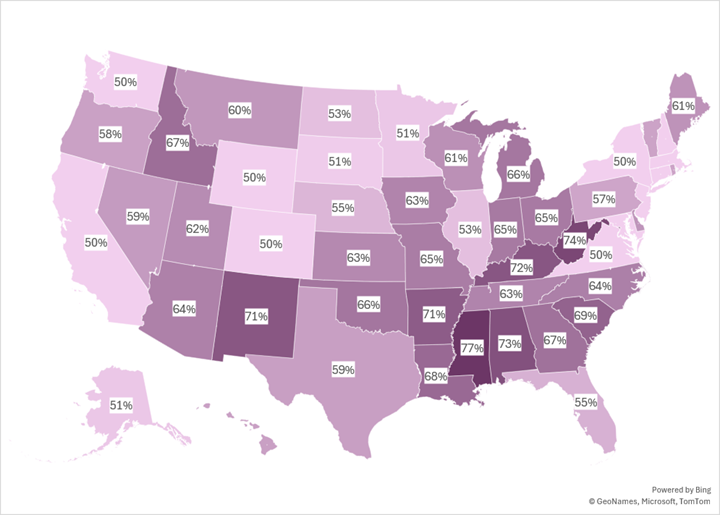
The FMAP is calculated based on a state’s income level relative to the national average. The federal share is always, by statute, at least as much as the state’s share. Originally, the maximum proportion the federal government would pay was 83 percent. Currently, FMAPs range from 50-77 percent based largely, but not completely on the state’s income distribution. For example, if the FMAP is 70 percent, then the federal government contributes 70 percent of the state’s Medicaid spending and the state is responsible for the remainder.
The 2010 Affordable Care Act (ACA) allowed states to expand Medicaid to cover nearly all adults with incomes up to 138 percent of the federal poverty level. Initially, the federal government assumed 100 percent of the Medicaid costs for the newly eligible population, but that share was phased down to 90 percent by 2020.
Because the federal government covered a larger share of Medicaid costs, states began to develop creative ways to draw in federal dollars on net. They used provider taxes, which had existed prior to the ACA, and State Directed Payments, which emerged after the ACA, to achieve that goal. Provider taxes are revenue streams levied directly on companies and individuals who provide health care services to the states’ Medicaid beneficiaries. In many states, provider taxes are structured such that Medicaid payments substantially offset providers’ tax liability. They allow states to generate additional federal matching funds while reducing the net financial burden on participating providers. The state government can then use that revenue stream to bolster its budget, redirect state money from Medicaid to other programs, and increase spending in Medicaid itself.
The OBBBA prohibited any further expansion of provider taxes. It also reduced the “safe harbor” level of provider taxes from 6 percent to 3.5 percent for states that have expanded Medicaid. The safe harbor provision was originally imposed in 1991. Understanding that provider taxes could be used as a financing mechanism, Congress barred states from promising, either implicitly or explicitly, to return provider taxes to the providers. Because it was difficult to prove an implicit promise, the agency responsible for enforcement set a ceiling on the tax rate without triggering review. States were technically allowed to set provider taxes at higher levels, but such rates would prompt scrutiny by CMS to ensure that the state made no guarantee to the providers that their tax dollars would be returned in the form of higher reimbursements. The OBBBA reduced that threshold to 3.5 percent.
The OBBBA also eliminated the ability of states and CMS ability to pay providers more than the limits imposed in federal law, which is either the Medicare reimbursement rates or 110 percent of Medicare rates, depending on whether the state expanded Medicaid.
Explore more on this topic: