The forced labor fig leaf
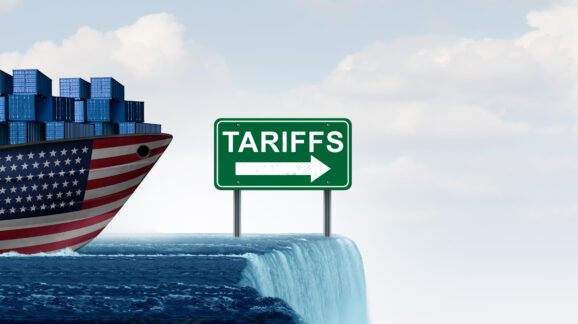
Photo Credit: Getty
The cardinal rule of President Trump’s trade policy is that he just likes tariffs. Any intellectual justification is just rationalizing his gut feelings. This is why nobody should take seriously the forced labor rationale for his new tariffs against 60 countries.
One tell is that the new forced labor tariffs took effect the instant his previous round of tariffs expired on July 24, and have similar rates. Those previous tariffs, based on a balance of payments rationale, were in turn improbably similar to the trade deficit emergency tariffs that the Supreme Court struck down.
Forced labor, the balance of payments, and trade deficits are three very different policy concerns. Their respective tariffs have cited three different statutes. It is unlikely that they all have similar optimal tariff rates, as I note in my recent study. Instead, what’s happening is that President Trump just wants to have tariffs. He and his advisers simply devise post hoc justifications.
It is also unlikely that Japan, Europe, and Canada are bastions of forced labor. As for known offenders like China, tariff rates of up to 145 percent have failed to spur any reforms.
A second tell is that Europe, Canada, and nearly all the other tariff targets already prohibit forced labor and/or are part of international agreements to ban trade in goods produced by forced labor. The Federal Register notice implementing the tariffs moves the goalposts by saying those economies do not do enough to enforce them.
This is vague. The administration can just create whatever standards it wants, then claim its tariff targets do not meet it. The notice also does not spell out what would make effective enforcement. The courts may not find such vagueness persuasive either, though it will be some time before the already-filed legal challenge can play out.
America has a tariff problem. The forced labor tariffs are one of six tariff stories in the news right now. Congress is considering a Russia tariffs and sanctions bill by the late Sen. Lindsey Graham (R-SC). Trump recently announced 50 percent tariffs against Canada. He also enacted new tariffs against Brazil. And there is ongoing uncertainty about renewing the USMCA trade agreement Trump negotiated in his first term. New generic drug tariffs may be on the way starting in 2028.
Aside from Graham’s Russia bill in Congress, the solution to these tariff problems is to reduce presidential power.
For decades, unchecked executive power has been the federal government’s most important structural problem. We are now reaping the consequences not just in trade policy, but across issue areas. The American experiment is based on the idea that no one person should have too much power.
The federal government has three branches, and all three need to play their roles. Congress needs to take away the keys from a president who refuses to wield his powers responsibly. And courts need to continue to strike down unconstitutional tariffs that harm America’s economic and foreign policy interests.
Congress can start by repealing Section 301 of the 1974 Trade Act, under which the new forced labor tariffs were enacted, as well as other statutes that we identify in CEI’s Agenda for Congress.