When driverless vehicles are attacked, look for the union label
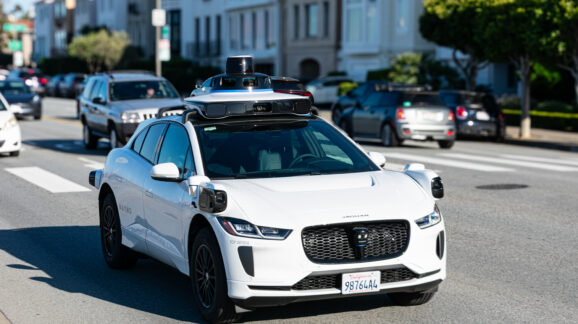
Photo Credit: Getty
Self-driving cars are coming to major cities, and one group in particular is not happy about this: unions. An effort to bring self-driving vehicles to Washington, DC is opposed by a mysterious organization with apparent union ties. The organization, which calls itself the Coalition for Accountability and Road Safety (CARS), claims that self-driving cars are potential threats to public safety. What it doesn’t say is that it represents organizations with a financial interest in keeping these vehicles off the street.
DC’s City Council is considering a bill, “The Autonomous Vehicle Deployment Authorization Amendment Act,” that would allow up to 200 autonomous vehicles (AVs) on its streets, with the possibility of further expanding the fleet in 2028. City Councilmember Charles Allen, the sponsor of this bill, argues that this would present an “opportunity to improve traffic safety and consumer choice in the District.”
The bill would require AV companies to have a minimum of $5 million in liability insurance for each vehicle they put in operation. The city’s Department of Transportation would oversee the implementation of the fleet.
CARS is running an ad in the DC metro area arguing that the cars are dangerous. “How do you feel about DC neighborhoods being used as a test lab for unproven, driverless technology?” it asks, before urging viewers to contact the council and tell them to reject the bill.
Is CARS a local grassroots group? It doesn’t appear to be. Its website doesn’t give any hint as to who backs the group, though the fact that CARS warns that driverless vehicles are “threatening the livelihoods of working families” offers a strong clue.
The news website TechCrunch has reported that CARS is registered to an employee of Pitta Bishop & Del Giorno LLC, a labor-side lobbying and government affairs outfit with offices in New York and DC. The firm’s clients include the Amalgamated Transit Union, the Transport Workers Union, the Transportation Communication Union, and the Garage Employees Union, among other labor groups.
The unions likely oppose driverless vehicles because you cannot unionize machines. (Not yet, anyway. Perhaps we shouldn’t be giving them ideas.) They may also be trying to protect traditional cab drivers and city bus drivers, who are often unionized, from competition from the new technology. Never mind that driverless vehicles will provide new options for DC residents, who can’t always get cabs or buses when they need them.
There is scant evidence that driverless vehicles are less safe than traditional human-driven vehicles. In fact, AVs appear to increase public safety. Johns Hopkins University’s Bloomberg School of Public Health reported earlier this week that “early data suggests that [AVs] are safe options for people looking for a rideshare. Driverless cars can also offer public health benefits, both by reducing fatal crashes and by increasing access to transportation.”
A 2025 peer-reviewed study published in the journal Traffic Injury Prevention found an 85 percent reduction in serious injury crashes involving autonomous vehicles compared with human drivers on the same streets.
A study commissioned by Waymo, the Google-backed AV company, analyzed claims arising from personal auto liability insurance in California, Arizona, and Texas. It found that autonomous vehicles had 88 percent fewer property damage claims and 92 percent fewer bodily injury claims when compared with the overall driving population.
That’s not to say that there aren’t kinks still to be worked out with autonomous vehicles. Questions remain such as what to do when a passenger falls asleep in the cab and doesn’t exit it, or how to keep the driverless cars from parking in areas where they shouldn’t. Every new technology goes through a period of adjustment when put under real-world conditions.
The unions can at least be said to be trying to protect their members, even if doing so comes at the expense of safety for the rest of the city. The American Association for Justice, the trial lawyers’ lobby, has publicly opposed the introduction of AVs on the federal level. It’s almost as if someone is afraid that there will be fewer personal injury lawsuits to pursue.