With apologies to The Who, agencies just met the new boss, not the same as the old boss
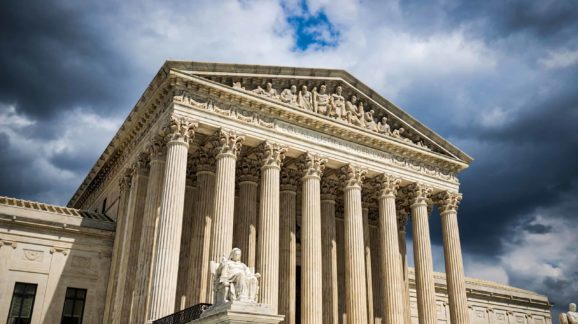
Photo Credit: Getty
The Supreme Court overruling Humphrey’s Executor restores an important constitutional principle: those who exercise executive power are not protected from at-will removal and should ultimately be accountable to the president, who is in turn accountable to the voters. This high-profile Federal Trade Commission firing case wasn’t about antitrust, consumer protection policy, or controversial non-compete agreements. It was about who controls officials wielding sweeping executive power.
No one, however, should mistake this Supreme Court decision for the end of the administrative state. The constitutional defect of Humphrey’s Executor doctrine was agency independence without accountability. The remaining defect — especially evident since COVID — is executive power without meaningful limits.
So while we celebrate this remarkable reaffirmation of constitutional principle, the danger is assuming that a change in lines of accountability automatically means a reduction in government power. This year marks not only America’s 250th anniversary, but also the 80th anniversary of the Administrative Procedure Act (APA): the landmark statute that institutionalized the modern administrative state. In a recent column, we noted that the APA effectively required the Constitution to deliver a concession speech to the New Deal.
The resultant administrative state rarely retreats; it migrates — such as from notice-and-comment rulemaking to sub-regulatory guidance. Real reform after today’s landmark SCOTUS ruling still requires that Congress legislate rather than delegate — and to legislate only within its enumerated powers; that agencies regulate less rather than simply answer to a different boss; and that presidents themselves exercise restraint rather than merely consolidate more power.
The actions of Trump and Biden alike — for example, the former’s partial nationalizations and industrial policy interventions, and the latter’s whole-of-government campaigns for net zero energy and sweeping social regulation — show that changing who controls the administrative state is not the same as shrinking it. Clarifying who is constitutionally responsible for the exercise of executive power is vital, but it neither eliminates federal agencies nor cures the excesses they have accumulated.
As we celebrate the Fourth of July, American independence, and the burial of Humphrey’s Executor in the same week, it is up to all liberty-minded Americans to ensure that all three branches abandon underlying regulatory urges that have no place in a nation characterized by independence from unchecked power.
Celebrate! It’s America250! But don’t confuse restoring Article II with restoring limited government just yet. The Framers’ work requires ongoing vigilance to preserve.
For more see:
“An America250 funeral for the 80-year-old Administrative Procedure Act,” Competitive Enterprise Institute
“A Deep State Guide to Post-Chevron Regulating,” Forbes