There are two main areas in which Congress can enact meaningful reform. The first is to rein in regulatory guidance documents, which we refer to as “regulatory dark matter,” whereby agencies regulate through Federal Register notices, guidance documents, and other means outside standard rulemaking procedure. The second is to enact a series of reforms to increase agency transparency and accountability of all regulation and guidance. These include annual regulatory report cards for rulemaking agencies and regulatory cost estimates from the Office of Management and Budget for more than just a small subset of rules.
In 2019, President Trump signed two executive orders aimed at stopping the practice of agencies using guidance documents to effectively implement policy without going through the legally required notice and comment process.
Featured Posts
Blog
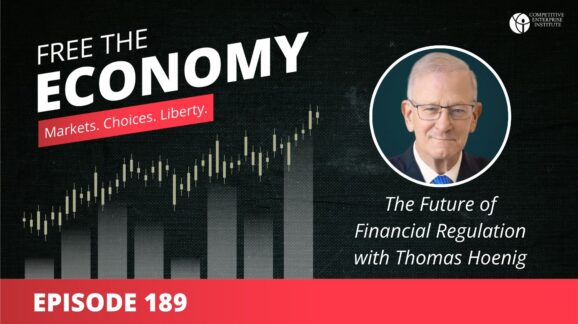
Free the Economy podcast: The future of financial regulation with Thomas Hoenig
In this week’s episode we cover the status of occupational licensing in the 50 states, the coming crack-up over entitlement spending,…

Blog
HHS cutting Head Start red tape shows the cost of regulatory micromanagement
Individual regulations are often defended as necessary on their own terms. But as CEI Senior Fellow Wayne Crews’ Ten Thousand Commandments documents, the…

Blog
It’s not the (government’s) thought that counts
Good intentions are not enough to create an effective regulation. An executive agency, Congress, or the White House can have the best intentions in…
Search Posts
The Heartland Institute
Trump Deregulation Will Save $3,100 Per Household, CEA Reports
The Heartland Institute cites CEI’s 10kc report. “The Competitive Enterprise Institute puts the annual economic cost of federal regulations at $1.9 trillion,” Herrick…
FreedomWorks
Support the Regulations from the Executive in Need of Scrutiny (REINS) Act, H.R. 3972
FreedomWorks cites CEI on the cost of federal regulations. According to the Competitive Enterprise Institute, federal regulation cost nearly $1.9 trillion in 2017…
Inside Sources
Consumer Choice Is Not Elitist
Rep. Frank Pallone, D-New Jersey, thinks it’s fine that your new dishwasher takes more than 2 hours to complete a cycle — we think consumers…
Forbes
Will the Regulatory Right-to-Know Act Ever Be Enforced?
For the past two years there's been a big production made of the Trump Administration’s year-end Status Report on the “one-in, two-out” regulatory reduction program. These…
Blog
Guidance Documents of the Week: Agriculture, Housing, Management
Guidance documents are statements of policy issued by your favorite alphabet soup of agencies, which more often than not translate into law, despite rarely going…
Blog
This Week in Ridiculous Regulations
In a pre-recess Parthian shot, the Senate passed a massive new spending bill that would increase federal spending by $320 billion over two years and…
Staff & Scholars

Clyde Wayne Crews
Fred L. Smith Fellow in Regulatory Studies
- Business and Government
- Consumer Freedom
- Deregulation

Ryan Young
Senior Economist and Director of Publications
- Antitrust
- Business and Government
- Regulatory Reform

Fred L. Smith, Jr.
Founder; Chairman Emeritus
- Automobiles and Roads
- Aviation
- Business and Government

Sam Kazman
Counsel Emeritus
- Antitrust
- Automobiles and Roads
- Banking and Finance

Marlo Lewis, Jr.
Senior Fellow
- Climate
- Energy
- Energy and Environment