There are two main areas in which Congress can enact meaningful reform. The first is to rein in regulatory guidance documents, which we refer to as “regulatory dark matter,” whereby agencies regulate through Federal Register notices, guidance documents, and other means outside standard rulemaking procedure. The second is to enact a series of reforms to increase agency transparency and accountability of all regulation and guidance. These include annual regulatory report cards for rulemaking agencies and regulatory cost estimates from the Office of Management and Budget for more than just a small subset of rules.
In 2019, President Trump signed two executive orders aimed at stopping the practice of agencies using guidance documents to effectively implement policy without going through the legally required notice and comment process.
Featured Posts
Blog
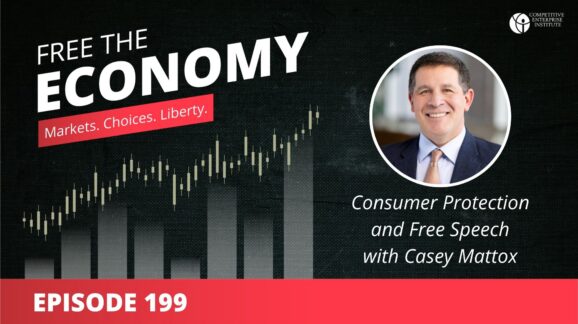
Free the Economy podcast: Consumer protection and free speech with Casey Mattox
In this week’s episode we cover the debt load of state and local governments, advances in nuclear waste storage, and hope…

News Release
Update in CEI’s case against Wisconsin’s unconstitutional rule barring voter participation in prediction markets
Yesterday, a District Court denied CEI’s motion for a preliminary injunction against Wisconsin’s rule denying voters the right to participate in election prediction market…

Blog
The regulatory dark matter beyond Washington’s graveyard of rules: 83,141 ghosts and counting
The clocks have turned back, the days are growing darker, and Washington’s regulatory shadows lengthen. Washington’s policy ghouls are waking up to the fact…
Search Posts
Blog
My One Agreement with Sen. Warren: Federal Rulemaking Should Be Transparent
In my two previous posts, I picked apart Sen. Elizabeth Warren’s allegation that notice and comment rulemakings are unfairly tilted in the favor of regulated…
Blog
More Wrongheadedness from Sen. Warren on Notice and Comment Rulemakings
Under the Administrative Procedure Act, federal agencies are required to undertake certain procedures when they promulgate rules of general applicability.
Blog
Sen. Warren’s Baseless Criticism of Notice and Comment Rulemaking
In a recent blog post about “regulatory capture,” Sen. Elizabeth Warren claimed that notice and comment rulemaking is unduly biased towards regulated parties.
Politico
Congress is back!
Politico's Morning Energy mentions Wayne Crews's report on a federal regulatory budget. The House has all the committee action on the energy front,…
Blog
CEI’s Battered Business Bureau: The Week in Regulation
Maybe the recently-passed Congressional Review Act deadline we wrote about earlier hasn’t had much effect on midnight regulators.
Blog
Senate Gazes at Regulatory Dark Matter
The Senate Subcommittee on Regulatory Affairs and Federal Management held a hearing yesterday, Examining the Use of Agency Regulatory Guidance, Part II, featuring testimony from…
Staff & Scholars

Clyde Wayne Crews
Fred L. Smith Fellow in Regulatory Studies
- Business and Government
- Consumer Freedom
- Deregulation

Ryan Young
Senior Economist and Director of Publications
- Antitrust
- Business and Government
- Regulatory Reform

Fred L. Smith, Jr.
Founder; Chairman Emeritus
- Automobiles and Roads
- Aviation
- Business and Government

Sam Kazman
Counsel Emeritus
- Antitrust
- Automobiles and Roads
- Banking and Finance

Marlo Lewis, Jr.
Senior Fellow
- Climate
- Energy
- Energy and Environment