There are two main areas in which Congress can enact meaningful reform. The first is to rein in regulatory guidance documents, which we refer to as “regulatory dark matter,” whereby agencies regulate through Federal Register notices, guidance documents, and other means outside standard rulemaking procedure. The second is to enact a series of reforms to increase agency transparency and accountability of all regulation and guidance. These include annual regulatory report cards for rulemaking agencies and regulatory cost estimates from the Office of Management and Budget for more than just a small subset of rules.
In 2019, President Trump signed two executive orders aimed at stopping the practice of agencies using guidance documents to effectively implement policy without going through the legally required notice and comment process.
Featured Posts
Blog
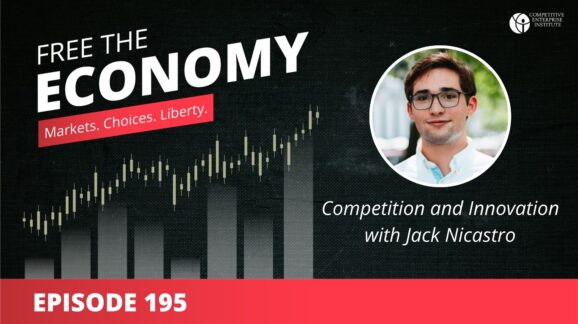
Free the Economy podcast: Competition and innovation with Jack Nicastro
In this week’s episode we cover the case of Suncor v. Boulder County at the Supreme Court, the problems with the Los…
Blog
Here’s how one-in, ten-out is successfully cutting rules — but not draining the swamp
It’s October already, and while there’s no real fiscal year for federal regulation, the September 30 closing of the 2026 budgetary fiscal year marks…

Blog
The week in regulations: Drug prices and inedible almonds
Sen. Eric Schmitt (R-MO) learned the difference between the Atlanta Hawks and the Iowa Hawkeyes. President Trump rolled back some China tariffs and published…
Search Posts
Blog
Italy’s Greatest Economic Threat: Italian Politicians
Italian ex-Prime Minister Silvio Berlusconi told news sources last week that his party -- Popolo della Libertà -- would soon decide whether or not to…
Blog
CEI’s Battered Business Bureau: The Week In Regulation
77 new regulations, from animal drugs to phone bills.
Blog
Regulatory Delays May Be Responsible For Slightly Better GDP Growth
This morning, data released by the Bureau of Economic Analysis showed third-quarter growth of gross domestic product (GDP) at 2 percent. This beat expectations slightly as, according to…
Blog
Pepco Caves On Contract Dispute To Avoid Union Strike
Talk about having your negotiating adversary over the barrel. Pepco and the International Brotherhood of Electric Workers’ Maryland-based Local 1900 had been in contract gridlock…
Blog
Regulation In Theory Vs. Practice
Externalities, asymmetric information, and monopolies are useful concepts for understanding how regulators should behave. But the important thing is how they do behave.
Blog
Police (Union) Brutality: Montgomery County Police “Effects” Bargaining Bludgeons Public Safety
This November, voters in Montgomery County, Maryland, will decide whether the police chief or union boss should determine public safety policy. The voter initiative, which will appear…
Staff & Scholars

Clyde Wayne Crews
Fred L. Smith Fellow in Regulatory Studies
- Business and Government
- Consumer Freedom
- Deregulation

Ryan Young
Senior Economist and Director of Publications
- Antitrust
- Business and Government
- Regulatory Reform

Fred L. Smith, Jr.
Founder; Chairman Emeritus
- Automobiles and Roads
- Aviation
- Business and Government

Sam Kazman
Counsel Emeritus
- Antitrust
- Automobiles and Roads
- Banking and Finance

Marlo Lewis, Jr.
Senior Fellow
- Climate
- Energy
- Energy and Environment