There are two main areas in which Congress can enact meaningful reform. The first is to rein in regulatory guidance documents, which we refer to as “regulatory dark matter,” whereby agencies regulate through Federal Register notices, guidance documents, and other means outside standard rulemaking procedure. The second is to enact a series of reforms to increase agency transparency and accountability of all regulation and guidance. These include annual regulatory report cards for rulemaking agencies and regulatory cost estimates from the Office of Management and Budget for more than just a small subset of rules.
In 2019, President Trump signed two executive orders aimed at stopping the practice of agencies using guidance documents to effectively implement policy without going through the legally required notice and comment process.
Featured Posts
Blog
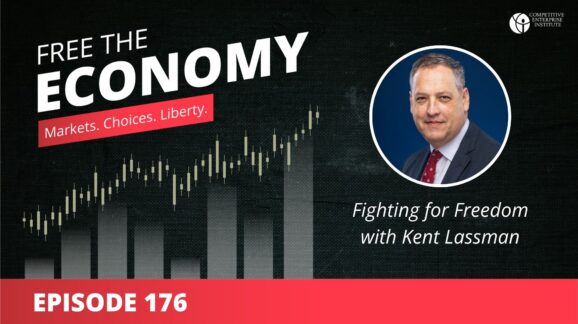
Free the Economy podcast: Fighting for freedom with Kent Lassman
In this week’s episode we cover bank privacy, SNAP benefits, a new study on tariffs, and a great new podcast…
News Release
CEI leads coalition letter urging Senate action on regulatory reform bills
The Competitive Enterprise Institute today led a coalition letter to Senate Republican leaders urging passage of two important House-passed regulatory reform bills, the Guidance Out of Darkness (GOOD)…
Blog
OPFAIL: Establishing a Congressional Office of Political Failure Analysis
For decades, reformers have proposed some version of a Congressional Office of Regulatory Analysis (CORA), a congressional counterpart to the regulatory oversight apparatus housed within…
Search Posts
Blog
Dodd-Frank Violates Separation of Powers and Constitutional Checks and Balances
In a recent edition of the Washington Post, former White House counsel C. Boyden Gray noted that the sweeping Dodd-Frank financial “reform” law passed…
Blog
Morning Media Summary
Tech: Hackers find new way to cheat on Wall Street – to everyone’s peril: “High-frequency trading networks, which complete stock market transactions in…
Blog
CEI Podcast for January 6, 2011: D.C.’s Plastic Bag Tax
Warren T. Brookes Journalism Fellow Kathryn Ciano talks about Washington, DC's five-cent tax on plastic bags.
Blog
More Signs of Incompetence in Washington, D.C. Transit System
In the latest sign of dysfunction at the Washington Metropolitan Area Transit Authority (“Metro”), the struggling subway system has appointed a supervisor of escalators…
Blog
What Government Unions Want: One, Two, Many Californias
That the large Republican gains in the 2010 midterm elections pose a setback for organized labor’s agenda is hardly news. What will be newsworthy is…
Blog
Morning Media Summary
Tech: HHS is Paying Google with Taxpayer Money to Alter ‘Obamacare’ Search Results (Updated): “The brazenness of the Obama administration never ceases to…
Staff & Scholars

Clyde Wayne Crews
Fred L. Smith Fellow in Regulatory Studies
- Business and Government
- Consumer Freedom
- Deregulation

Ryan Young
Senior Economist and Director of Publications
- Antitrust
- Business and Government
- Regulatory Reform
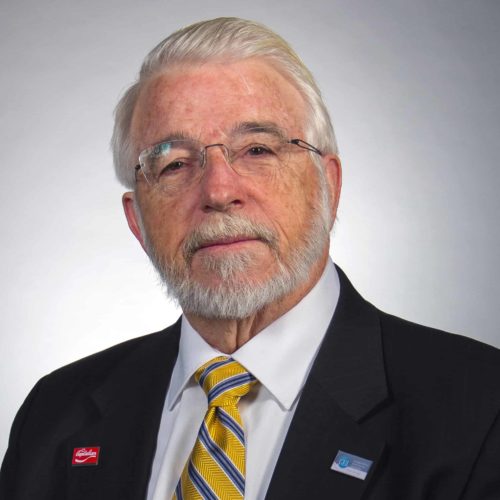
Fred L. Smith, Jr.
Founder; Chairman Emeritus
- Automobiles and Roads
- Aviation
- Business and Government

Sam Kazman
Counsel Emeritus
- Antitrust
- Automobiles and Roads
- Banking and Finance

Marlo Lewis, Jr.
Senior Fellow
- Climate
- Energy
- Energy and Environment